
Listen and read
Modern Bible Stories
Timeless Bible stories, faithfully retold for today.
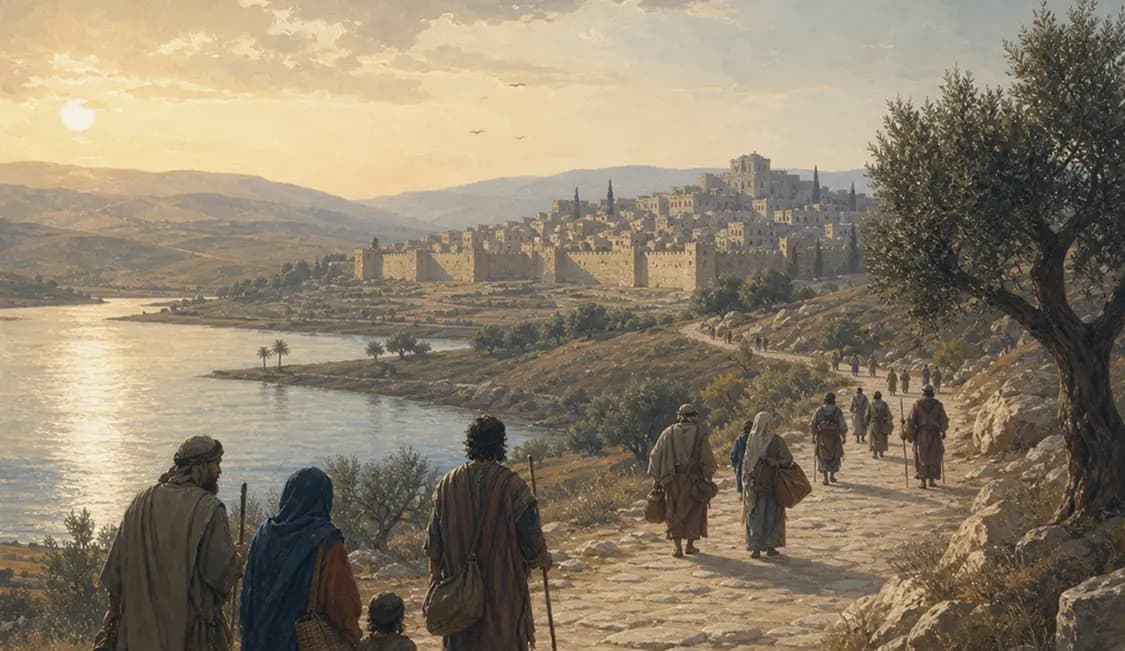
In the Beginning

The Creation of the World
Genesis opens with God creating the heavens and the earth in ordered stages. Light, sky, land, plants, heavenly lights, sea life, birds, land animals, and humanity appear by his word. God blesses living creatures, gives food to people and animals, and calls creation very good. Human beings, male and female, are made in God's image and entrusted with responsibility for living things. The account closes with God resting and blessing the seventh day, setting a rhythm of completed work and holy rest.
Listen to the story5 min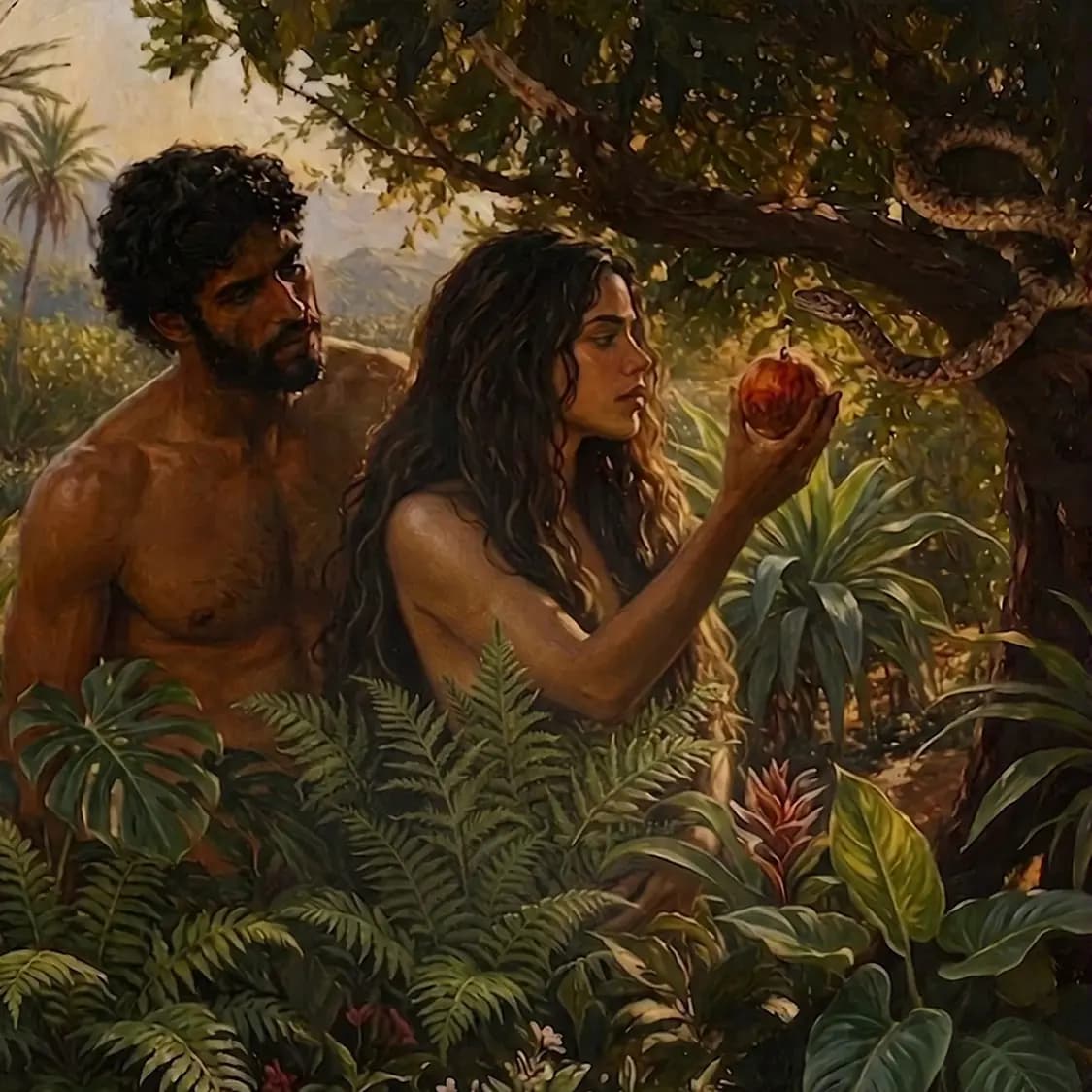
Adam and Eve’s Choice
In Eden, God gives Adam life, meaningful work, abundant food, companionship, and one clear prohibition. The serpent questions God's words and promises wisdom through the forbidden fruit. The woman eats, gives fruit to Adam, and both hide when God comes. God holds the serpent, woman, and man accountable, describing painful consequences and sending Adam and Eve from the garden. Yet judgment is accompanied by continuing care: God makes clothing for them and guards the way to the tree of life.
Listen to the story6 min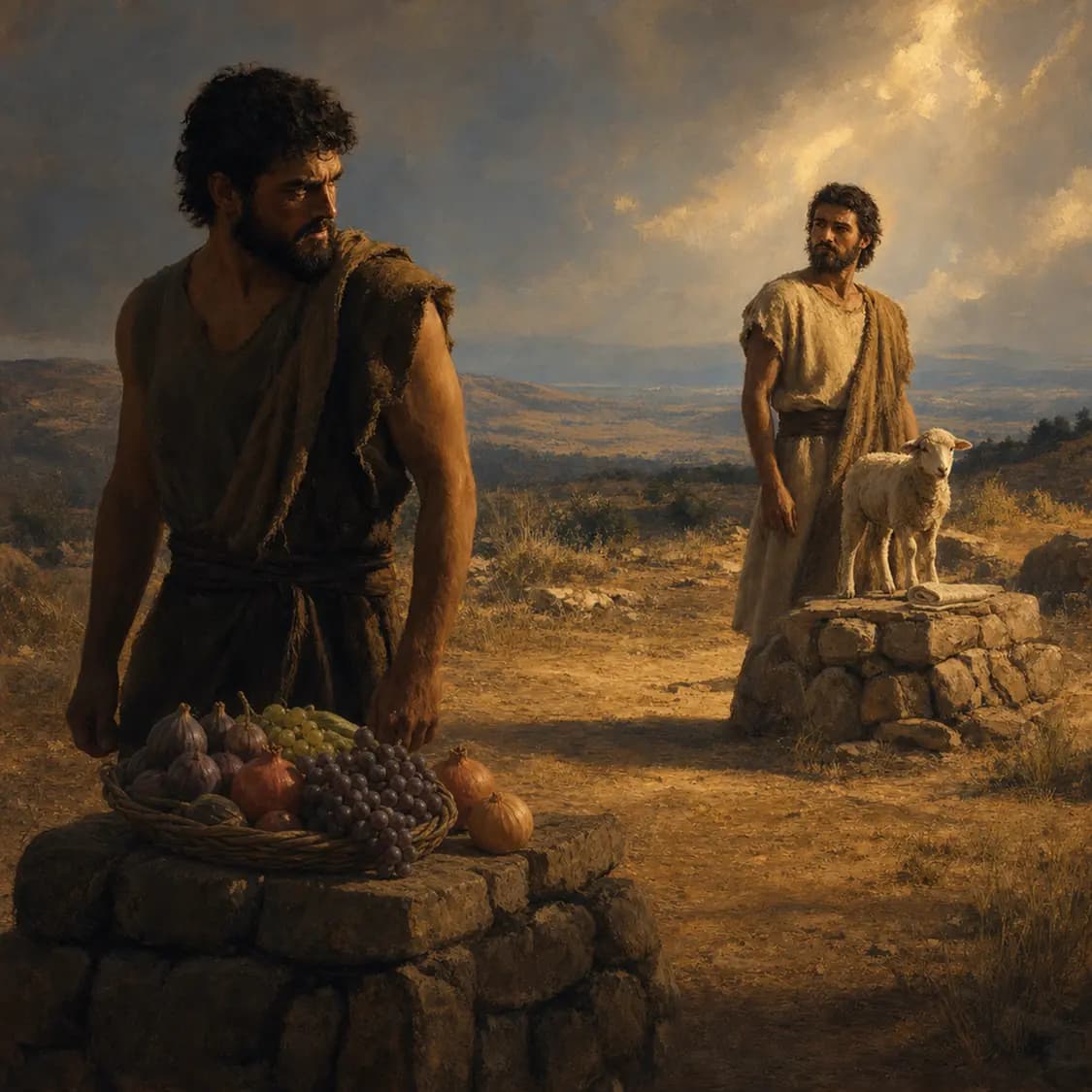
Cain and Abel
Cain farms the ground and Abel keeps flocks. Both bring offerings to God, but God favors Abel's offering and not Cain's. Cain becomes angry and downcast, and God warns him that sin is crouching at the door and must be resisted. Cain attacks Abel in the field and kills him. God confronts Cain, hears Abel's blood crying from the ground, and condemns Cain to restless wandering. Cain fears revenge, yet God marks and protects him from being killed, restraining a further cycle of violence.
Listen to the story4 min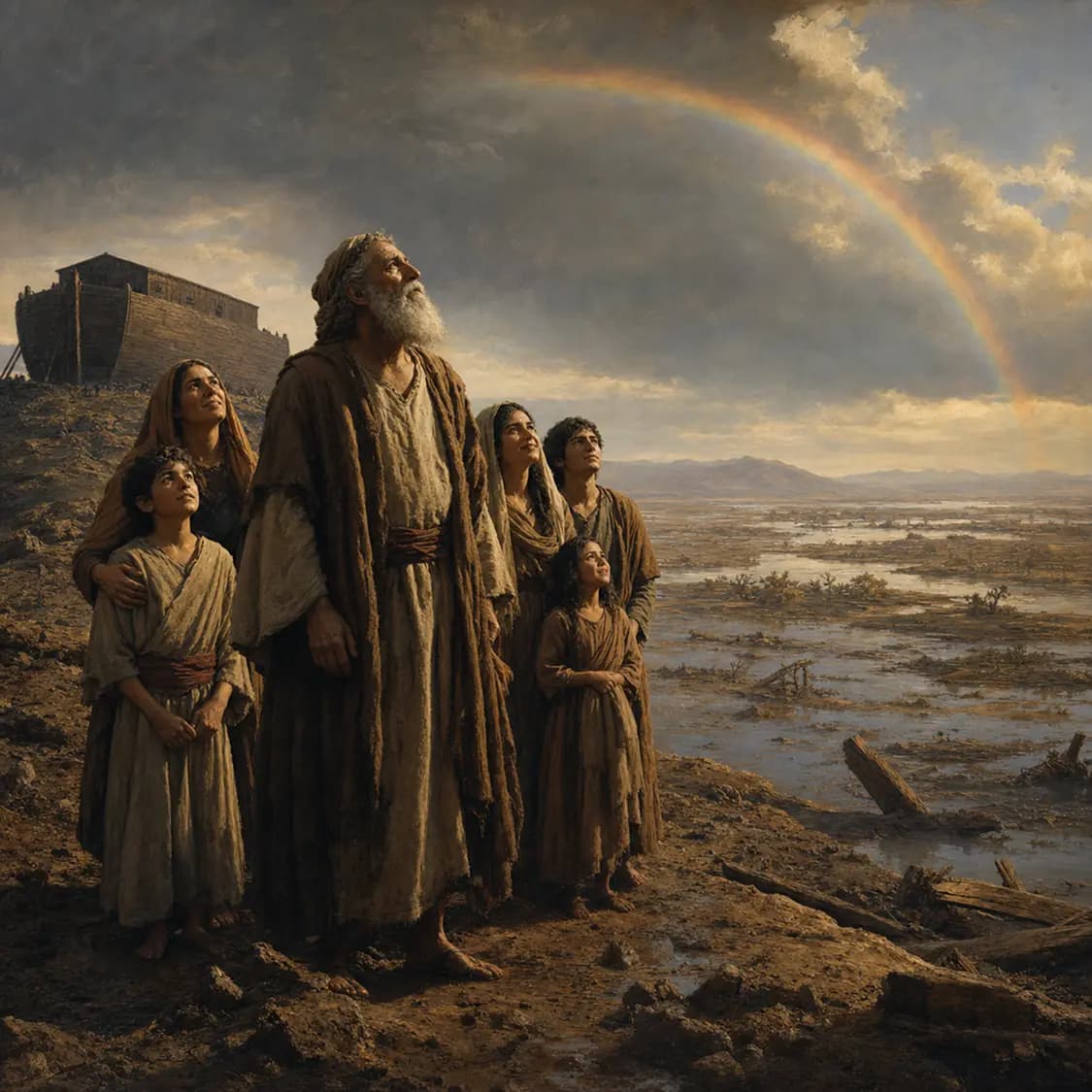
Noah, the Flood, and the Rainbow Covenant
God sees a world filled with wickedness and violence and announces judgment by a flood. Noah finds favor, walks with God, builds an ark, and enters it with his household and representatives of living creatures. The waters rise, cover the earth as narrated, and later recede. Noah leaves the ark, worships, and receives God's covenant with his descendants and every living creature. The rainbow becomes the sign of God's promise against another flood destroying all life, joining serious judgment with preservation and enduring faithfulness.
Listen to the story7 min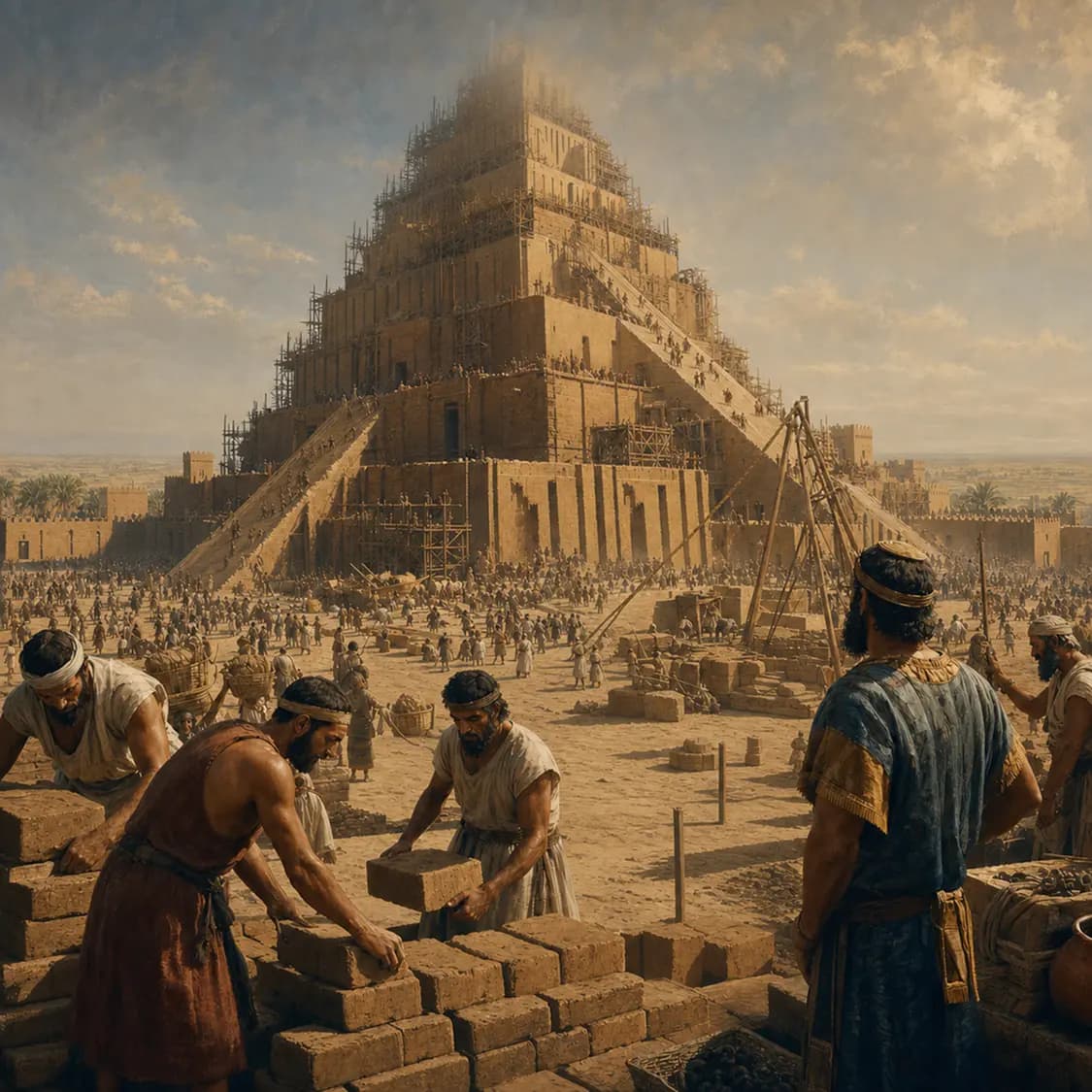
The Tower of Babel
The people of the earth share one language and settle in Shinar. They make bricks, build a city and tower, and say they want to make a name for themselves and avoid being scattered. The Lord sees the project and confuses their language so they cannot understand one another. The work stops, and the people scatter across the earth, reversing the plan that was meant to prevent scattering. The place is called Babel, a story about collective ambition, human limits, language, and community.
Listen to the story3 min
Promises, Families, and Faith
God Calls Abram and Makes a Covenant
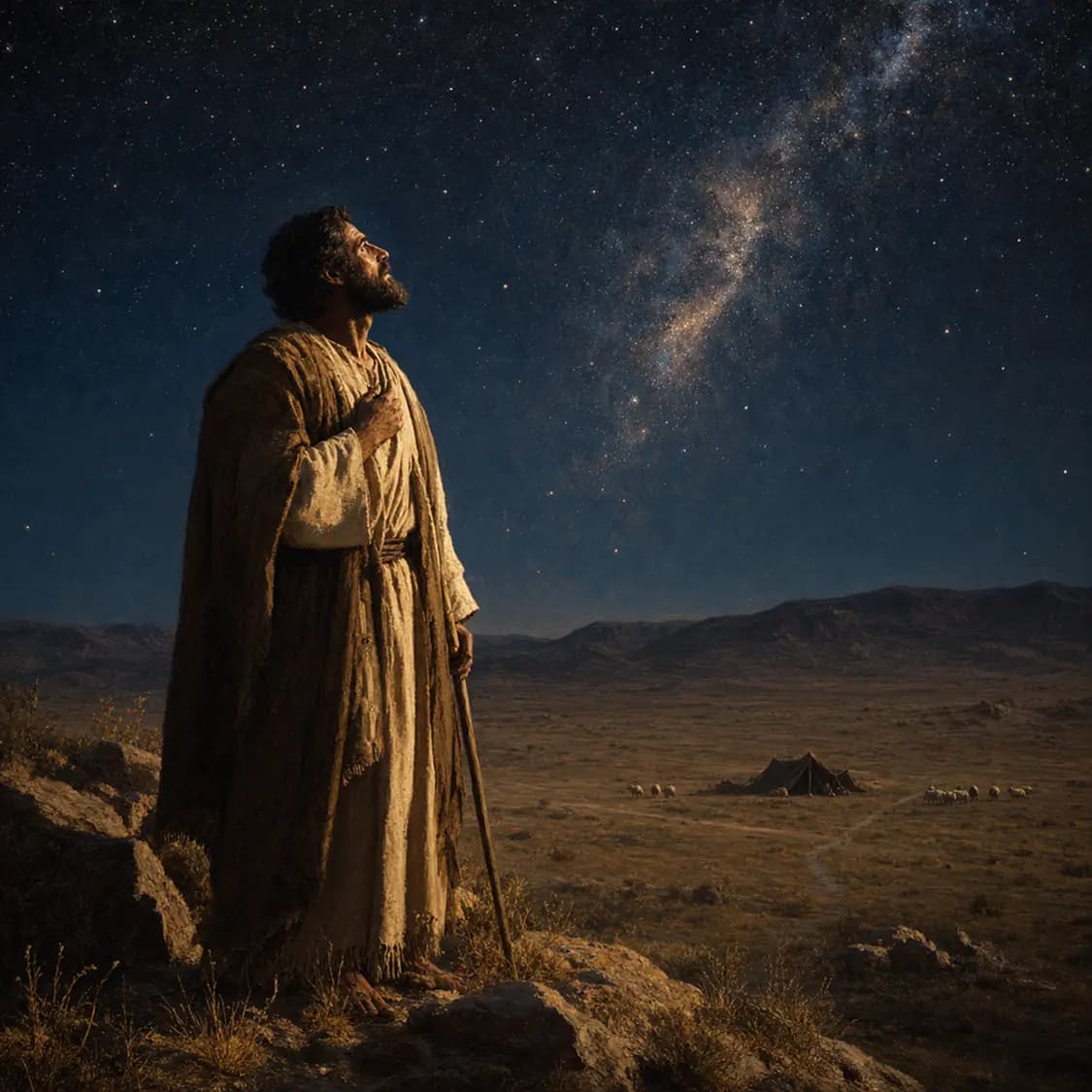
God calls Abram to leave Haran for a land he will show him and promises to make him a great nation and a blessing to every family of the earth. Abram travels with Sarai, Lot, and his household, builds altars, and calls on the Lord. Later, Abram asks how God's promise can be fulfilled while he remains childless. God promises an heir, counts Abram's belief as righteousness, and establishes a covenant concerning descendants, land, future oppression, and return. The story joins obedience with honest questions and an unseen future.
Listen to the story6 min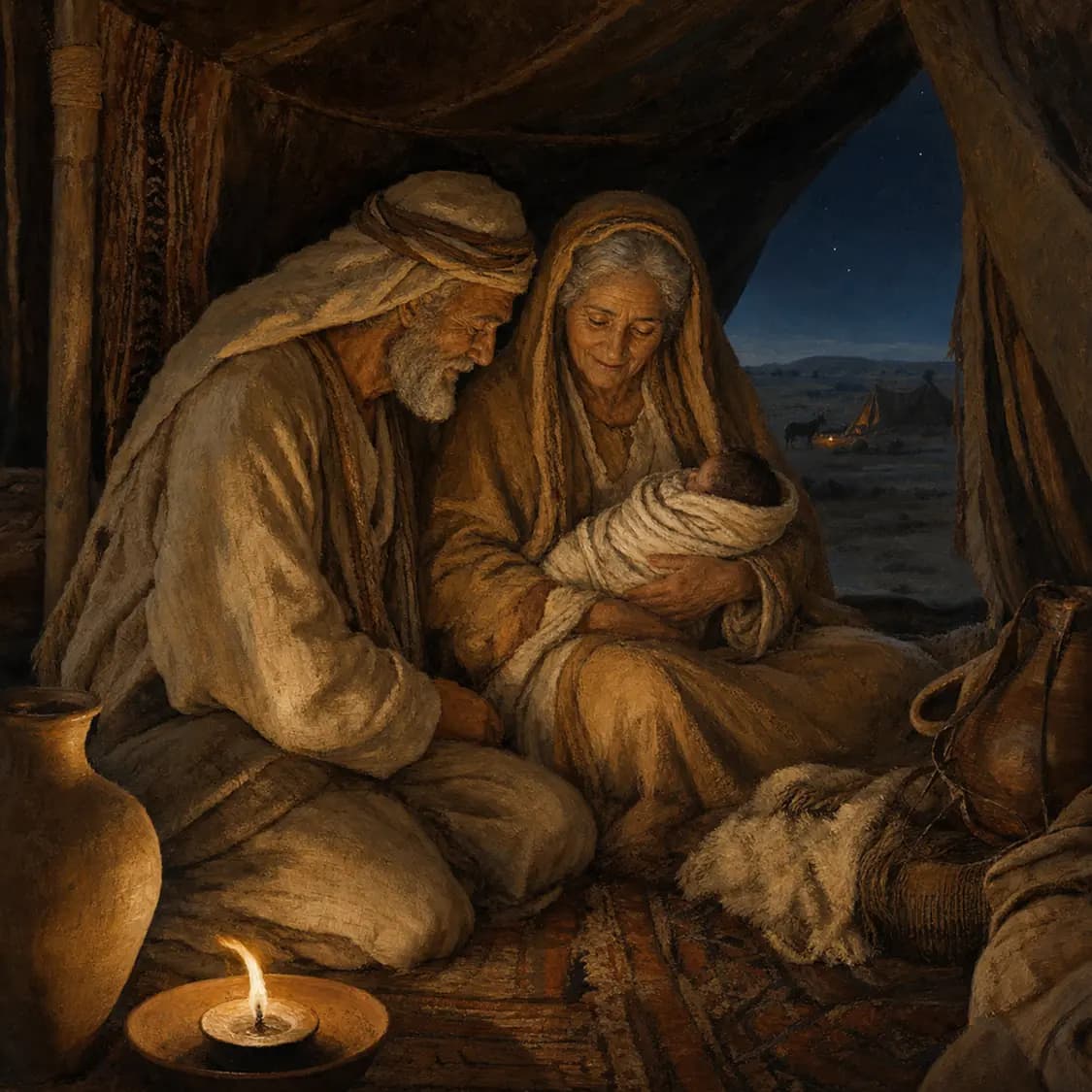
Abraham and Sarah’s Promised Son
God changes Abram and Sarai's names to Abraham and Sarah, confirms the covenant sign, and promises that Sarah will bear Isaac at an appointed time. Abraham and Sarah both laugh at the promise, and Sarah is afraid when the visitors question her laughter. God also promises blessing for Ishmael while saying the covenant line will continue through Isaac. Sarah gives birth, Abraham names the child Isaac, and he circumcises him as commanded. The birth turns a long-delayed promise into a joyful, concrete event without erasing the couple's earlier uncertainty.
Listen to the story6 min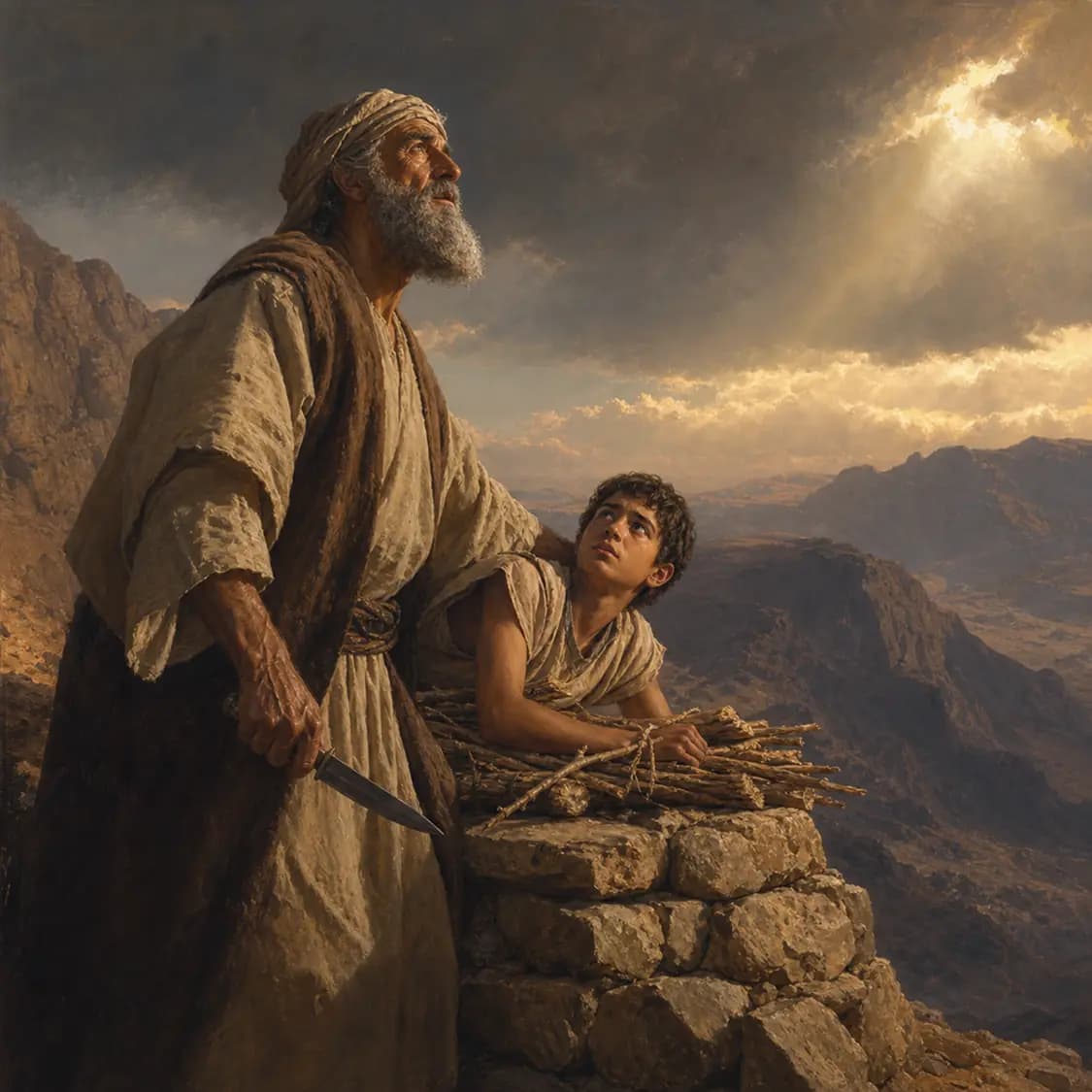
Abraham Offers Isaac
God tests Abraham by commanding him to take Isaac to Moriah and offer him as a burnt offering. Abraham travels with Isaac, builds the altar, binds his son, and reaches for the knife. The angel of the Lord stops him before Isaac is sacrificed. Abraham sees a ram caught in a thicket and offers it instead. The story then renews God's promises of descendants and blessing to the nations. Its decisive outcome is that Isaac lives and God provides the offering, while the narrative leaves wider theological interpretations beyond its stated events.
Listen to the story4 min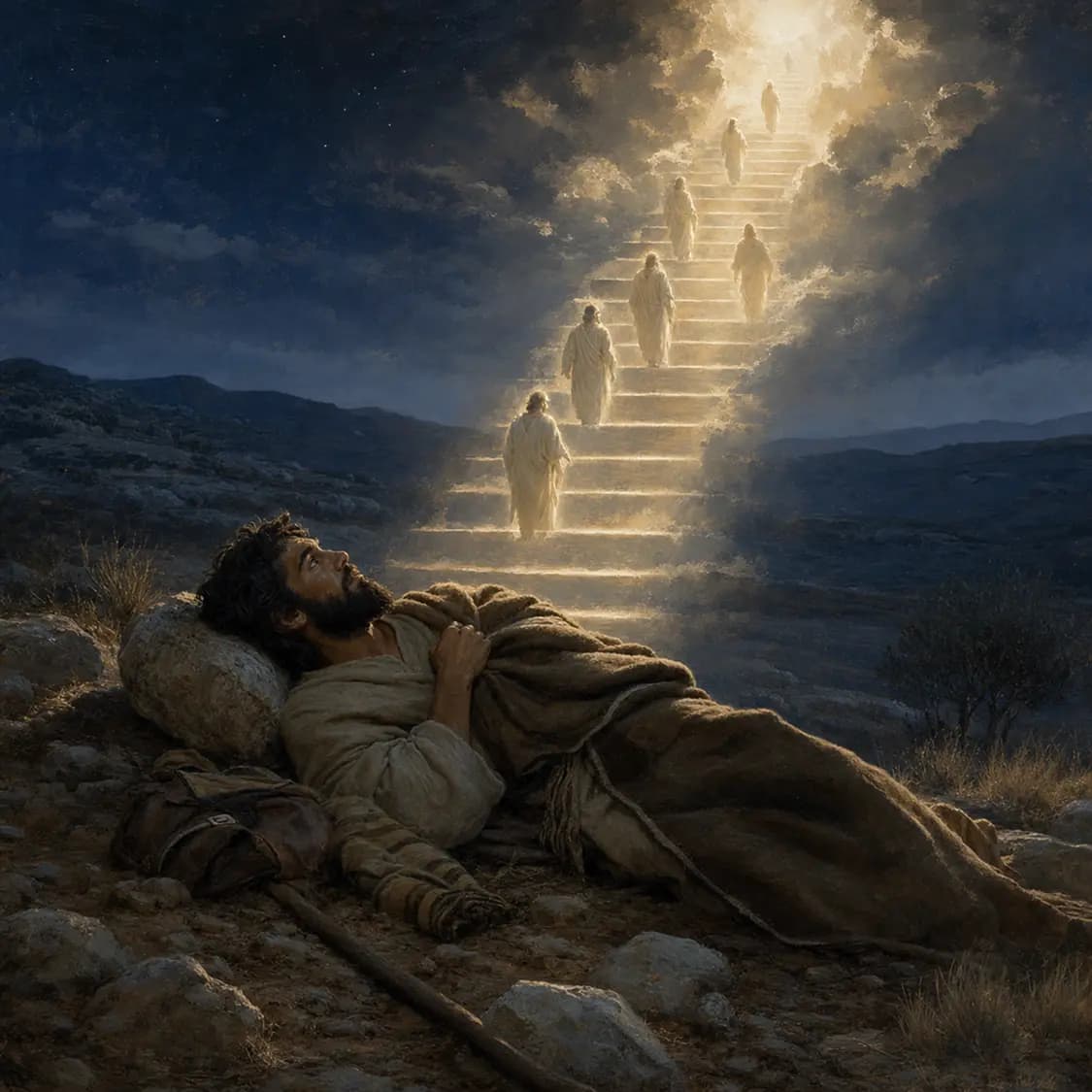
Jacob’s Deception and Dream at Bethel
Rebekah helps Jacob disguise himself as Esau so Isaac will give him the blessing intended for the elder son. Jacob receives the blessing, but Esau plans to kill him, so Jacob flees toward Haran. At Bethel, he sleeps and dreams of a stairway between earth and heaven with messengers moving on it. God promises land, descendants, presence, protection, and a return. Jacob wakes, recognizes the place as significant, names it Bethel, worships, and makes a vow. God's continuing promise does not make the deception harmless or approved.
Listen to the story7 min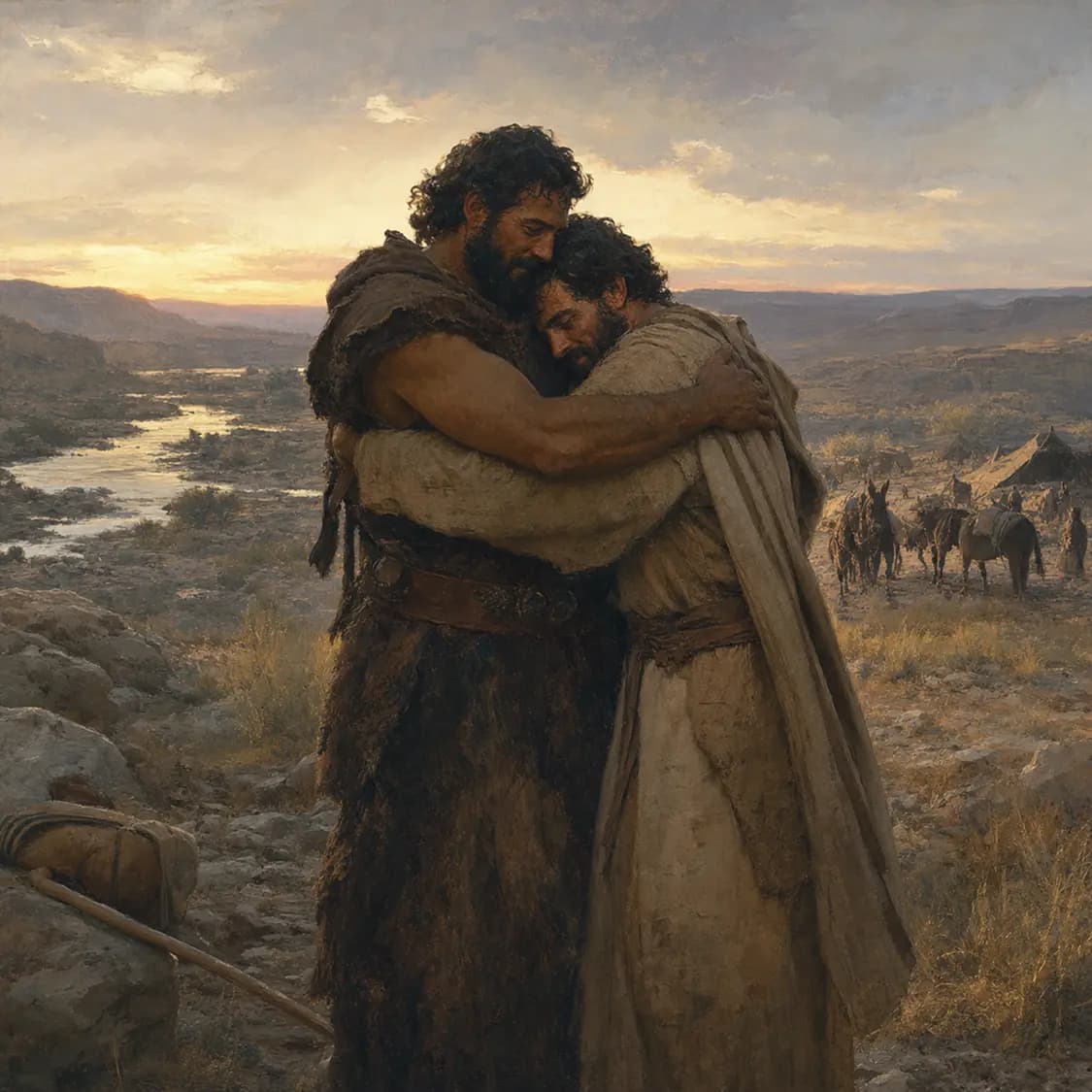
Jacob Wrestles with God and Reconciles with Esau
Jacob learns that Esau is approaching with four hundred men and asks God for rescue. He sends gifts ahead, moves his household across the Jabbok, and spends the night wrestling with a man until daybreak. The figure blesses him and gives him the name Israel, while Jacob leaves with an injured hip and a limp. At dawn, Jacob goes ahead of his family, bows before Esau, and meets an embrace instead of an attack. He recognizes his safety and restored relationship as grace and builds an altar to the God of Israel.
Listen to the story6 min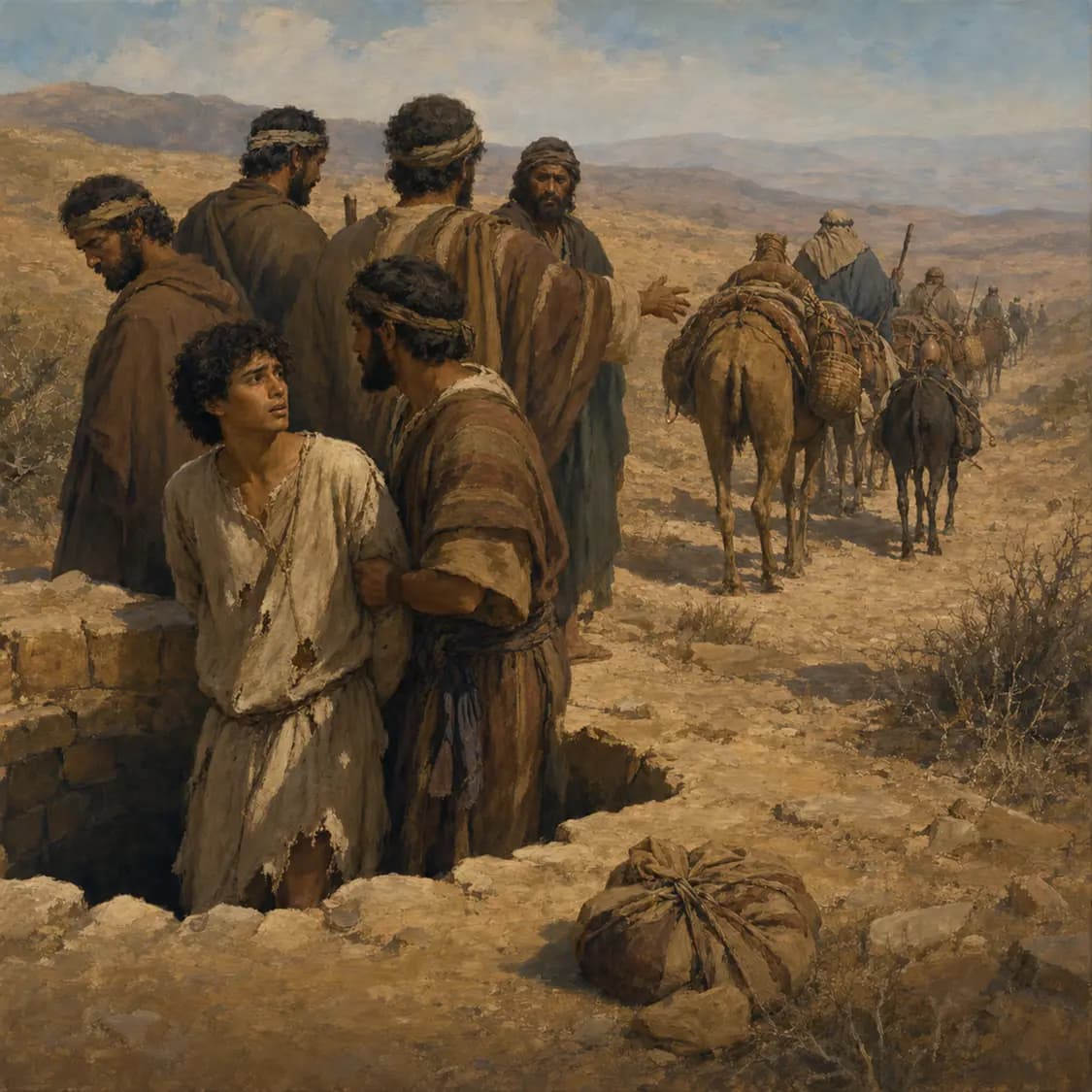
Joseph Is Sold by His Brothers
Jacob favors Joseph, and Joseph's dreams suggest that his family will bow to him. His brothers' jealousy grows when Jacob gives him a special robe. They strip Joseph, throw him into a dry pit, and sell him to traders for silver. Reuben hopes to rescue him, while Judah proposes selling him instead of killing him. The brothers dip Joseph's robe in blood and deceive Jacob into believing that a wild animal has killed his son. Joseph is taken to Egypt and sold to Potiphar, and the chapter ends with his dreams and future unresolved.
Listen to the story7 min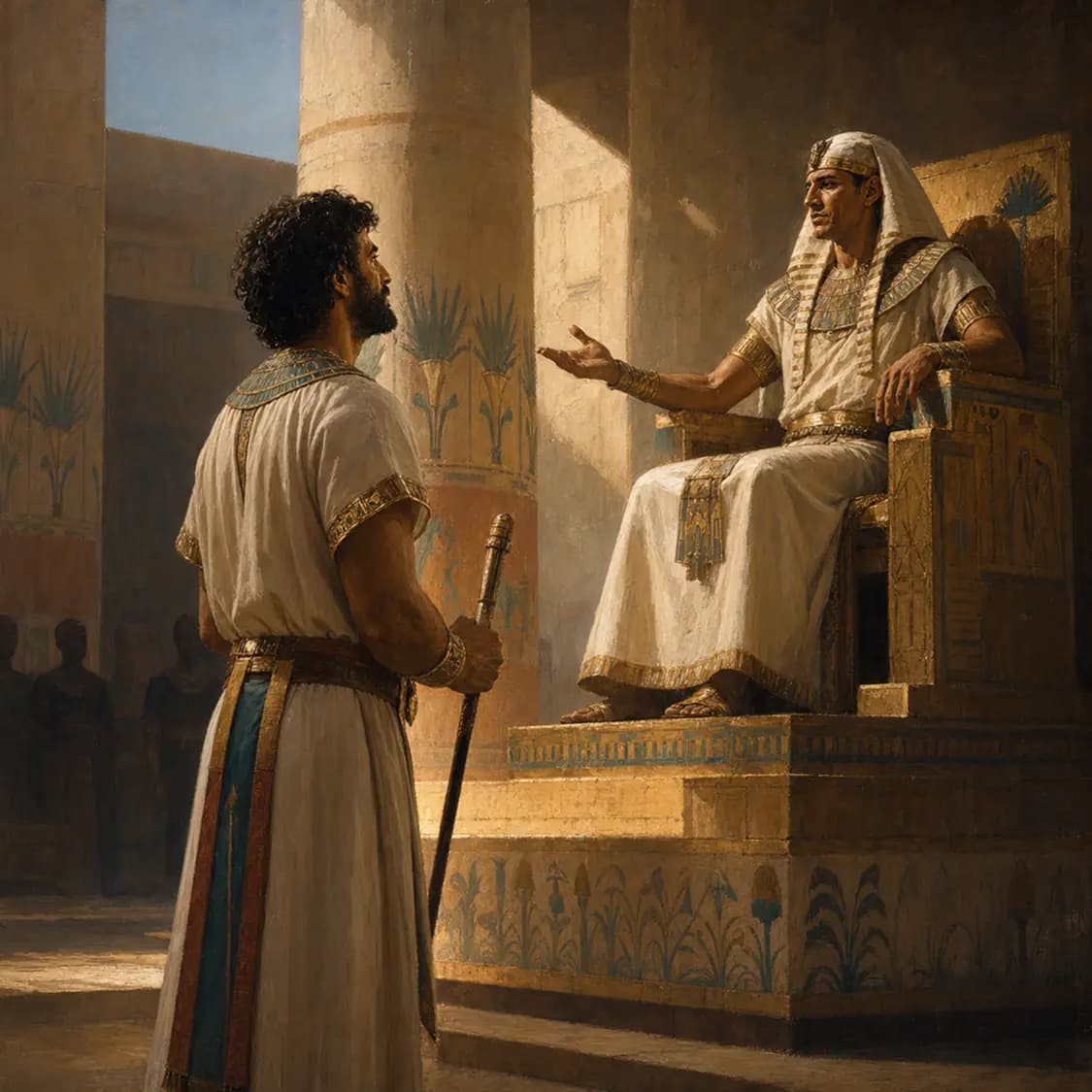
Joseph Rises from Prison to Power in Egypt
Joseph serves faithfully in Potiphar's household but is falsely accused after refusing Potiphar's wife's advances and is sent to prison. God remains with him there, and Joseph interprets dreams for royal officials. When Pharaoh has troubling dreams, Joseph says their interpretation belongs to God. He explains seven years of abundance followed by seven years of famine and proposes storing grain during the good years. Pharaoh appoints Joseph second in authority over Egypt to administer the plan. Joseph's integrity and wisdom become responsibility for preserving lives, not a universal promise of promotion after suffering.
Listen to the story6 min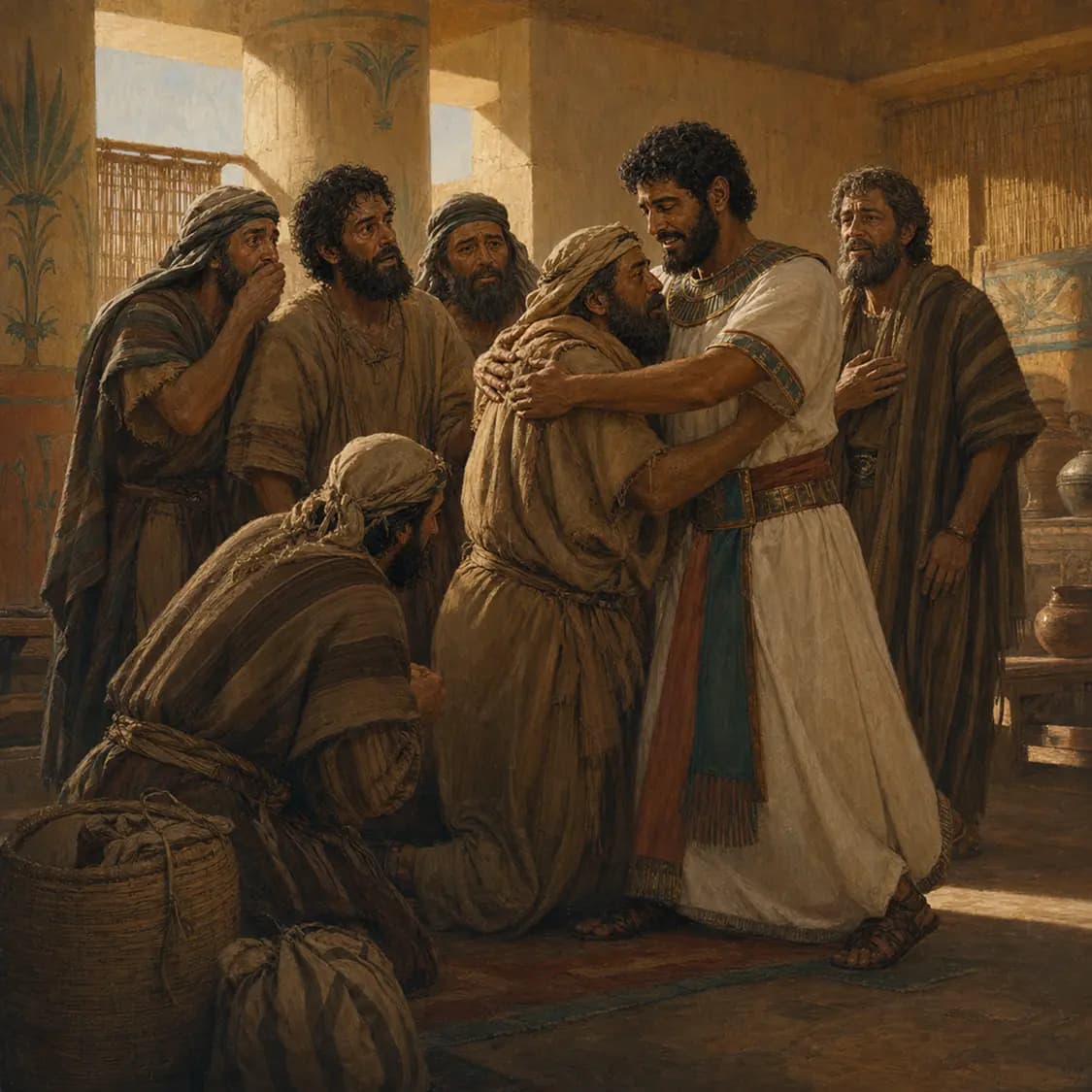
Joseph Reunites with His Brothers
Famine brings Joseph's brothers to Egypt for grain, though they do not recognize the official before them. Joseph tests their honesty and loyalty, requiring Benjamin's presence and watching how they respond. Judah finally offers himself as a servant so Benjamin can return safely to Jacob. Joseph reveals his identity, names the harm his brothers did, and forgives, comforts, and provides for them. He invites Jacob's household to Egypt, and God reassures Jacob on the journey. The reunion holds wrongdoing, changed action, forgiveness, preservation, and an uncertain future together.
Listen to the story7 min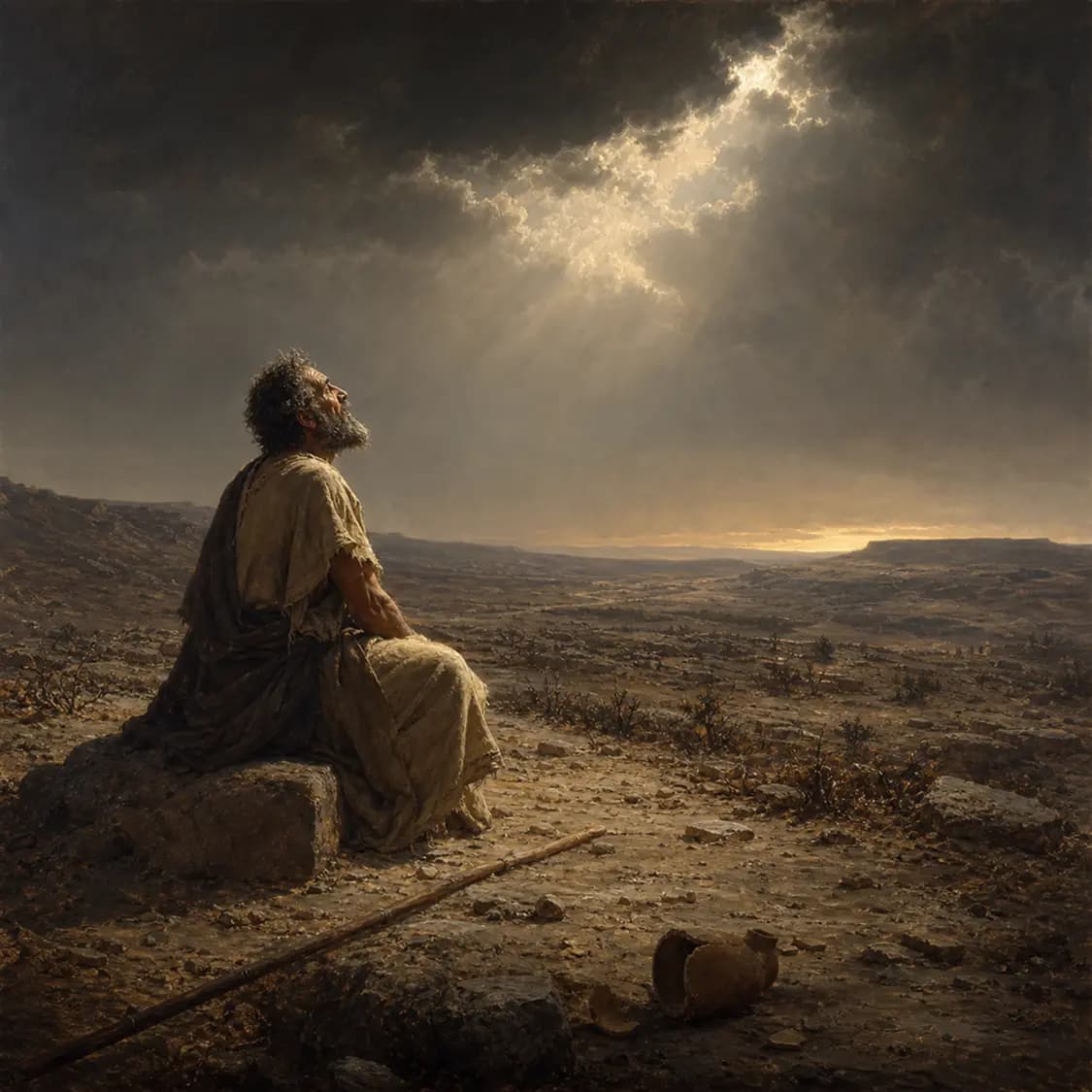
Job Seeks God in Suffering
Job is introduced as blameless and upright, yet he loses wealth, children, and health after a heavenly challenge he never sees. He grieves openly without cursing God and debates with friends who try to explain his suffering. God answers from a whirlwind with questions about creation, wisdom, power, and care. Job confesses limited understanding and prays for his friends after God corrects their claims. The story ends with restoration and blessing, but that gracious ending is not given as the reason for Job's losses or proof that suffering reveals personal guilt.
Listen to the story8 min
Freedom and Covenant
Baby Moses Is Rescued
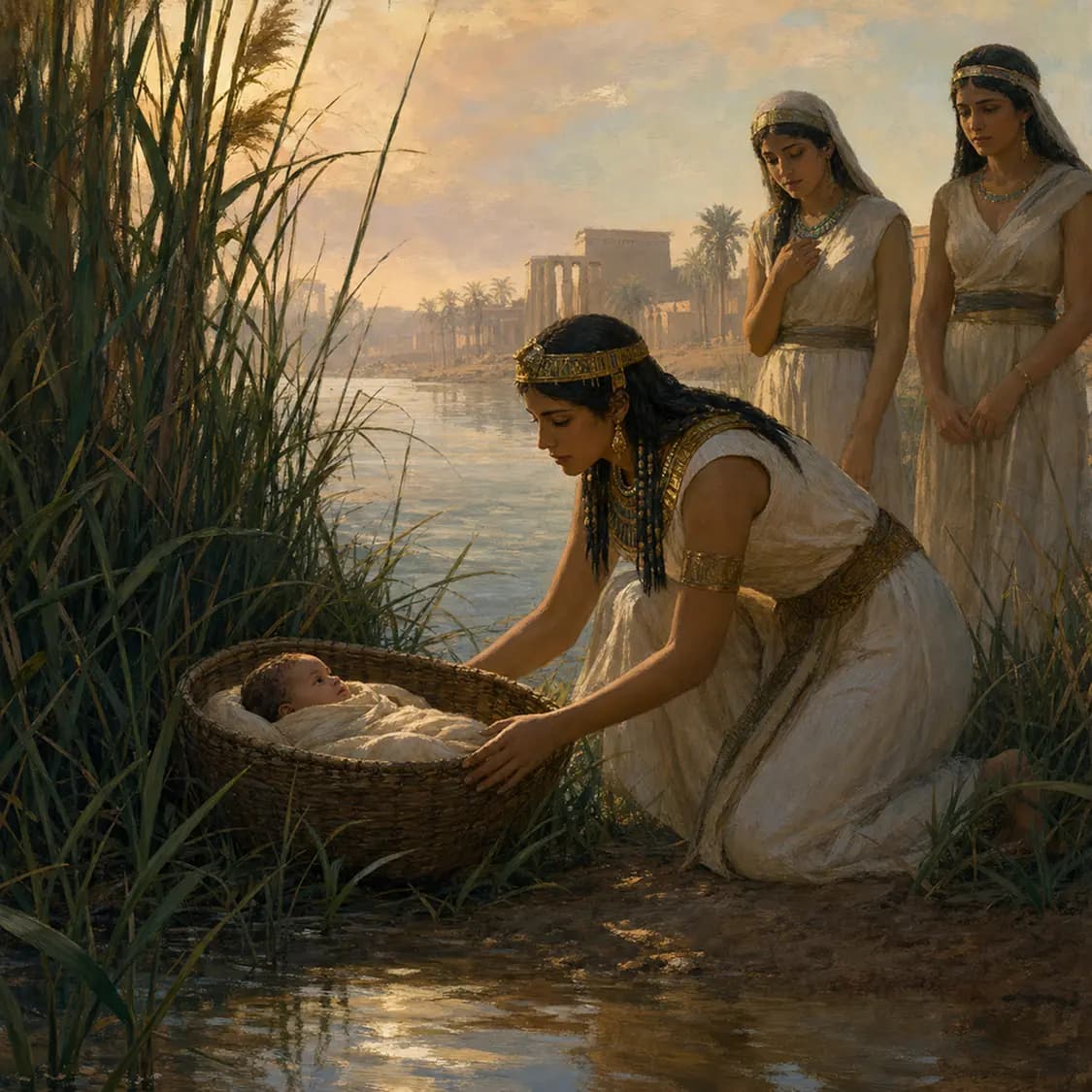
A new Pharaoh enslaves Israel and orders Hebrew newborn boys killed. The midwives Shiphrah and Puah fear God and refuse to obey the order. Moses' mother hides him, then places him in a papyrus basket among the reeds. Pharaoh's daughter finds and adopts him, while Moses' sister helps arrange for his mother to nurse him. As an adult, Moses kills an Egyptian who is beating a Hebrew and flees to Midian, where he marries Zipporah. The story ends with God hearing Israel's groaning under slavery and remembering his covenant.
Listen to the story6 min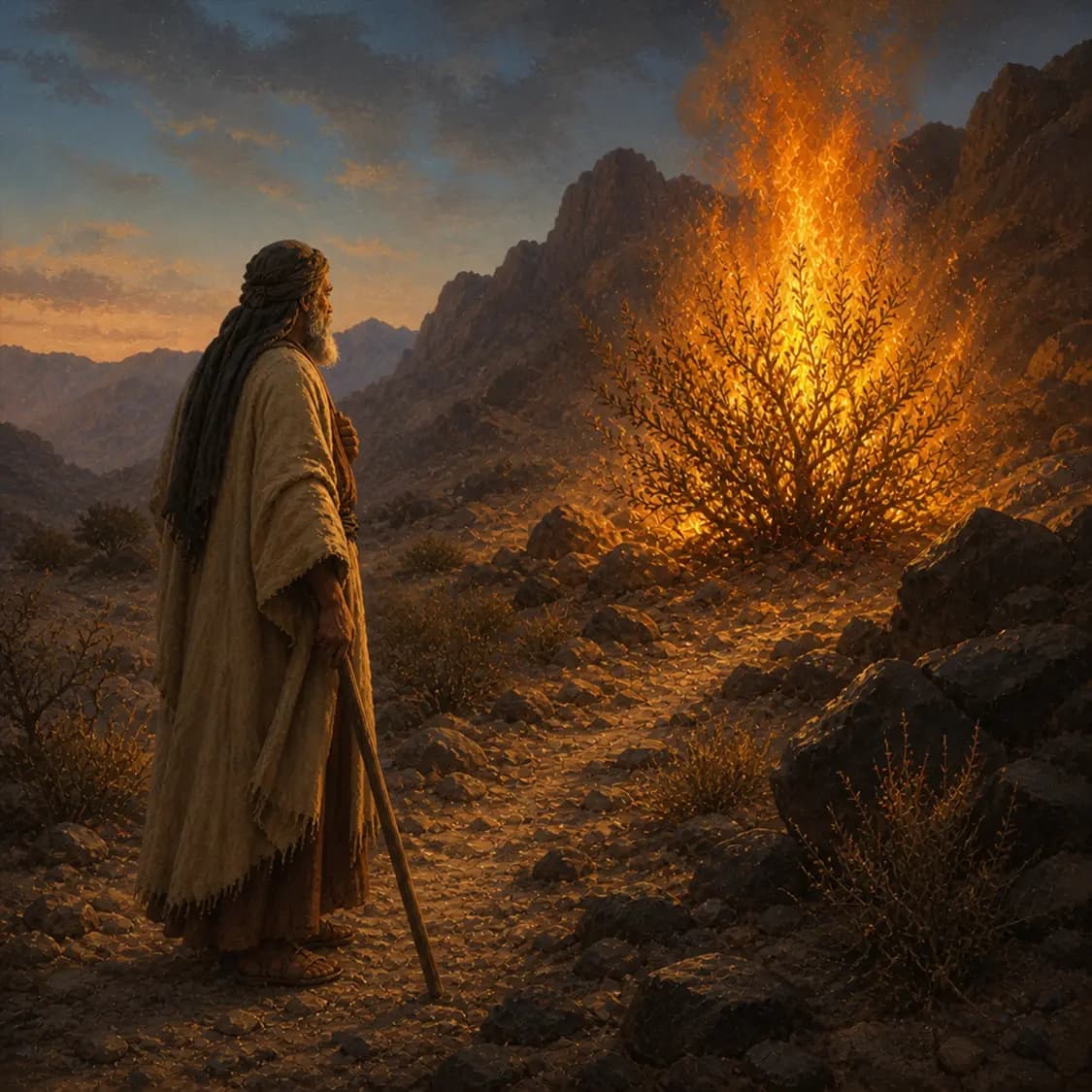
The Burning Bush
While Moses tends Jethro's flock at Horeb, he sees a bush burning without being consumed. God calls from the bush, identifies himself as the God of Israel's ancestors, and tells Moses to remove his sandals because the ground is holy. God has seen, heard, and knows Israel's suffering, so he sends Moses to confront Pharaoh. Moses hesitates and asks questions about his authority, God's name, and his ability to speak. God promises his presence, gives signs, and provides Aaron as Moses' spokesman, showing that the call rests on God's identity and help.
Listen to the story7 min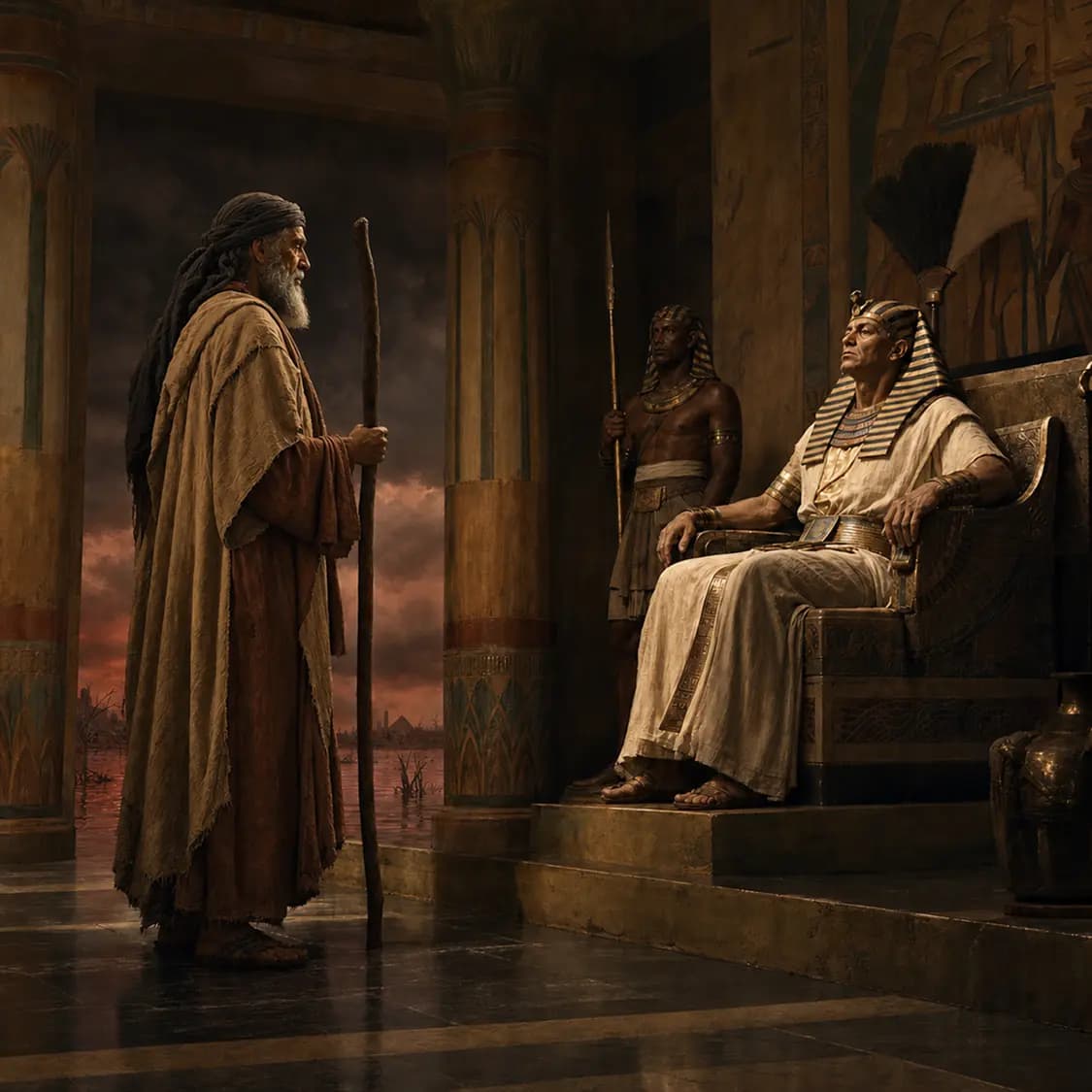
Moses Confronts Pharaoh
Moses and Aaron ask Pharaoh to release Israel for worship, but Pharaoh responds by increasing the people's labor. He repeatedly refuses as God sends signs and plagues affecting Egypt's river, animals, people, crops, and light. The account says that Goshen is spared in these judgments, while Pharaoh alternates between regret and refusal. Moses will not accept partial permission when God commands the whole community to go and worship. The story ends with darkness over Egypt and no release yet. It stops before the final plague and sea crossing, so it is not the complete Exodus account.
Listen to the story8 min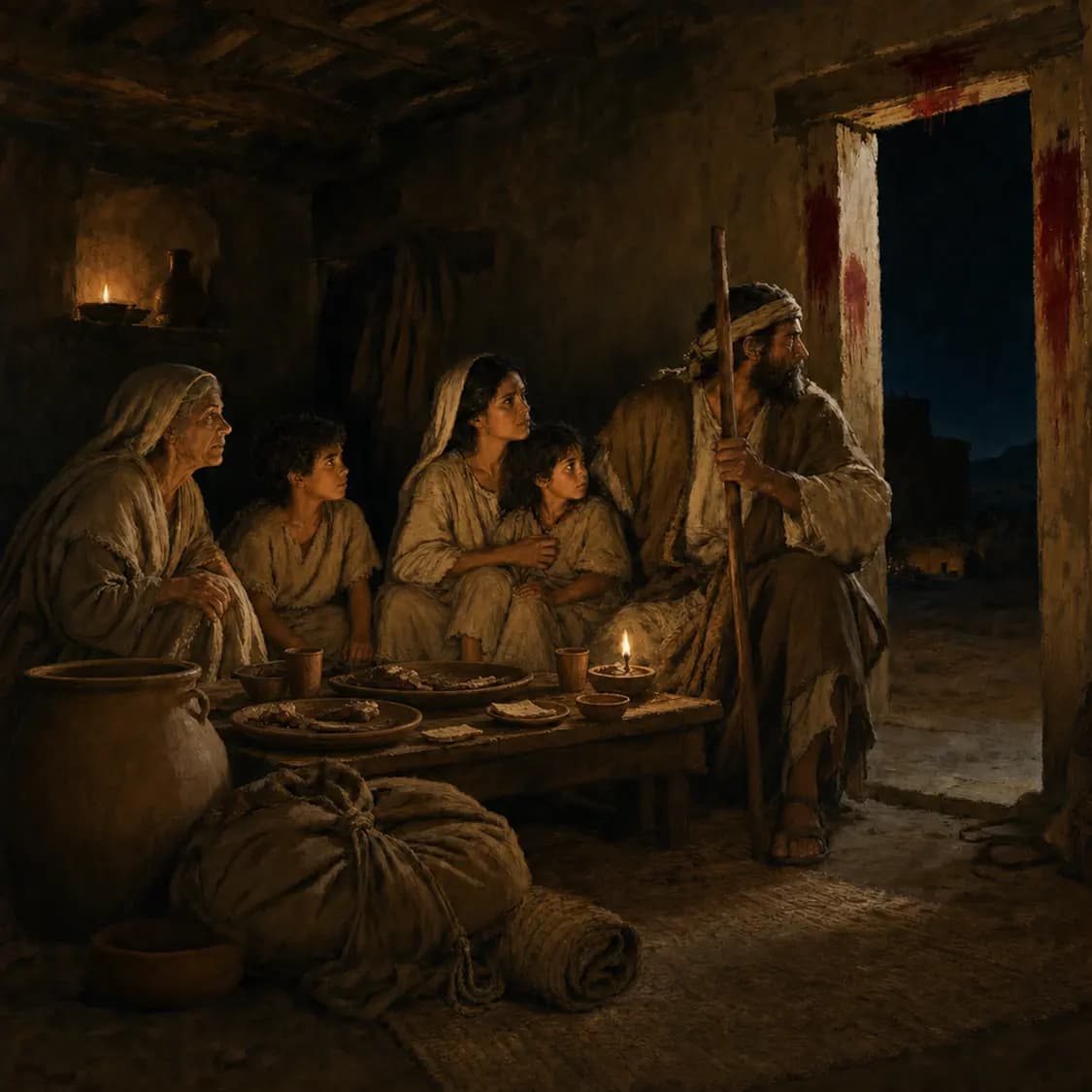
The First Passover
God announces a final plague on Egypt and gives Israel instructions for the first Passover. Each household selects an unblemished young animal, applies its blood to the doorway, remains inside, and eats the roasted meal with unleavened bread. Firstborns die throughout Egypt, bringing grief and leading Pharaoh to release Israel. The people leave in haste, and God establishes the feast as a recurring remembrance. Passover therefore holds judgment and deliverance together, with obedience before the outcome and household storytelling that will teach children what the Lord has done.
Listen to the story6 min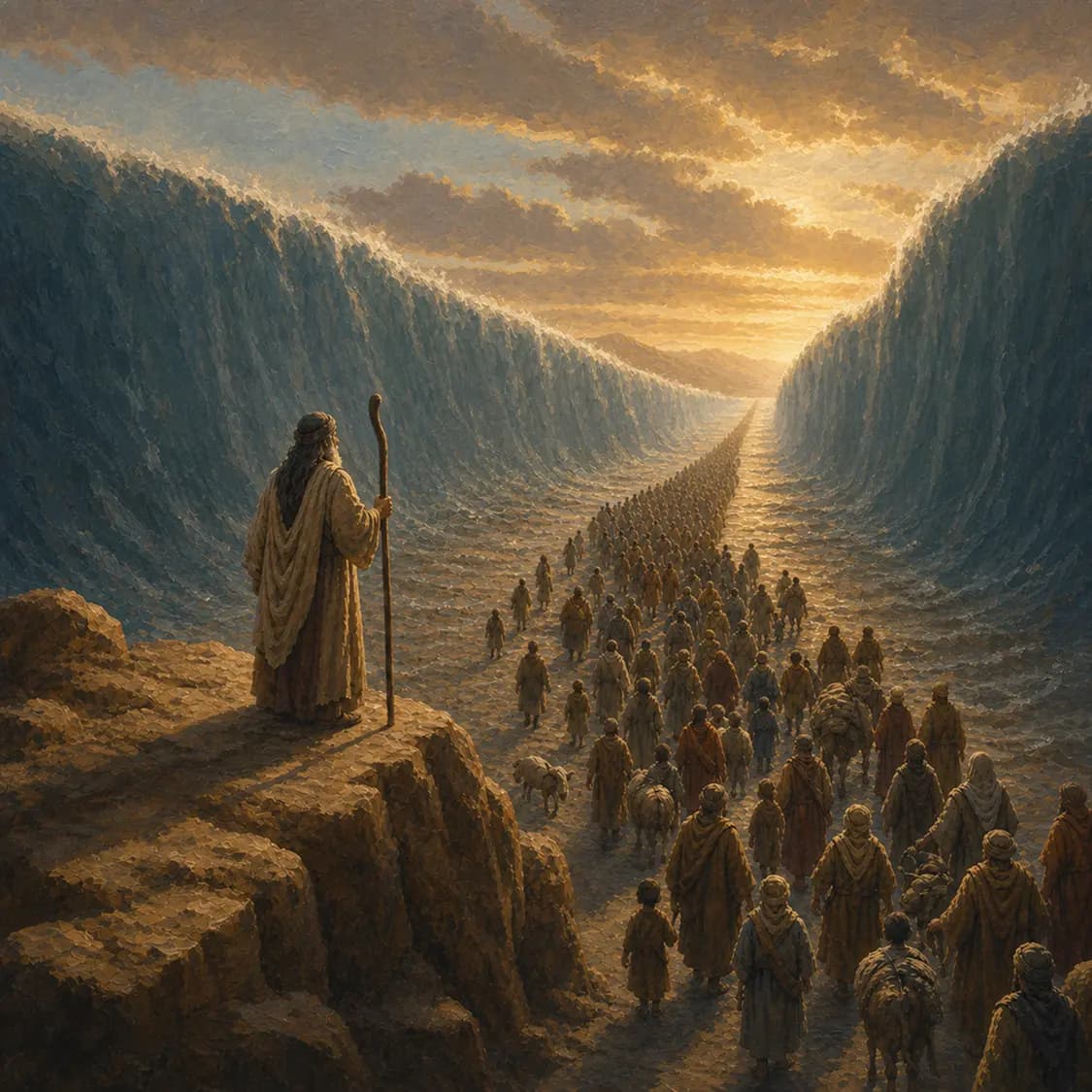
Crossing the Red Sea
God leads Israel toward the Red Sea by a pillar of cloud and fire, but Pharaoh's army follows. Fear spreads as the people see the sea ahead and the army behind them. At God's command Moses stretches out his staff, the waters divide, and Israel crosses on dry ground. When the Egyptians pursue, the waters return over the forces, while Israel remains safe. Moses and Miriam lead the people in a song of awe, trust, and praise. The account presents deliverance as God's work, with Israel moving when commanded and worshiping after rescue.
Listen to the story7 min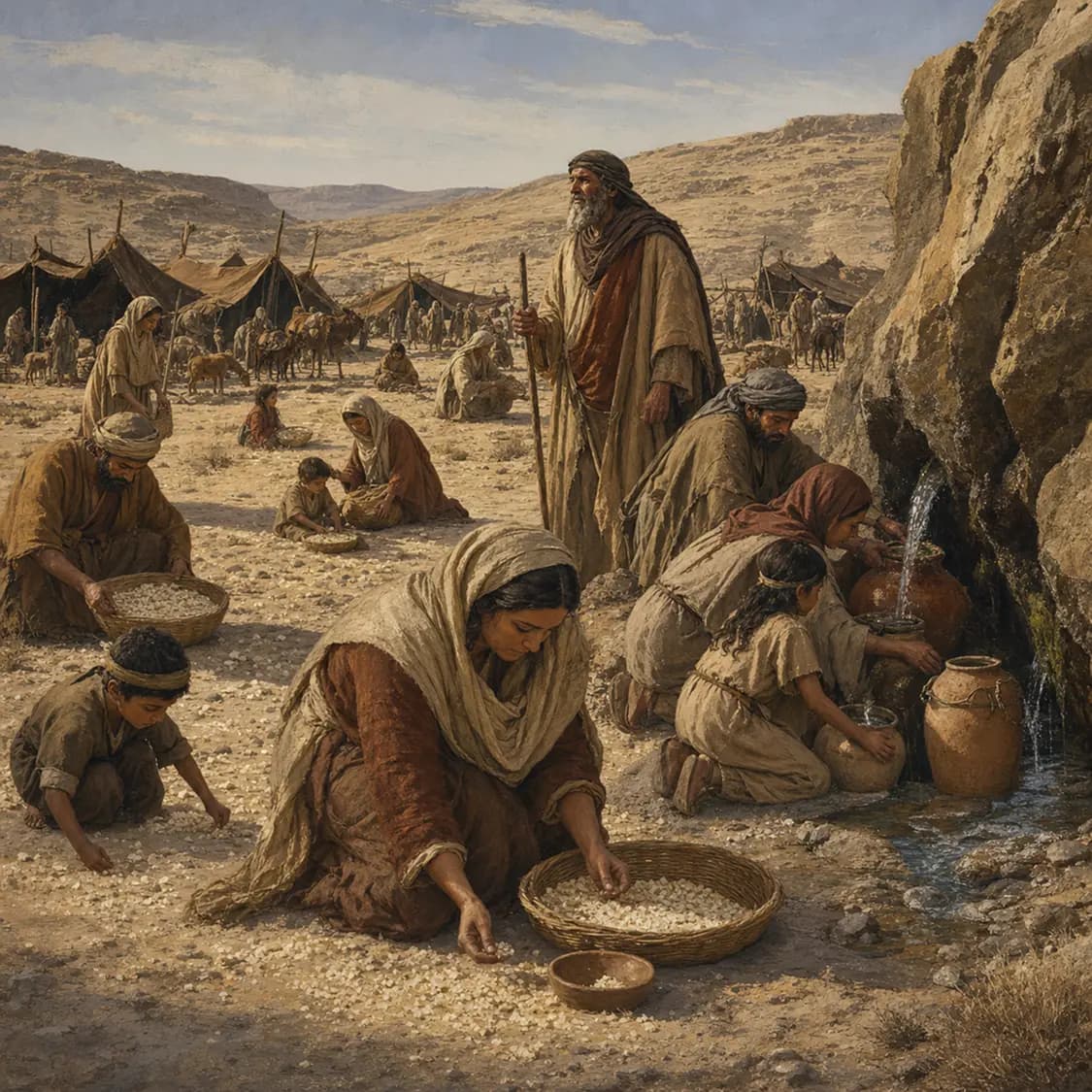
God Provides Food and Water in the Wilderness
Israel travels through the wilderness and finds bitter water at Marah, where God provides drinkable water. Later, hunger leads the people to complain in the wilderness of Sin, and God sends quail and manna with instructions for daily gathering and Sabbath rest. A sample of manna is kept for future generations. At Rephidim, the people thirst again, Moses cries out, and God brings water from a rock after Moses strikes it as commanded. The story presents real hunger and thirst alongside divine provision, testing, complaint, trust, and a daily dependence that includes rest.
Listen to the story7 min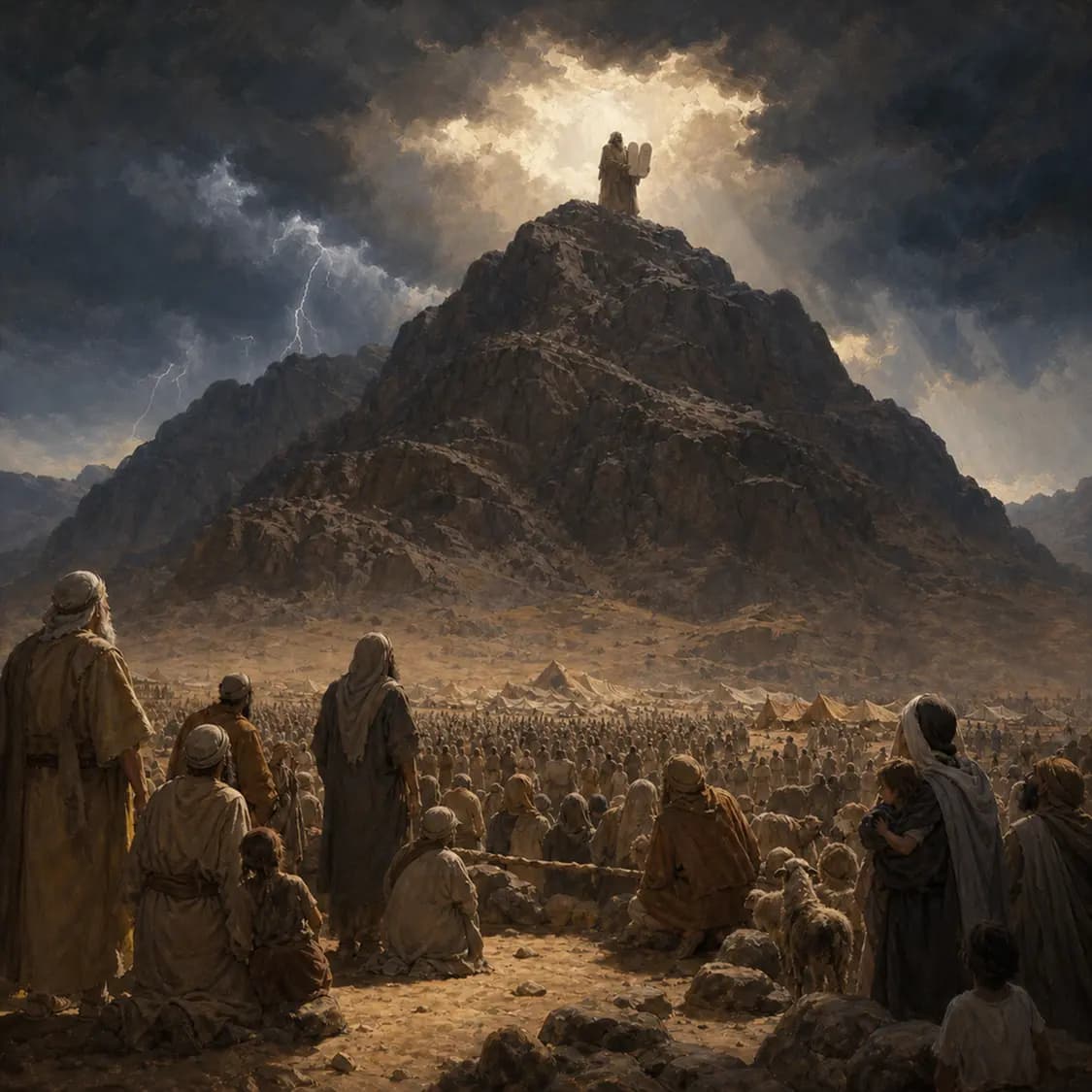
The Ten Commandments at Mount Sinai
At Mount Sinai, God forms Israel as a covenant people and prepares them to approach his presence. He gives commands about exclusive worship, his name, Sabbath, family honor, life, marriage, property, truth, and coveting. Moses records the covenant words, sacrifices are offered, blood is applied, and the people affirm their obedience. Boundaries and reverence remain around the mountain, while Moses enters the cloud for forty days. The Ten Commandments belong within this larger covenant ceremony: they address worship, communal life, and inward desire as Israel responds to the God who has already brought them from slavery.
Listen to the story7 min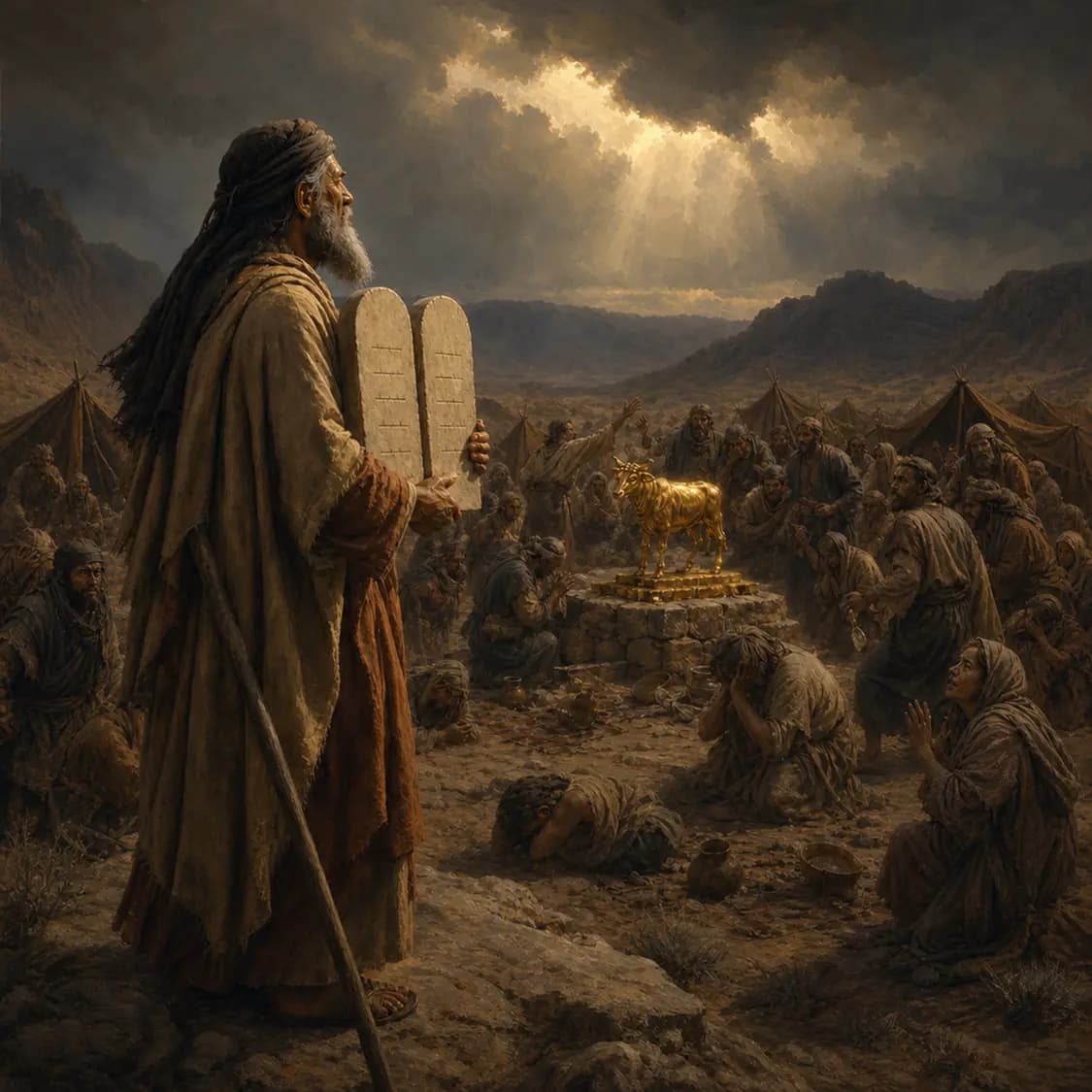
The Golden Calf and the Renewed Covenant
While Moses remains on Sinai, Israel asks Aaron to make gods and worships a golden calf, crediting it with the rescue from Egypt. Moses descends, breaks the tablets, and confronts the camp. He intercedes for the people, pleads for God's presence, and oversees judgment. God reveals mercy and justice, gives Moses new tablets, and renews the covenant. When Moses returns, his face shines and he wears a veil. The story holds idolatry, serious covenant breach, intercession, judgment, mercy, and renewed presence together without sanitizing the deaths, plague, or obligations described.
Listen to the story8 min
Toward the Promised Land
The Twelve Spies and Israel’s Fear
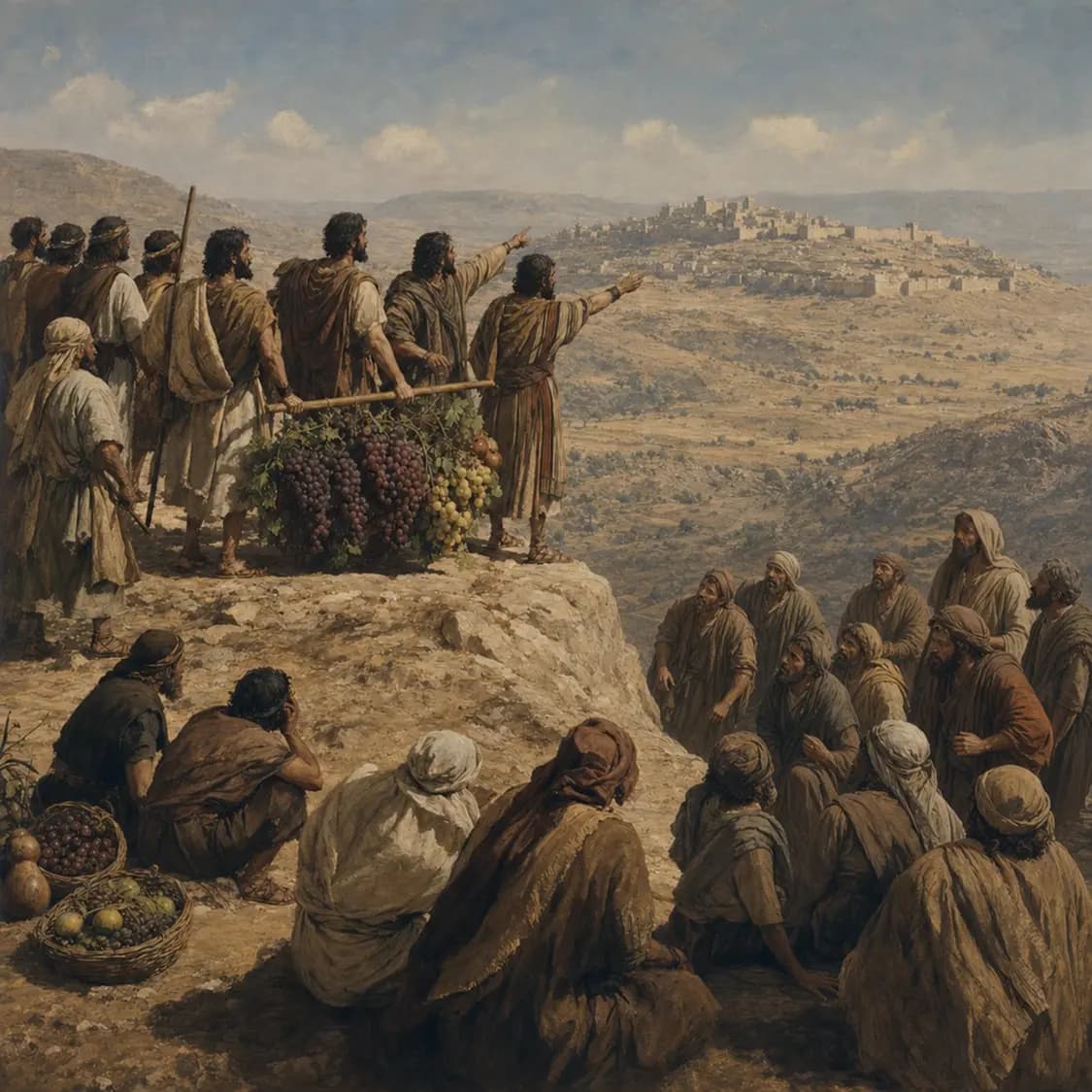
Moses sends twelve scouts into Canaan, and they agree that the land is fertile while disagreeing about whether Israel can overcome its fortified peoples. Joshua and Caleb trust God's promise, but the community gives way to fear and rebellion. The people threaten their leaders, and God announces a wilderness consequence. Moses intercedes, God pardons the people, and the generation is still told to wander for forty years. When some Israelites later attack without God's command, they are defeated. The story distinguishes faith from denying real obstacles and pardon from the removal of every consequence.
Listen to the story8 min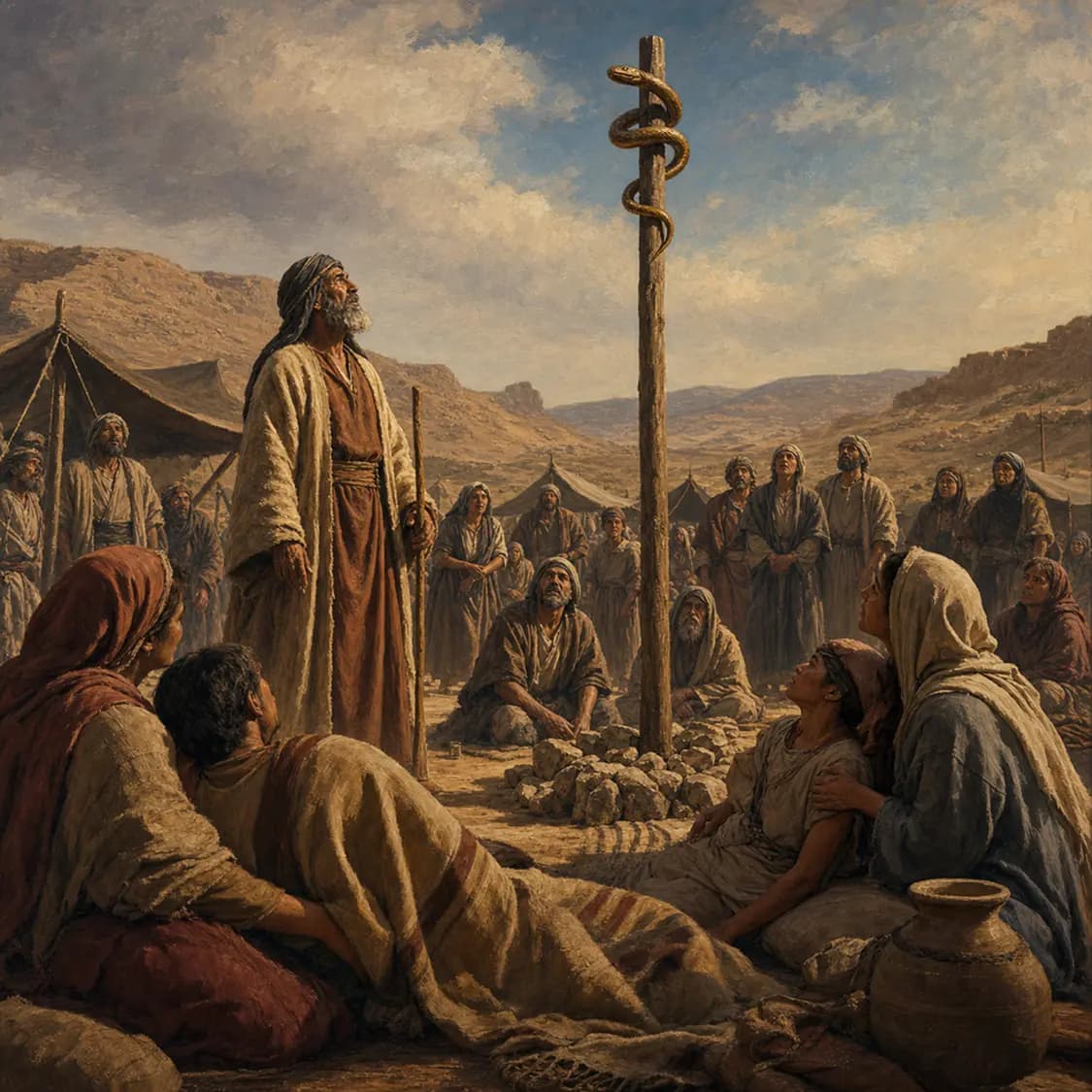
The Bronze Serpent
Discouraged by the difficult route around Edom, the Israelites complain against God and Moses and question the food and water they have received. Venomous snakes bite many people, and deaths follow. The people confess that they have sinned, and Moses prays for them. God instructs Moses to make a bronze serpent and raise it on a pole. Those who are bitten and look at the raised serpent live. The account presents a specific wilderness sign after confession and intercession; it does not describe a medical mechanism or establish a general healing promise.
Listen to the story3 min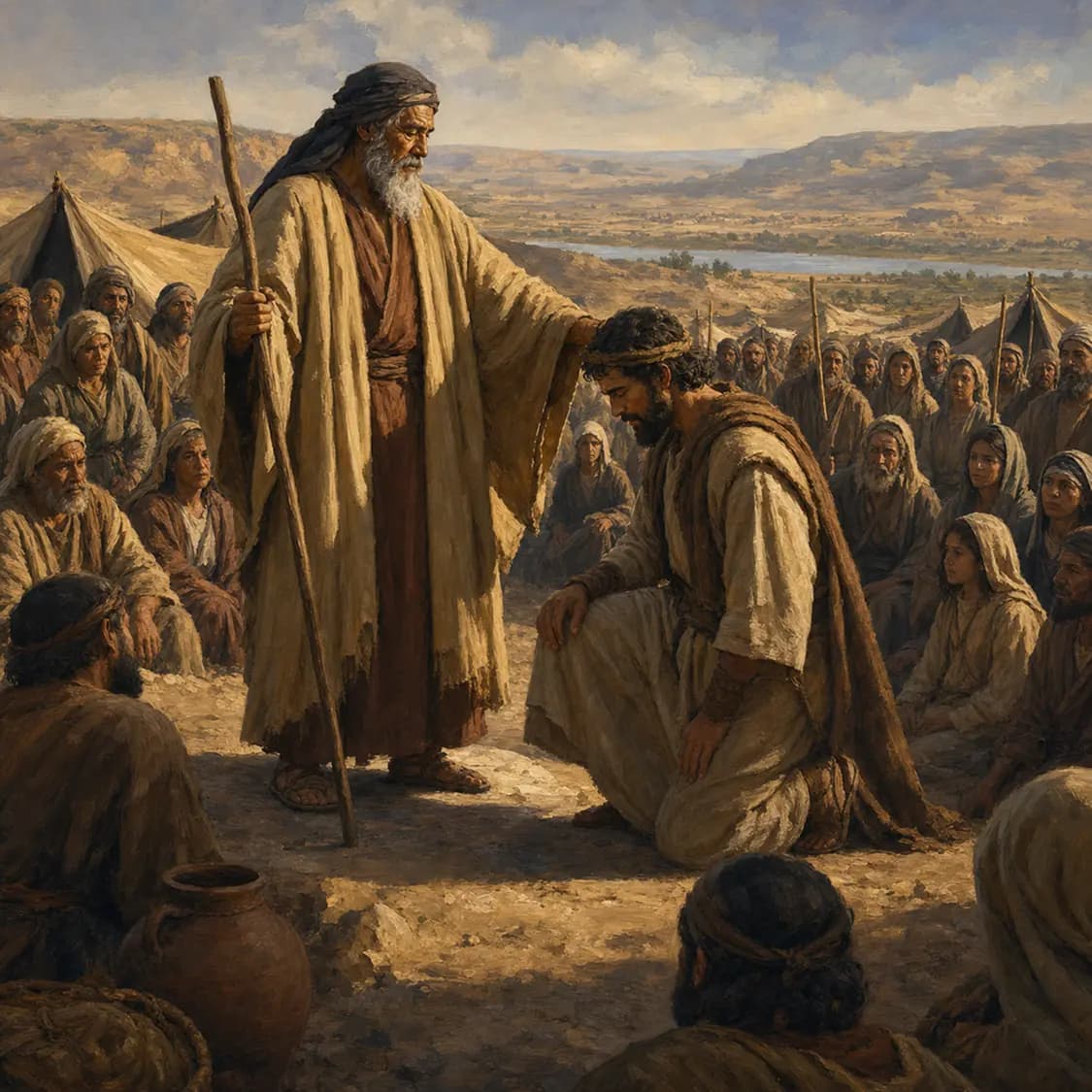
Moses Says Farewell and Commissions Joshua
On the plains of Moab, Moses tells Israel that he will not cross the Jordan and publicly commissions Joshua. He urges the people and Joshua to be strong because God will go before them and will not abandon them. Moses records the law, commands its regular public reading, receives a warning about Israel's future unfaithfulness, and writes a song. From Mount Nebo he sees the promised land, then dies, and Joshua succeeds him. The story presents leadership transition as a continuation of God's presence, promise, teaching, and responsibility across generations.
Listen to the story7 min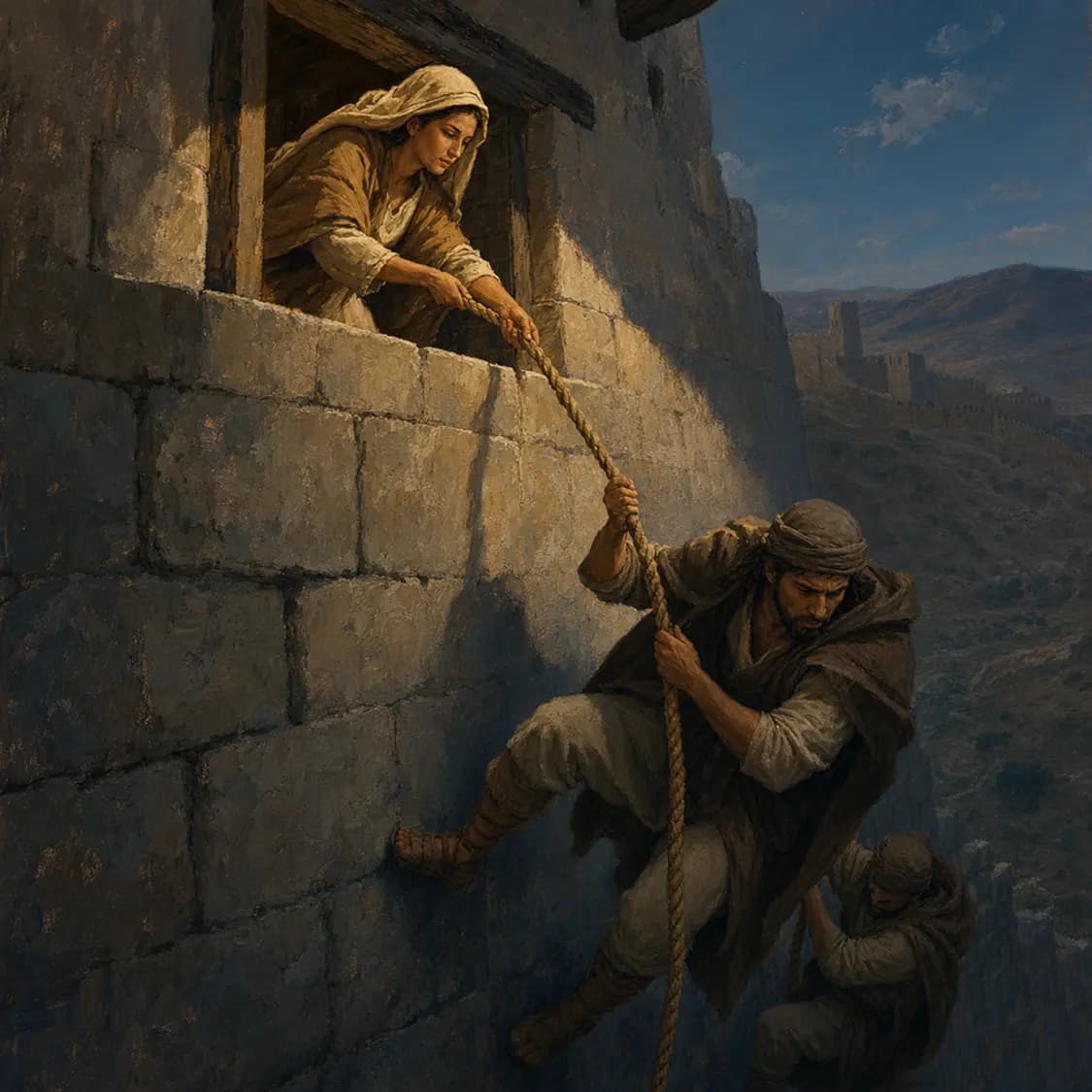
Rahab Helps the Spies
Joshua sends two spies to Jericho, where Rahab hides them from the king's messengers and misdirects the search. She tells the spies that the people have heard what the LORD did for Israel and confesses that he rules heaven and earth. Rahab asks for protection for her household, and the spies swear an oath tied to concrete conditions: keep the family inside her house and mark it with a scarlet cord. The spies escape, return to Joshua, and report that the land is being given to Israel. Courage, faith under threat, and oath-bound protection shape the encounter.
Listen to the story6 min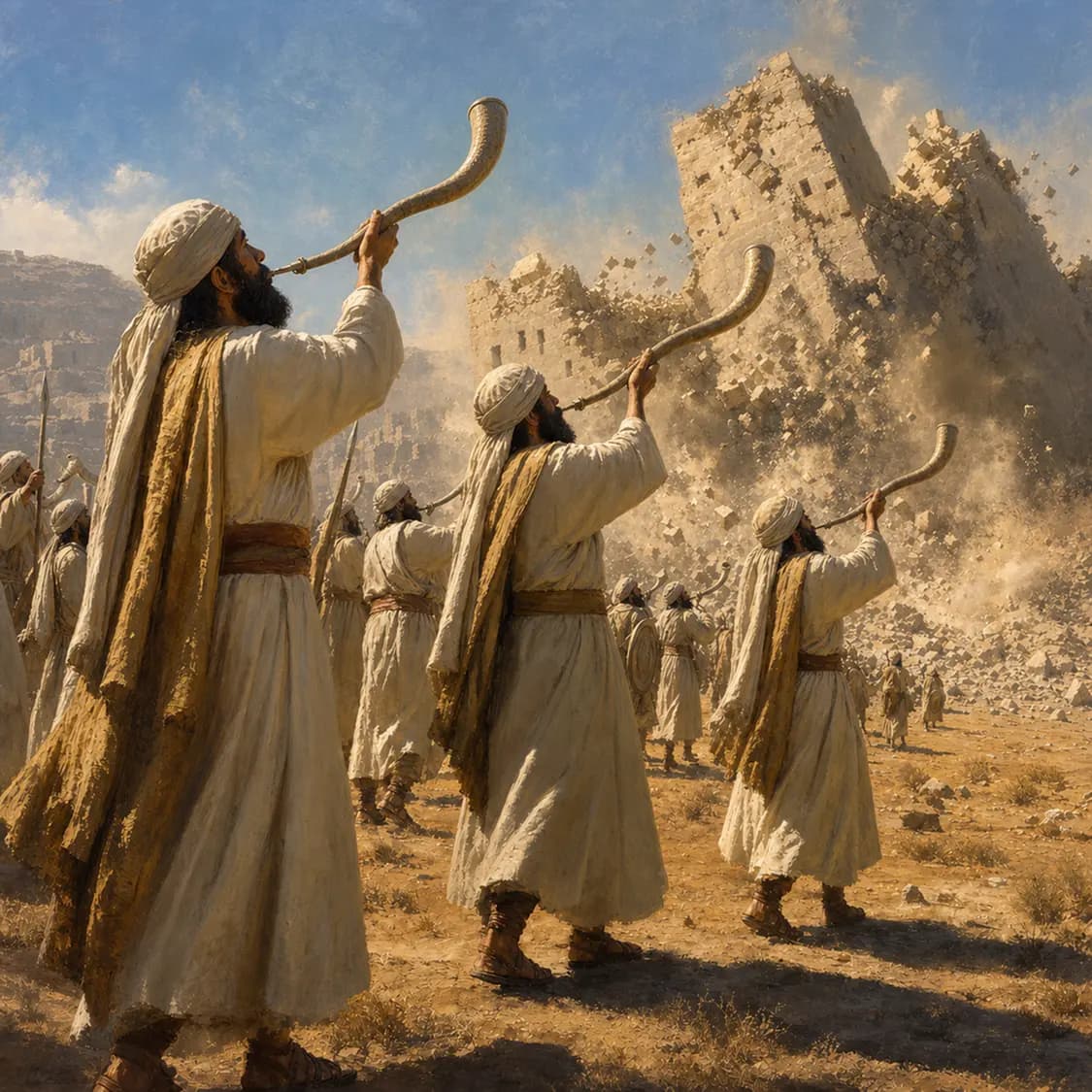
The Fall of Jericho
At Jericho, a commander of the LORD's army gives Joshua instructions for silent marches around the city, with the ark and trumpets at the center. Israel marches once a day for six days and seven times on the seventh day, then shouts. The wall falls, and Jericho is devoted to destruction. Rahab and her household are spared because of the earlier oath, while valuables go to the LORD's treasury and the city is burned. The story presents the fall as God's gift received through obedience, with judgment and mercy held together. It is not a simple wall story.
Listen to the story7 min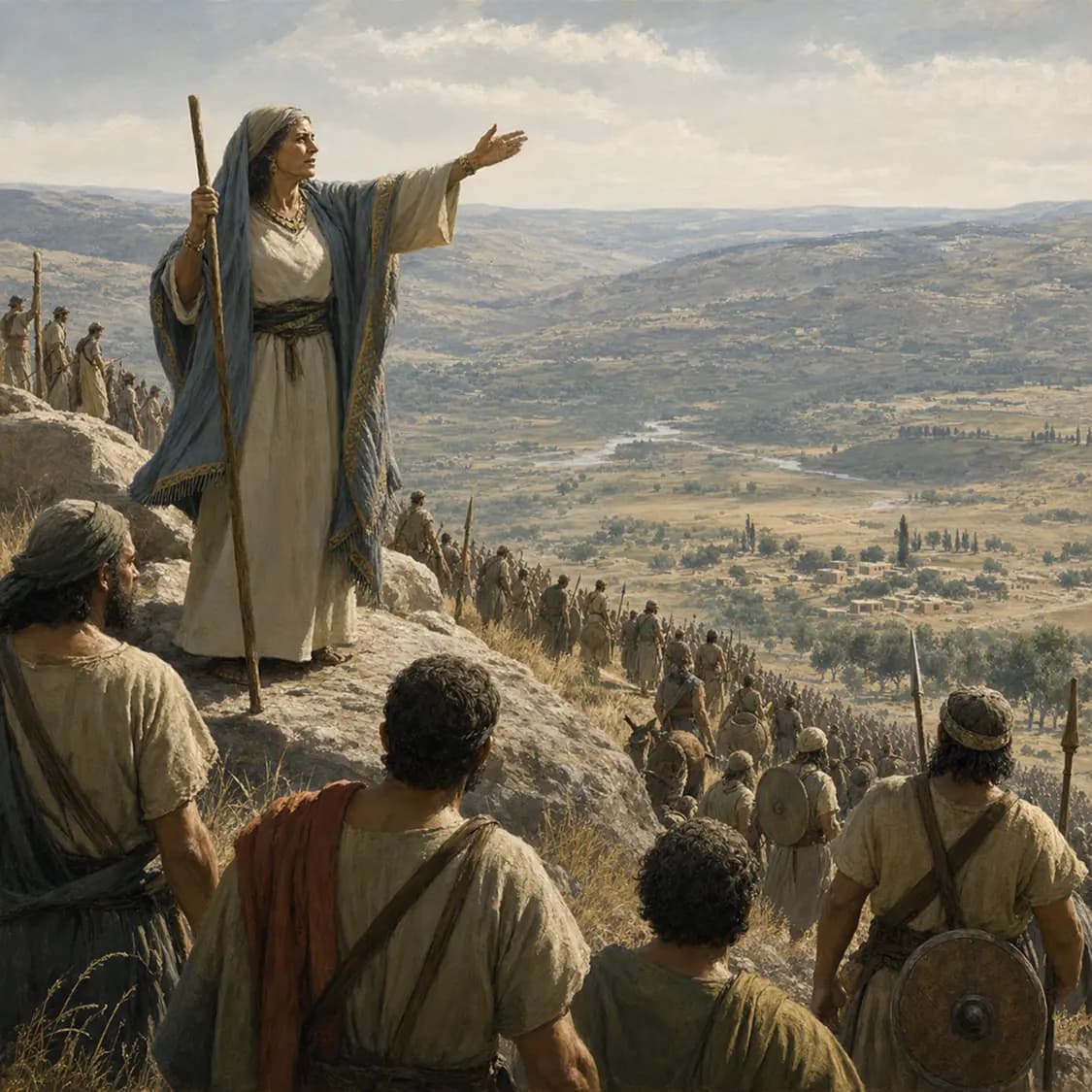
Deborah Leads Israel
Deborah judges Israel and summons Barak to lead ten thousand men against Sisera's army under King Jabin. Barak agrees to go with Deborah, and the Lord throws the enemy into confusion. Sisera flees on foot and enters Jael's tent, where Jael kills him. Deborah and Barak sing a victory song that praises willing participation and remembers those who stood aside. Israel grows stronger against Jabin, and the land has rest for forty years. The campaign belongs to the Lord's deliverance, while Deborah, Barak, and Jael retain distinct roles in the narrated conflict.
Listen to the story6 min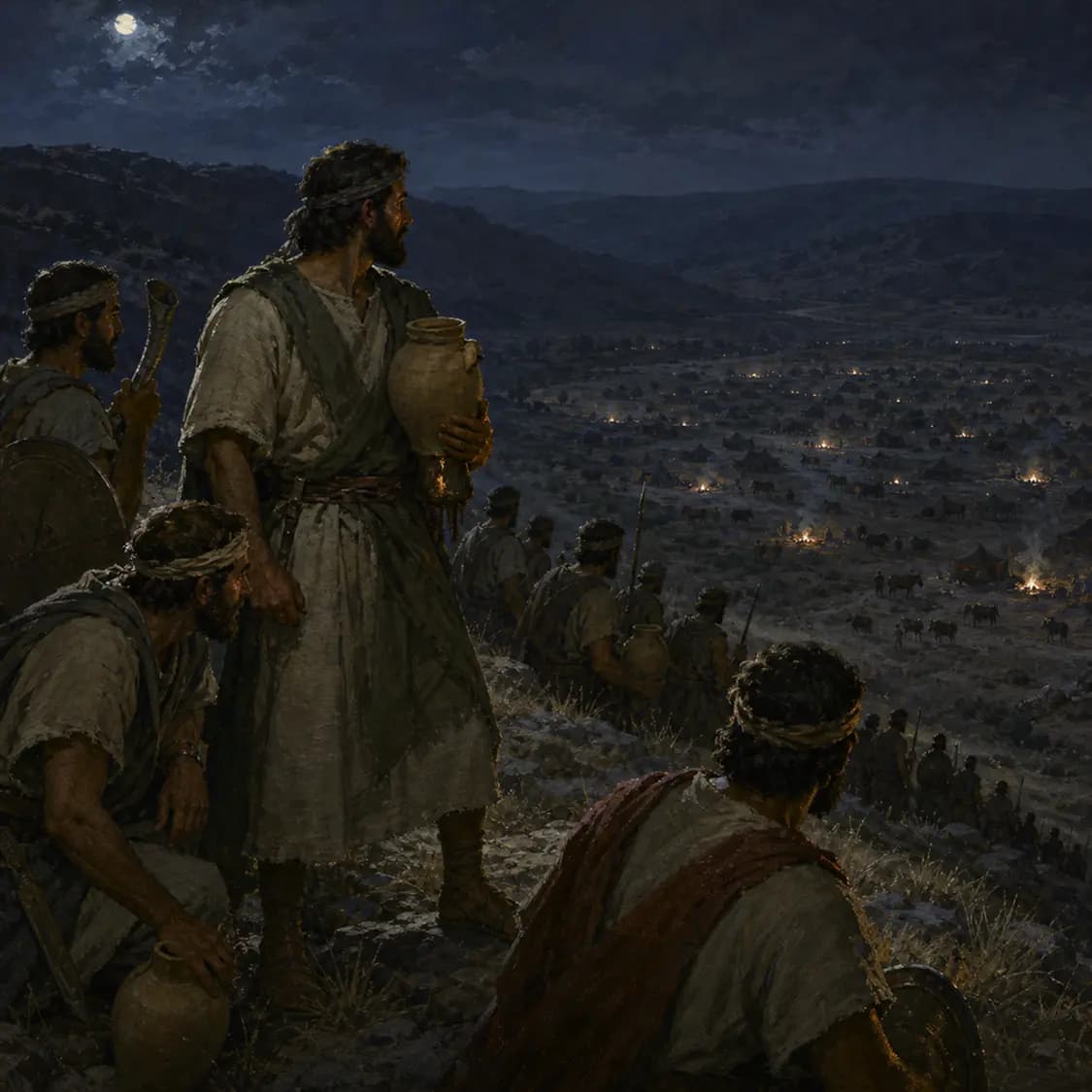
Gideon and the Three Hundred
After seven years of Midianite oppression, God calls Gideon, who questions the call and asks for signs with a fleece. Gideon tears down his father's Baal altar, then gathers an army. God reduces it until only three hundred remain, so Israel cannot claim that its own strength won the victory. At night, Gideon's men carry trumpets, jars, and torches; the camp panics when the jars break and the horns sound. Midian flees, Israel pursues, and its commanders are killed. The story shows deliverance through obedience despite fear, not a universal military formula.
Listen to the story6 min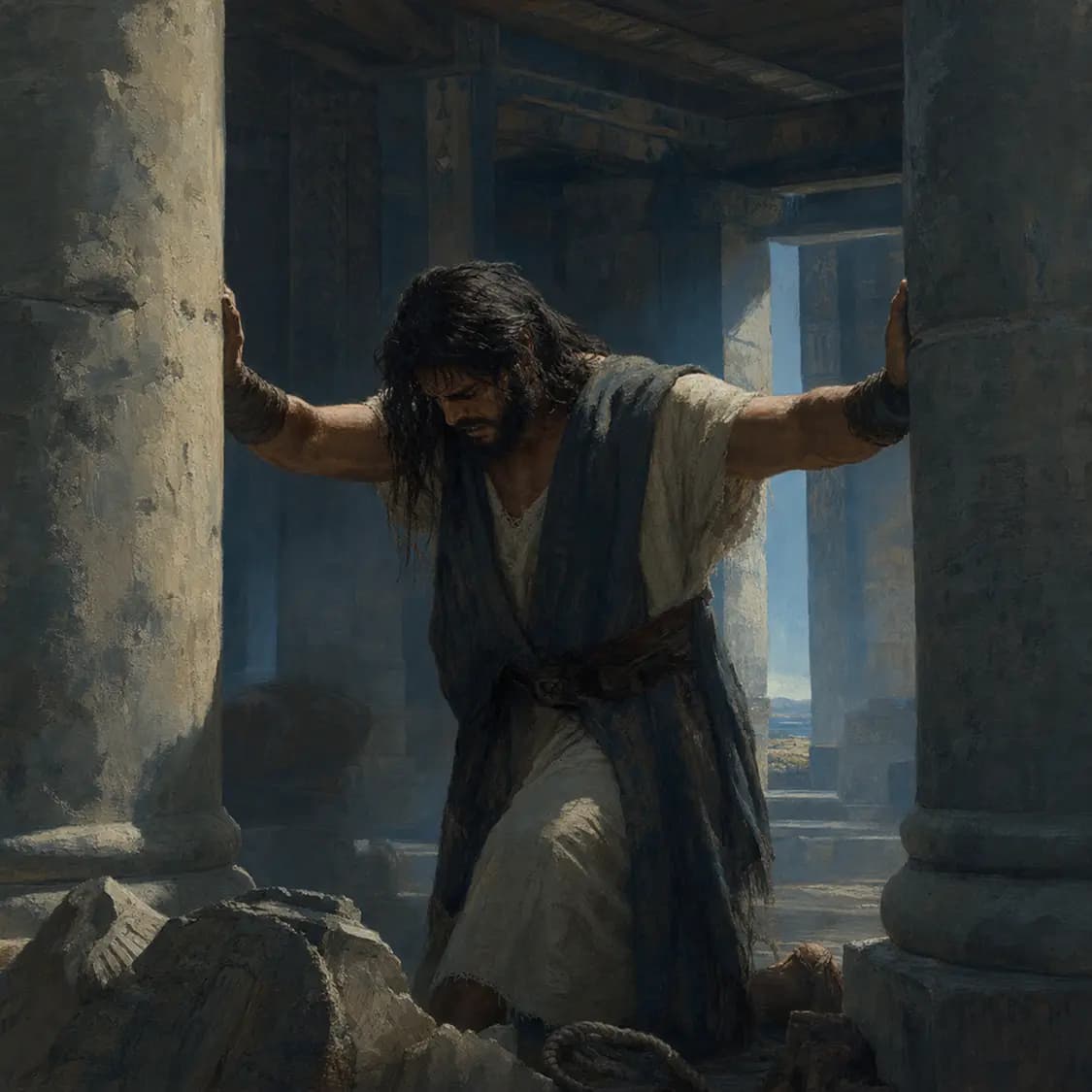
Samson’s Strength and Failure
Samson is announced as a son set apart to God from birth and begins confronting the Philistines with unusual strength. His riddle, revenge, sexual conduct, and relationship with Delilah lead to betrayal, shaving, blindness, and imprisonment. When Samson prays and his strength returns, he pulls down the Philistine temple, killing himself and a crowd. His hair marks consecration, but it has no independent power; the story links strength to the Lord and shows that calling does not make impulsive choices harmless. The ending includes devastating consequences and cannot be presented as an unqualified victory.
Listen to the story6 min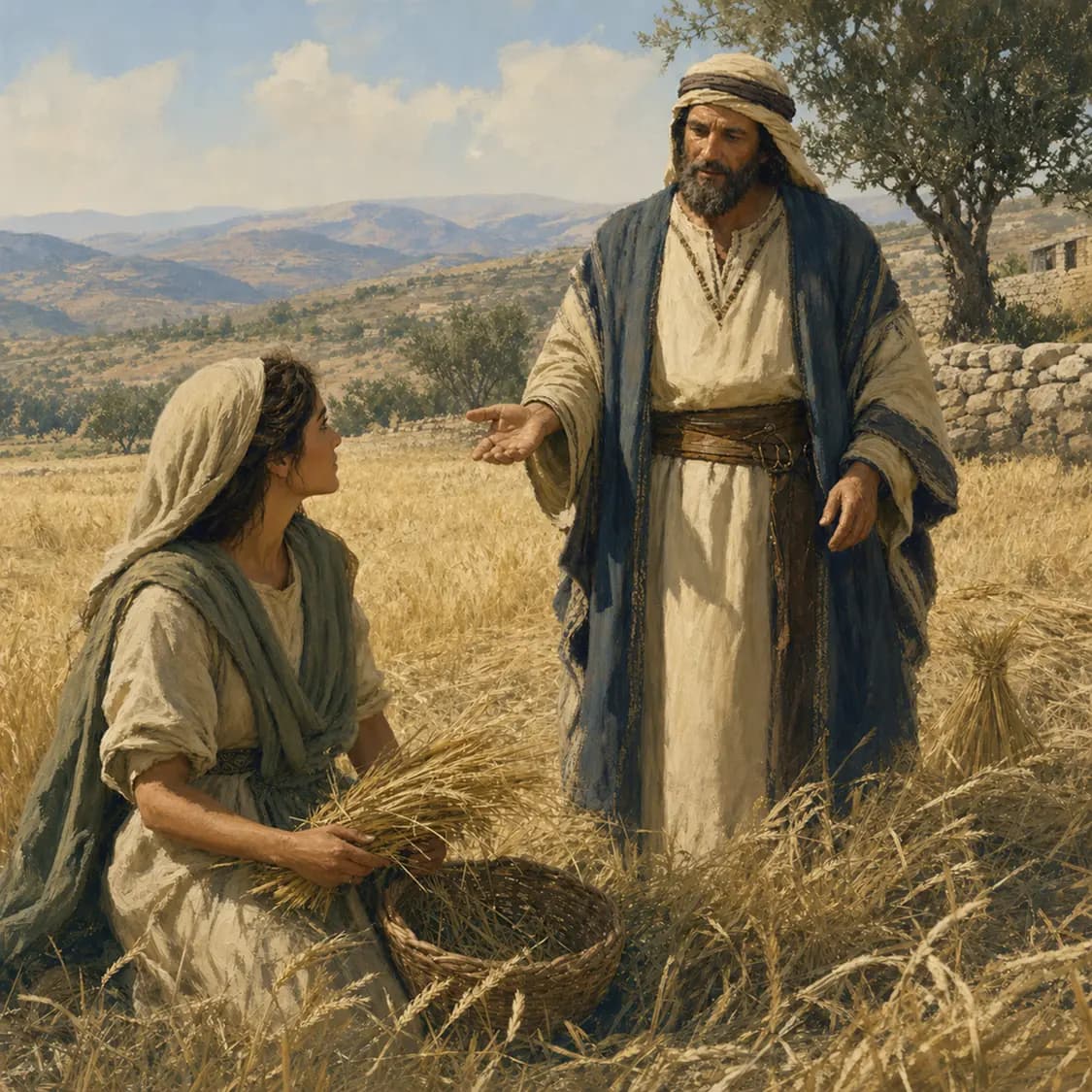
Ruth and Boaz
After Naomi loses her husband and sons in Moab, Ruth remains with her and returns to Bethlehem. Ruth gleans in Boaz's field, and Boaz protects her dignity, provides food, and instructs his workers to help her. Boaz publicly completes the family-redeemer process when the nearer relative declines. He marries Ruth, and they have a son named Obed. The family line reaches David. The story portrays loyalty and kindness through ordinary work and public responsibility, while its widowhood, poverty, threshing-floor customs, and redemption practices should not be flattened into a generic romance or directly equated with modern law.
Listen to the story7 min
Kings and the Kingdom
Hannah’s Prayer and God’s Call to Samuel
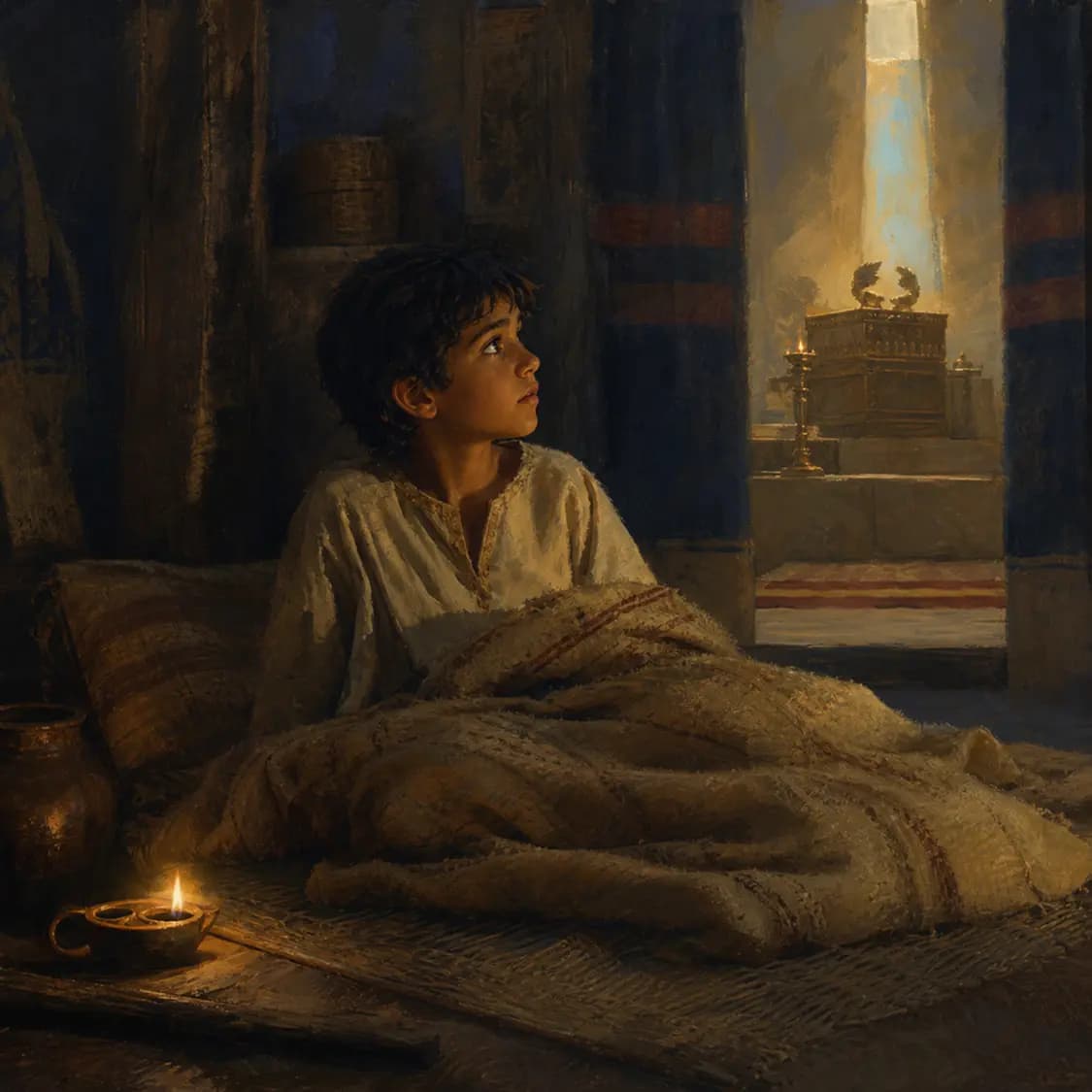
Hannah is taunted because she has no children, so she prays at Shiloh and vows to give a son to the Lord. Samuel is born, weaned, and dedicated there. Eli's sons corrupt their priestly office and receive a warning of judgment. One night, the Lord calls Samuel, who first thinks Eli is speaking. Eli teaches him to listen, and Samuel receives a message against Eli's household. Samuel tells Eli the whole message despite fear, and the Lord establishes him as a prophet. The story joins honest prayer, dedication, listening, and leadership accountability.
Listen to the story7 min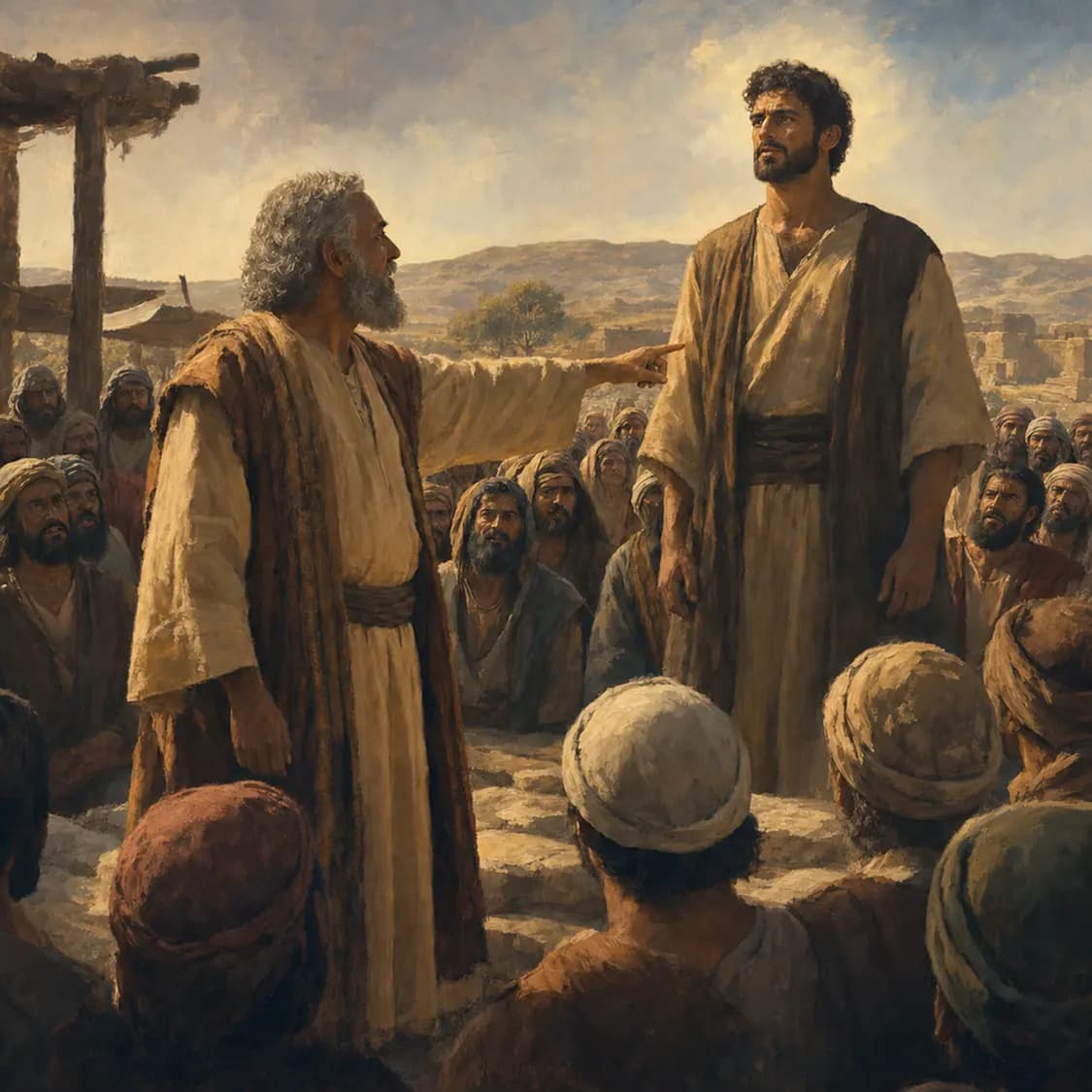
Israel Asks for a King and Saul Is Chosen
Israel's elders ask Samuel for a king because his sons administer justice corruptly and the people want to be like other nations. Samuel warns that royal power can take sons, daughters, fields, labor, and produce, but God tells him to grant the request. Saul is anointed, confirmed by signs and the Spirit, and publicly chosen. He rescues Jabesh-gilead from the Ammonites, and the people confirm him as king. Saul's early selection and victory do not guarantee later faithfulness. The story holds leadership, security, warning, permission, accountability, deliverance, and restraint together.
Listen to the story6 min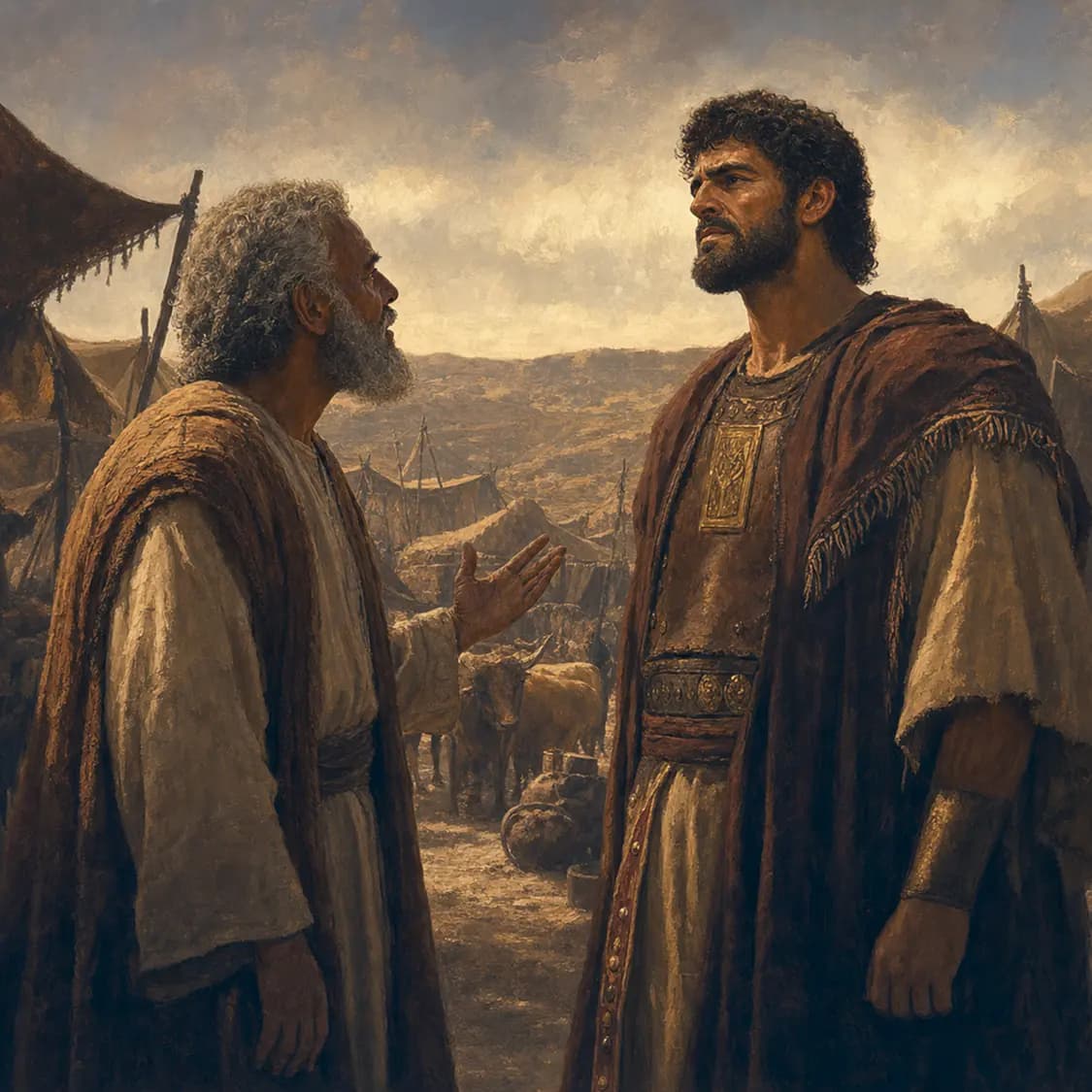
Saul Disobeys God
Samuel commands Saul to destroy Amalek and all its possessions, but Saul and the people spare King Agag and the best animals. Saul claims obedience and says the animals were kept for sacrifice. Samuel rejects the excuse, declaring that obedience is better than sacrifice, and announces that Saul will lose the kingship. Saul admits that he feared the people and listened to them, yet Samuel still executes Agag. The story contains a severe warfare command and does not provide a modern ethical framework for it. Its central conflict is between God's command, partial compliance, approval, worship language, and accountability.
Listen to the story7 min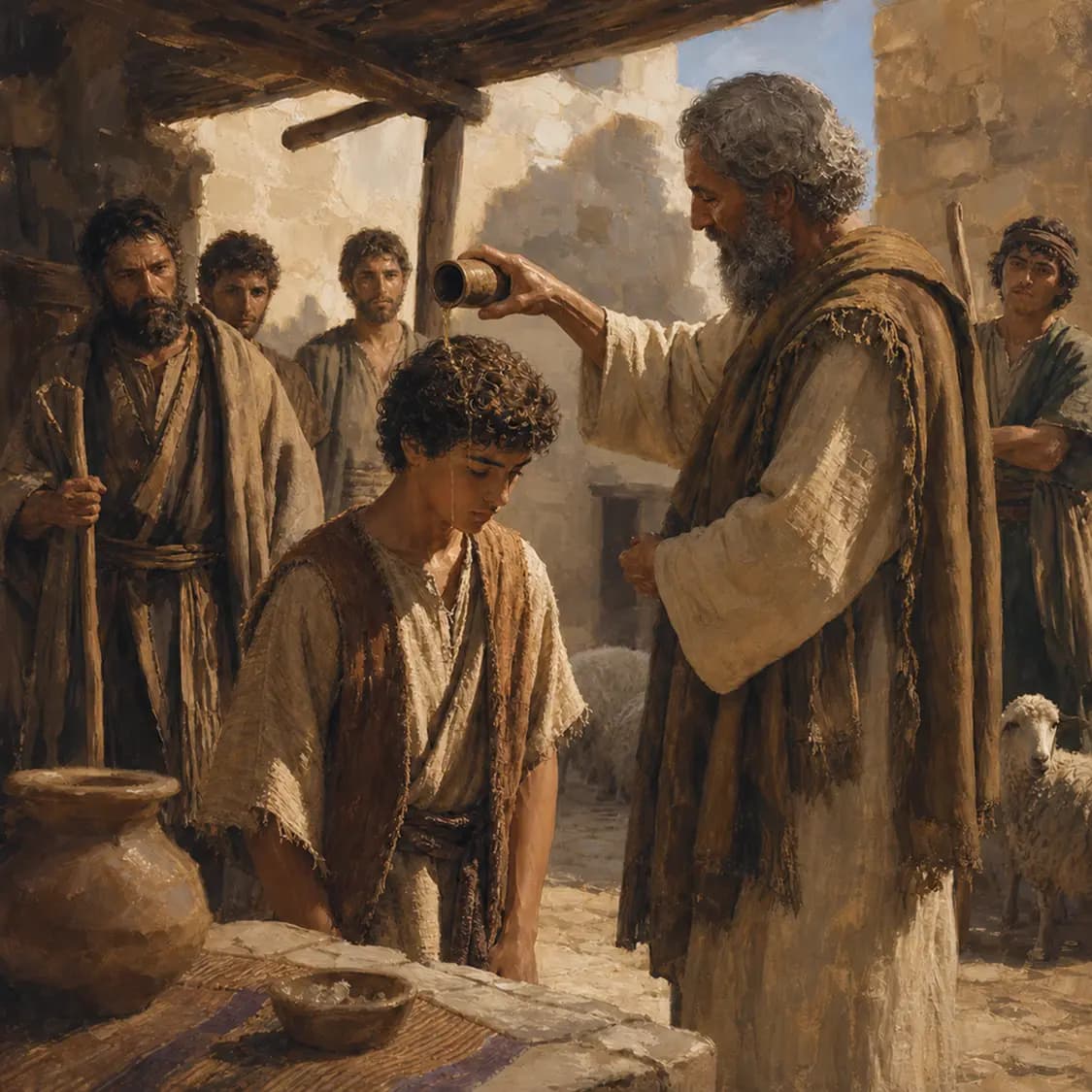
David Is Anointed as King
God sends Samuel to Jesse in Bethlehem to anoint one of his sons, while Samuel fears Saul's reaction. Samuel initially favors the older sons' appearance, but God directs him to look beyond what people see. David, the youngest, is brought in from tending sheep. The Lord tells Samuel that he has chosen David, and Samuel anoints him. The Spirit of the Lord comes upon David while Saul still reigns. David's anointing begins a calling; he does not become king immediately, and the story does not describe his brothers' later response.
Listen to the story4 min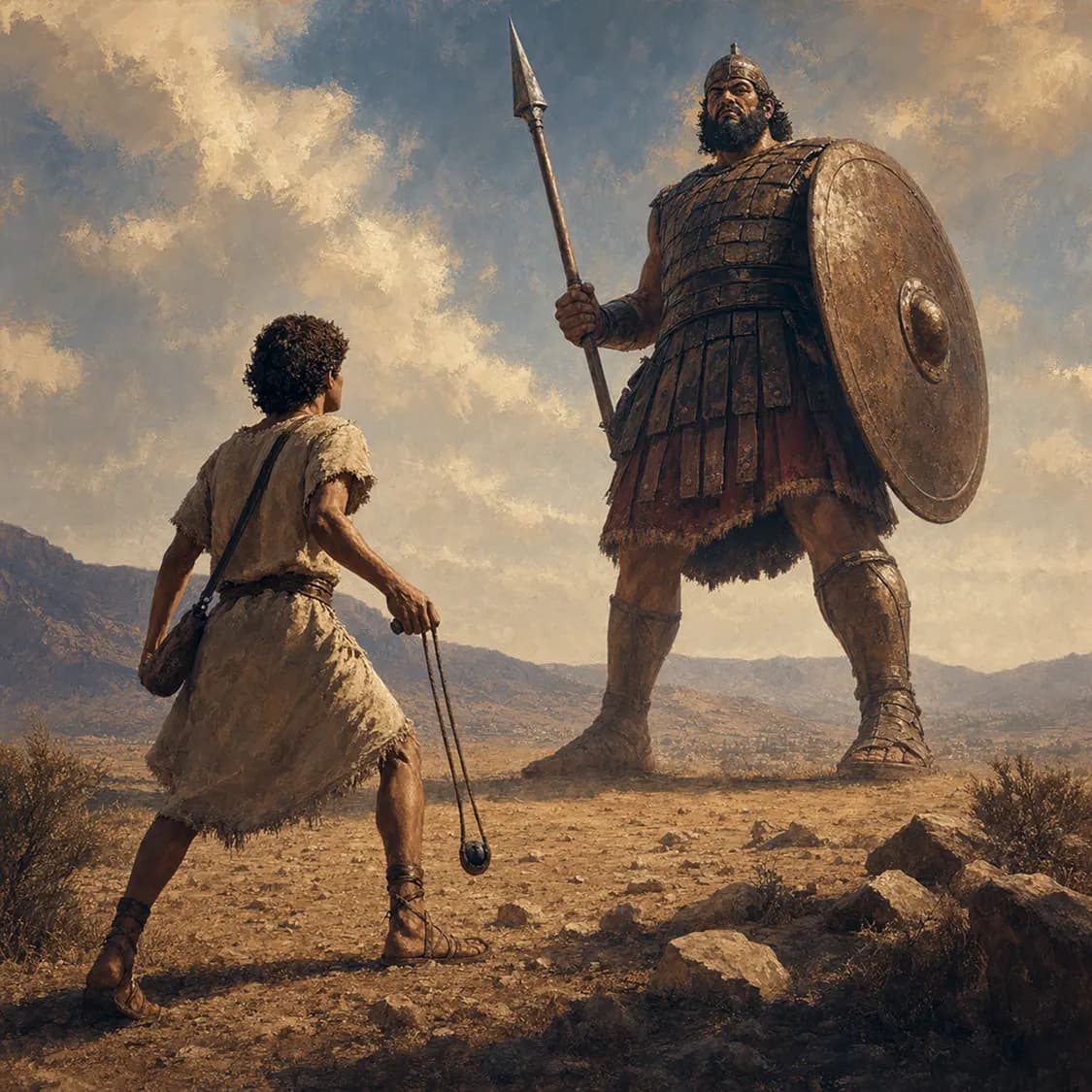
David and Goliath
Goliath challenges Israel's army for forty days, and the soldiers, including Saul, are afraid. David arrives from tending sheep and hears the challenge. He remembers that the Lord rescued him from a lion and a bear and trusts God in this new crisis. David refuses Saul's untested armor, takes his staff, five stones, and sling, and strikes Goliath in the forehead. He then uses Goliath's sword. Israel pursues the fleeing Philistines. The story attributes victory to the Lord while preserving the danger, deaths, threats, and decisive skill used in the battle.
Listen to the story6 min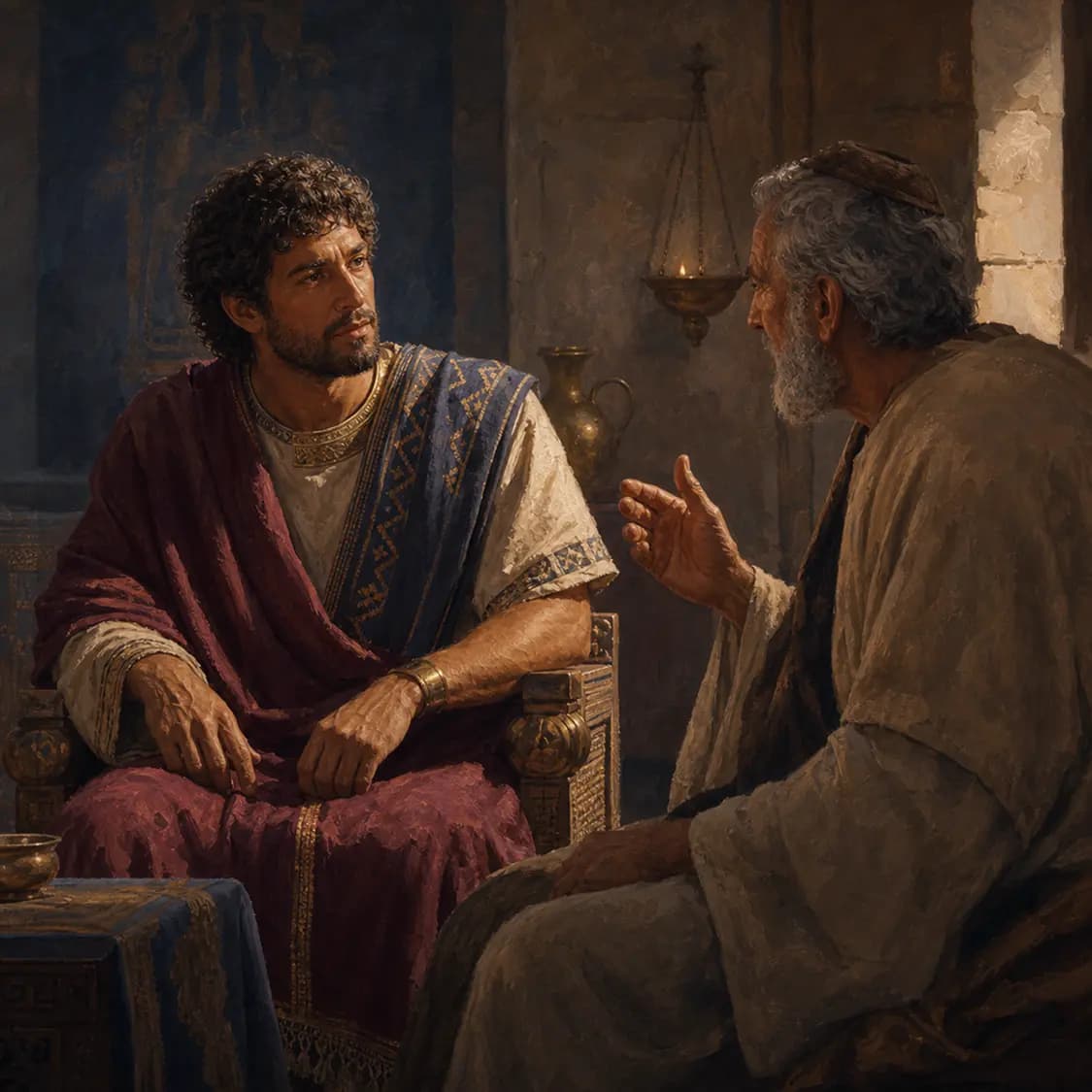
God’s Promise to King David
David becomes king over all Israel, captures Jerusalem, and brings the ark toward the city. After Uzzah dies when he touches it, David later brings the ark with reverence and joy. David wants to build a temple, but God promises instead to establish David's house and enduring kingdom through a descendant who will build the temple. David responds with humility, praise, and prayer. The story joins servant kingship, holy presence, correction, covenant promise, and present dependence. It states the promise without deciding later theological interpretations of its fulfillment.
Listen to the story6 min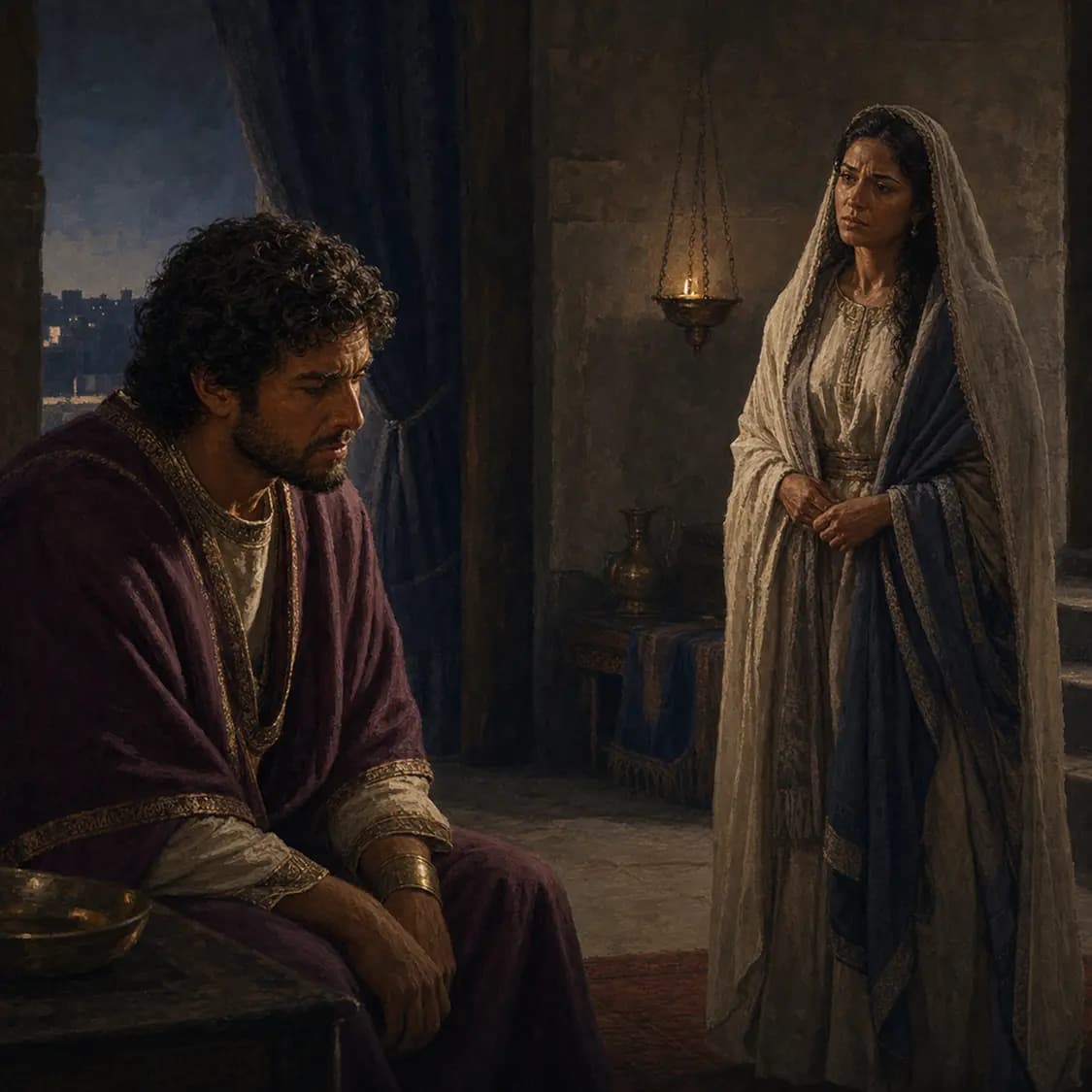
David and Bathsheba
David sees Bathsheba, sleeps with her despite her marriage to Uriah, and tries to conceal the resulting pregnancy. When the cover-up fails, David arranges Uriah's death and marries Bathsheba. Nathan confronts David through a parable, and David confesses. God declares that David's sin is taken away, yet the child dies despite David's fasting and the announced consequences continue. Bathsheba later gives birth to Solomon. The story depicts sexual coercion, abuse of royal power, arranged killing, violence, and infant death. Confession and mercy do not erase the harm or remove every consequence.
Listen to the story7 min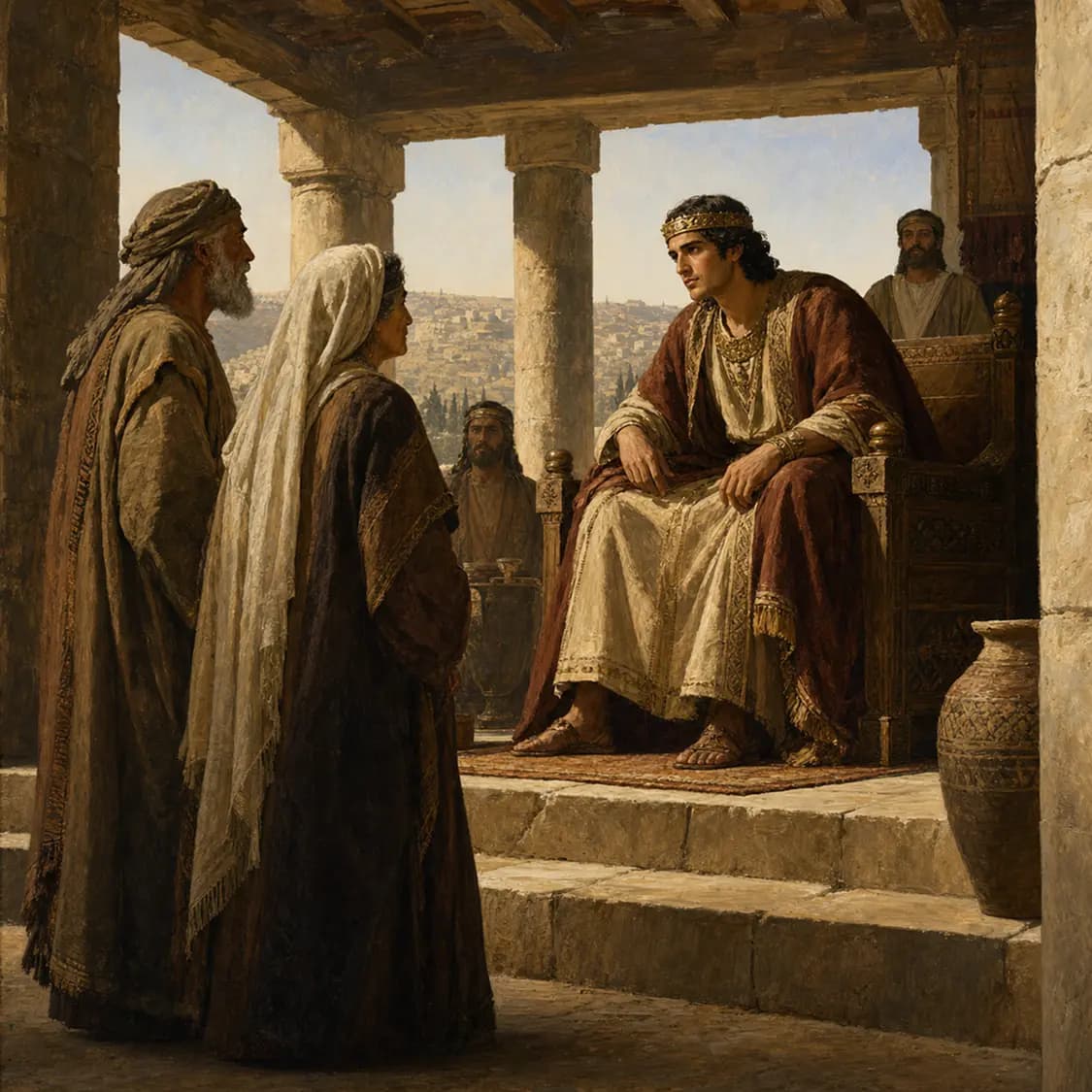
Solomon Asks for Wisdom
Solomon asks God for an understanding heart so he can govern Israel and distinguish good from evil. He does not ask for wealth, long life, or victory over enemies. God grants him exceptional wisdom, and Solomon soon faces a dispute between two women who both claim the same living child. Solomon orders a test that appears to threaten dividing the child. The true mother responds with compassion and offers the child to the other woman, revealing the truth. Solomon protects the living child, and Israel recognizes God's wisdom in his judgment.
Listen to the story5 min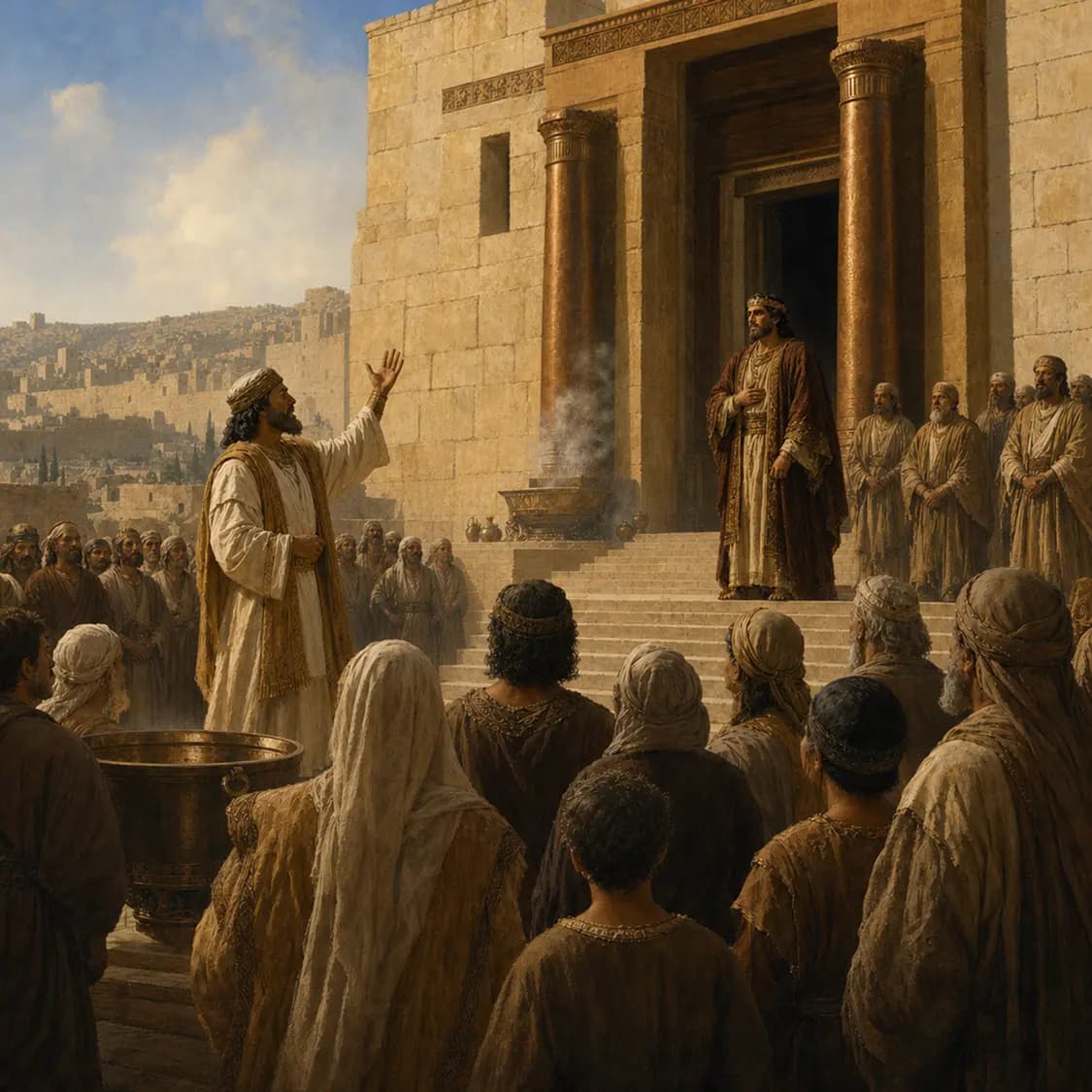
Solomon Dedicates the Temple
Solomon brings Israel's leaders to Jerusalem, and the priests place the ark in the temple. A cloud fills the house, and Solomon praises God for fulfilling the promise to David. In his long prayer, he asks God to hear and forgive people facing injustice, drought, defeat, exile, repentance, and return. He also includes foreigners who turn toward God's name. Solomon says that heaven cannot contain God, so the temple is not a container for the divine presence. The dedication ends with sacrifices and a fourteen-day celebration rooted in God's goodness and covenant faithfulness.
Listen to the story6 min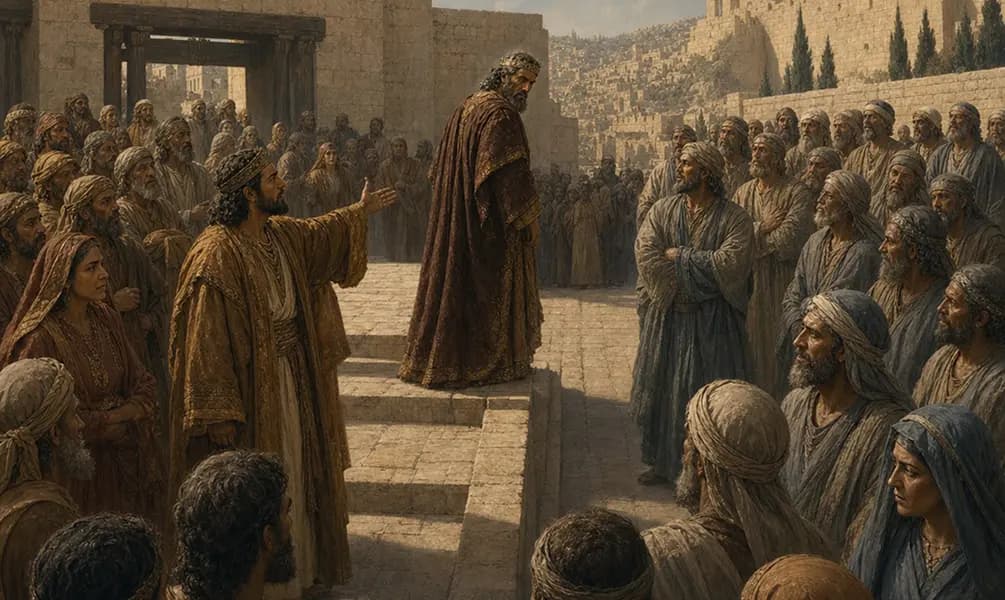
Solomon Turns Away and the Kingdom Divides
Solomon's many wives and concubines turn his loyalty toward other gods, and God announces that the kingdom will be torn from his house after his death while preserving a portion for David's sake. After Solomon dies, Rehoboam rejects older advisers and increases the people's burdens. Israel rejects David's house and makes Jeroboam king. Rehoboam gathers an army, but God's word through Shemaiah stops the threatened civil war. The division follows both God's announced judgment and human choices. The story ends with Solomon's death already behind the transition, not with Solomon personally losing his throne in the scene.
Listen to the story5 min
Prophets in Troubled Times
Elijah and the Widow of Zarephath
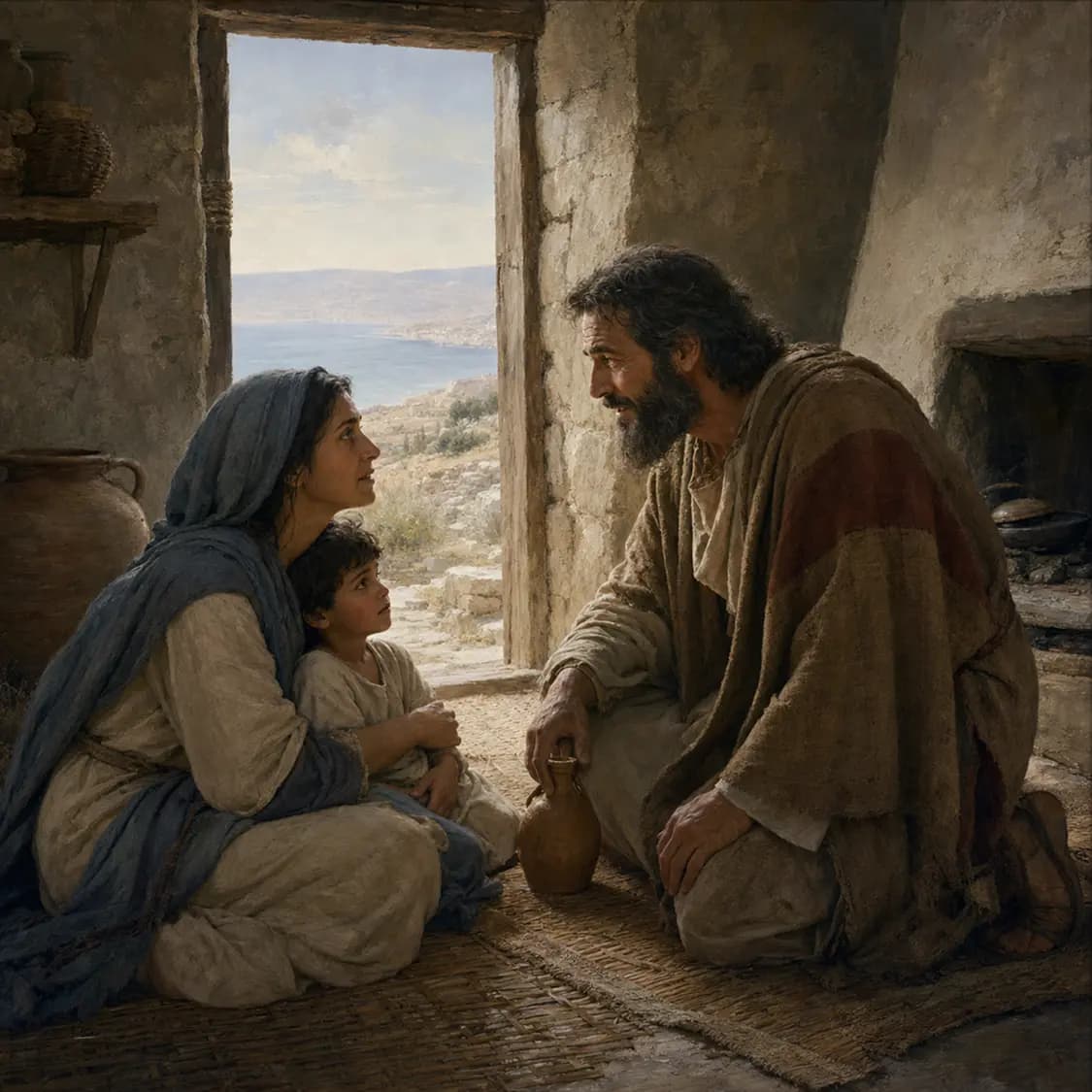
During a drought announced by Elijah, the Lord sends him first to ravens at the Brook Cherith and then to a widow in Zarephath. She is preparing a last meal for herself and her son, but she trusts Elijah's word and her flour and oil last through the drought. Later her son dies, and the widow speaks from grief rather than receiving an easy explanation. Elijah prays, the Lord restores the child's life, and the widow recognizes that the Lord's word through Elijah is true.
Listen to the story5 min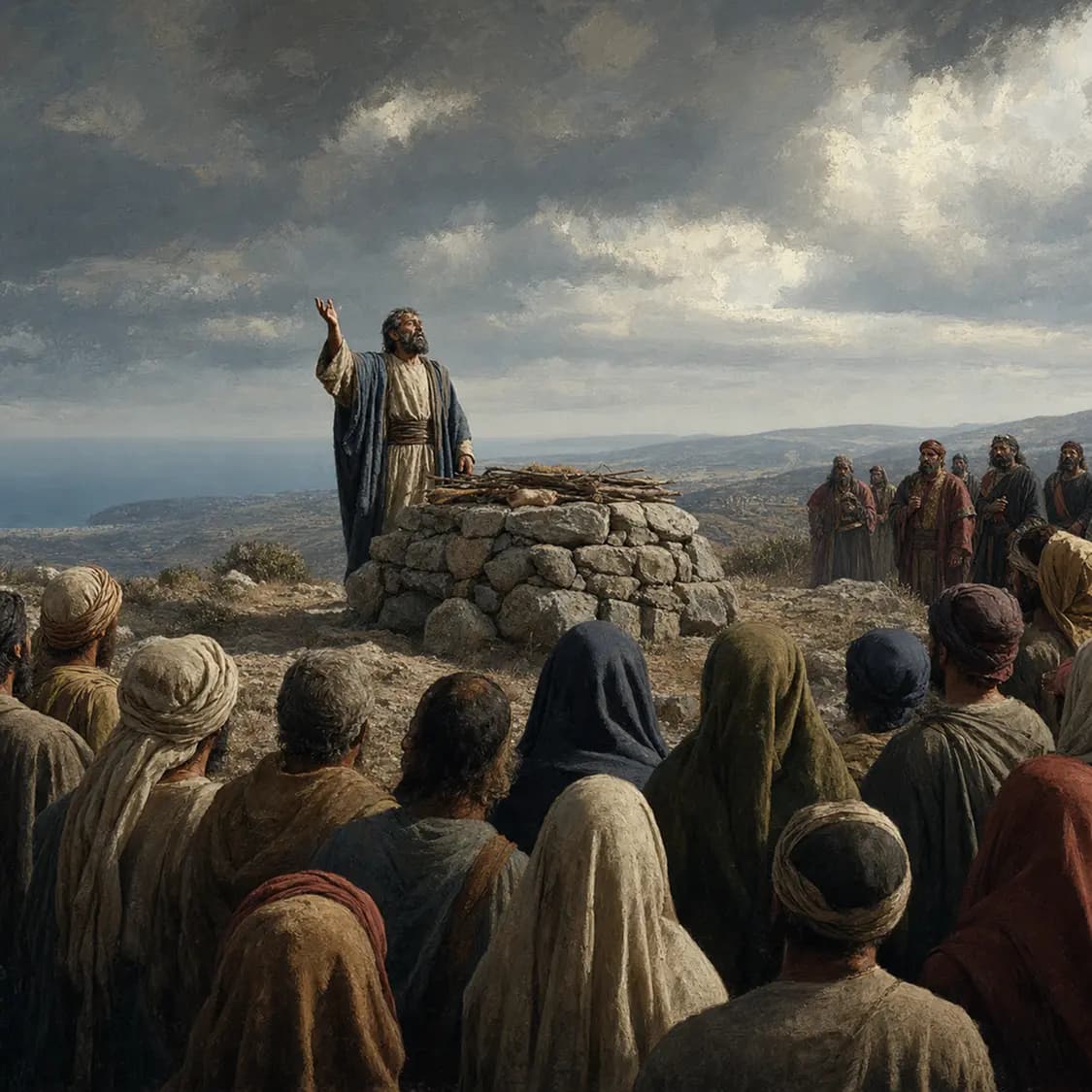
Elijah and the Test on Mount Carmel
After years of drought, Elijah meets Ahab and gathers Israel and 450 prophets of Baal at Mount Carmel. He asks the people to stop wavering and proposes that each side call on its god to answer with fire. Baal's prophets receive no answer, while the Lord consumes Elijah's water-soaked altar, sacrifice, stones, and trench. The people confess that the Lord is God. The prophets of Baal are seized and killed within the narrative. Elijah sends his servant to watch the sea until a small cloud appears, and heavy rain returns after prayer.
Listen to the story6 min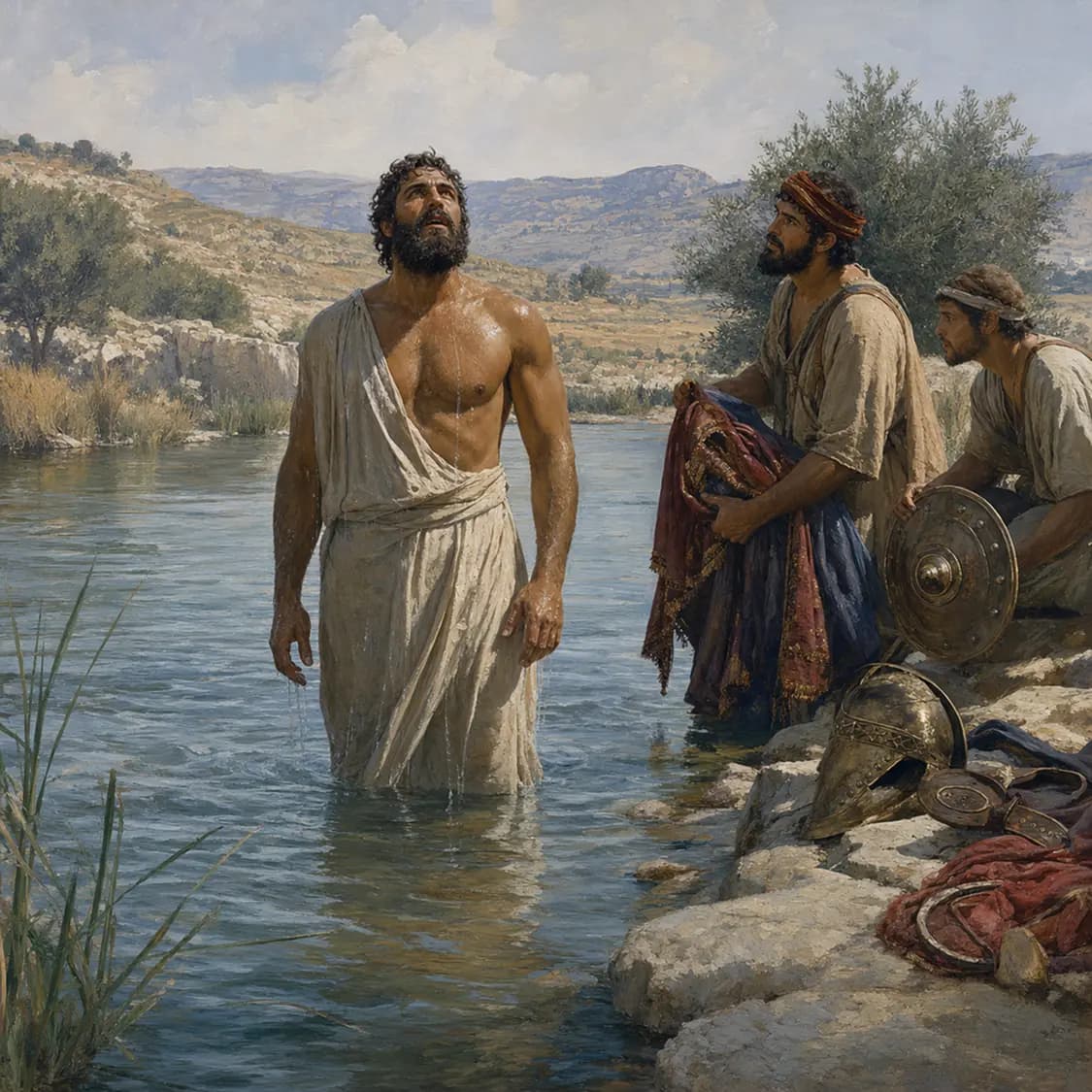
Naaman Is Healed
Naaman, commander of Aram's army, is honored by his king but suffers from a serious skin disease. An Israelite girl points his household toward Elisha, who tells Naaman through a messenger to wash seven times in the Jordan. Naaman resists the humble instruction, then obeys and is cleansed. He confesses that there is no God except in Israel and says he will offer sacrifices only to the Lord. He also asks pardon for the bowing his royal duty may require in Rimmon's temple. Gehazi's deceit brings judgment.
Listen to the story6 min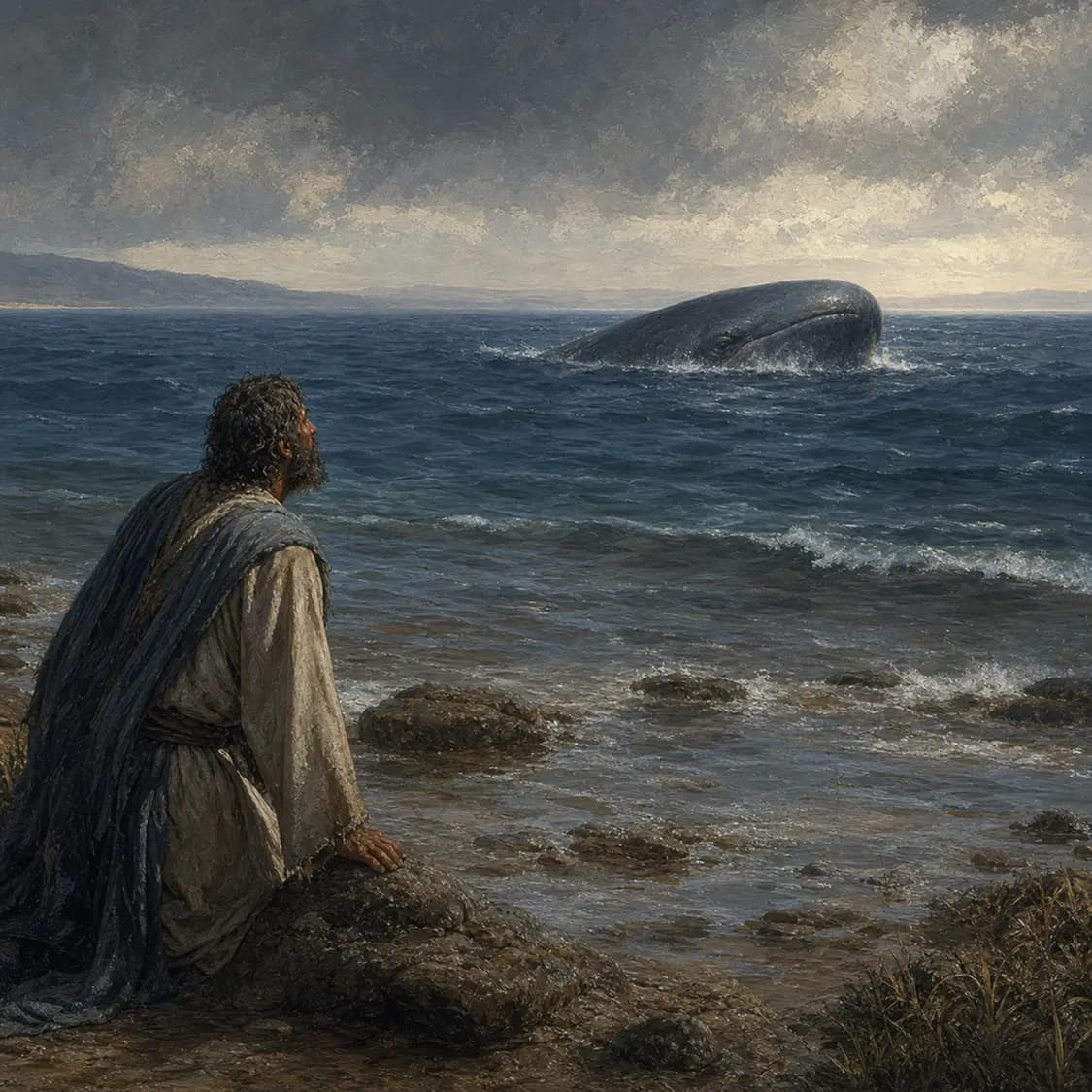
Jonah and the Great Fish
God sends Jonah to warn Nineveh, but Jonah boards a ship toward Tarshish. A violent storm exposes his flight, and the sailors reluctantly throw him into the sea after praying to the Lord. God appoints a great fish to swallow Jonah, and Jonah prays before the fish releases him. He then preaches in Nineveh; the people and king turn from evil and violence, so God relents from the announced destruction. Jonah is angry, and God's lesson through a plant reveals how narrow Jonah's compassion has become.
Listen to the story6 min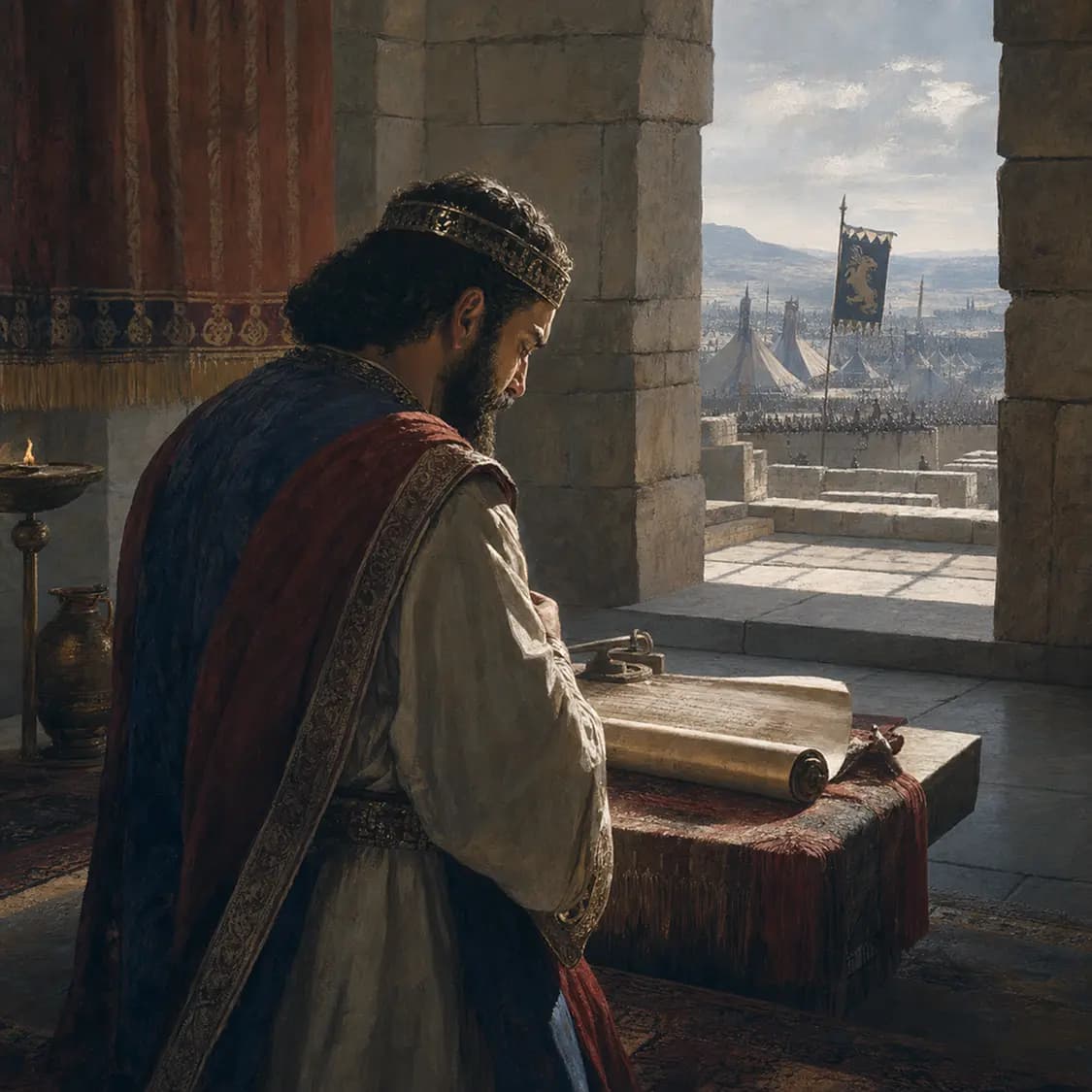
Hezekiah Faces the Assyrian Army
Sennacherib captures Judah's fortified cities and sends an army and spokesman to threaten Jerusalem. Hezekiah first pays tribute from the temple and royal treasury, but the threat returns. The Assyrian spokesman mocks Judah's confidence, pressures the people, and claims the Lord cannot save them. Hezekiah tears his clothes, goes to the temple, and sends for Isaiah. When Sennacherib's letter arrives, Hezekiah spreads it before the Lord and asks him to hear the defiance and save Jerusalem. Isaiah announces the Lord's answer; the Assyrian army is struck, Sennacherib withdraws, and later dies in Nineveh.
Listen to the story6 min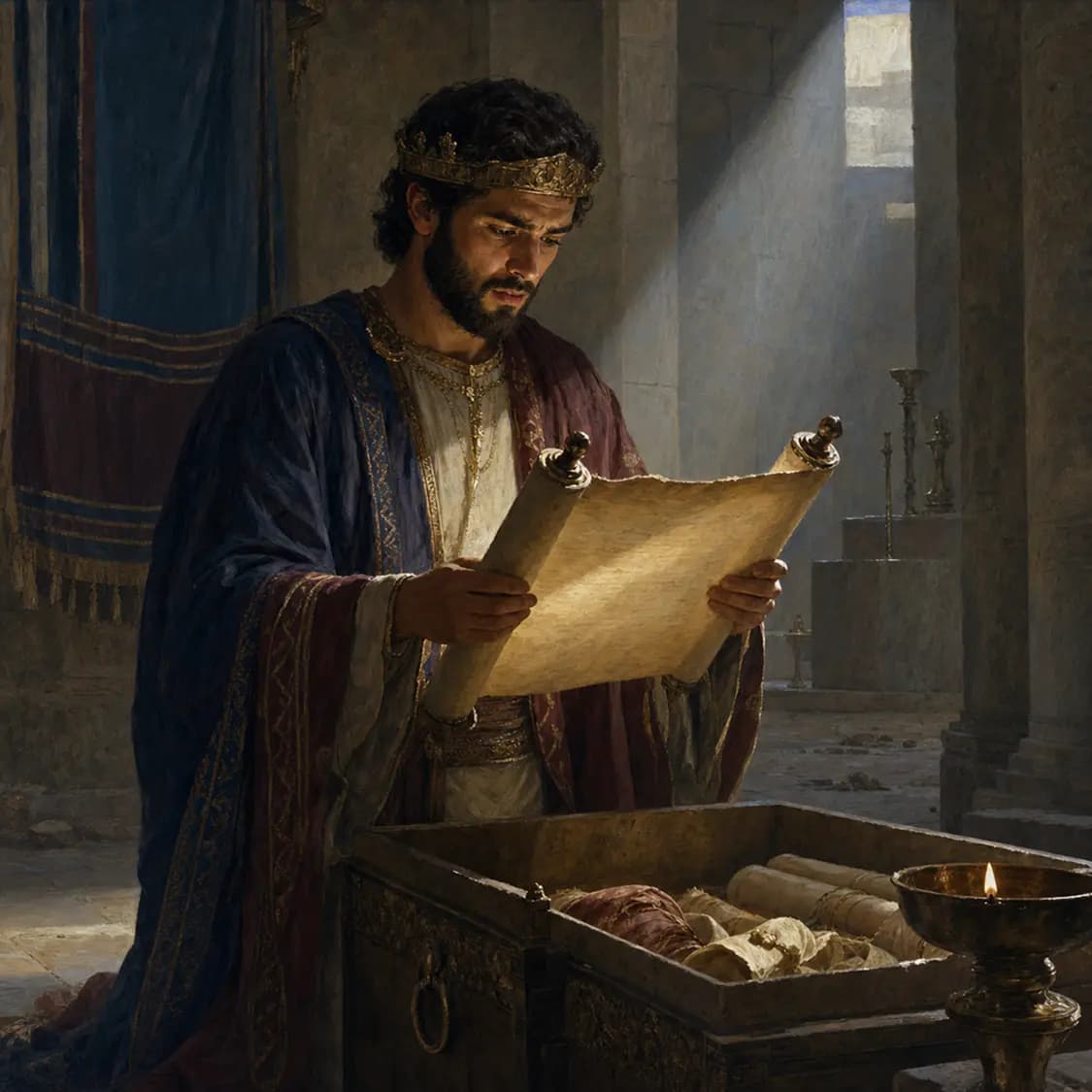
Josiah and the Book of the Law
During repairs to Jerusalem's temple, Hilkiah finds the Book of the Law and Shaphan reads it to King Josiah. Josiah tears his clothes and asks Huldah the prophetess to seek the Lord. She announces coming judgment on Judah but also says Josiah will be gathered in peace because he humbled himself. Josiah gathers the people, reads the book, renews the covenant, removes idols and forbidden practices, and orders a Passover. The account praises his wholehearted response while still saying that Judah's accumulated judgment will come.
Listen to the story5 min
Exile and Return
Jerusalem Falls and Judah Goes into Exile
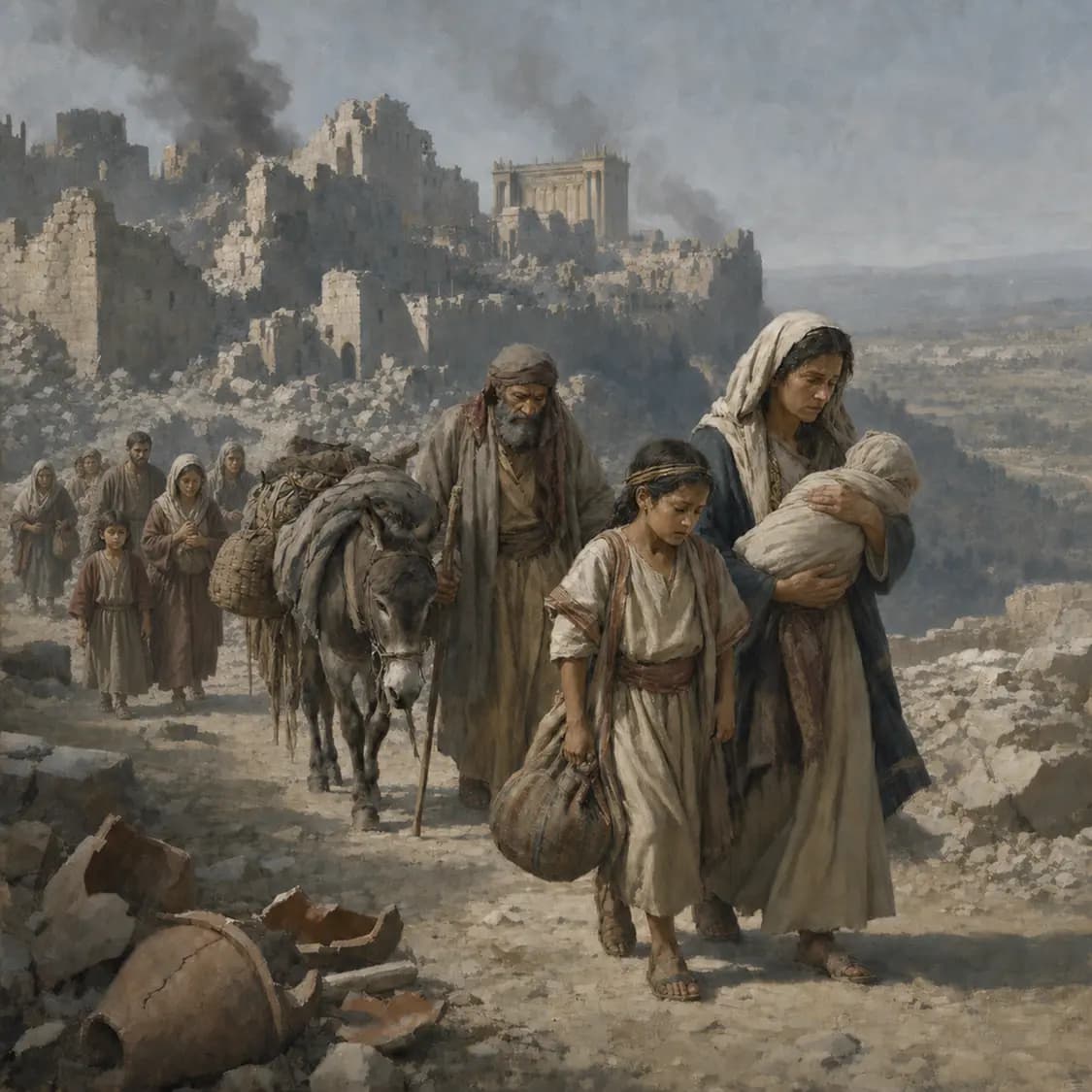
Zedekiah rebels against Babylon, and Nebuchadnezzar's army besieges Jerusalem until famine and a breach in the wall bring the city down. The temple, palace, houses, and walls are burned; treasures are taken; leaders are executed; and many Judeans are deported. Gedaliah is appointed governor, but his short period of stability ends in assassination and flight to Egypt. The closing scene offers a small opening within exile: Jehoiachin is released from prison, given a place at the king's table, and provided for in Babylon.
Listen to the story5 min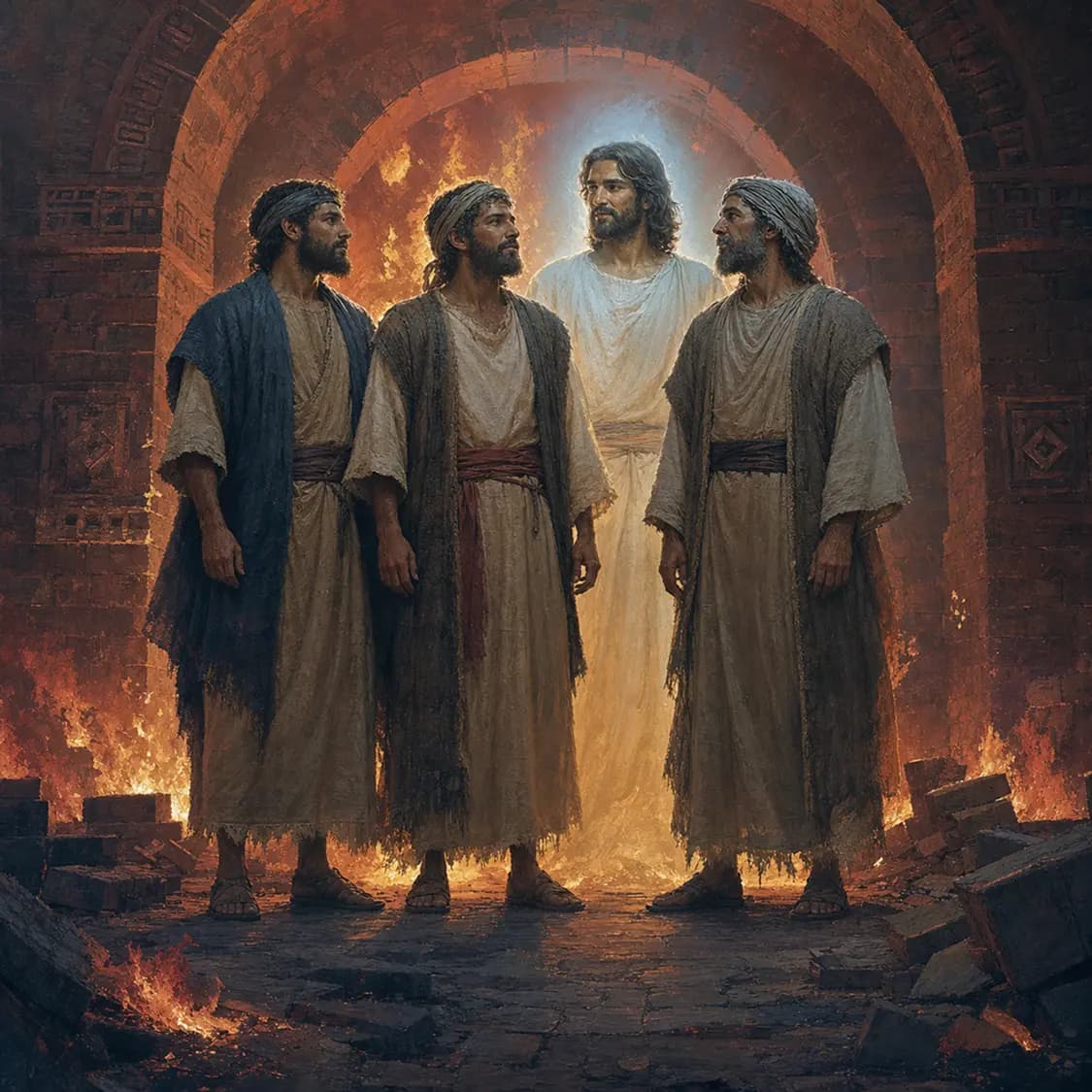
Three Friends in the Fiery Furnace
Nebuchadnezzar orders officials to worship a golden image or be thrown into a blazing furnace. Shadrach, Meshach, and Abednego refuse, saying that God can rescue them but that they will remain faithful even if he does not. The furious king orders the furnace heated seven times hotter than usual and the three men bound and thrown in. He sees them walking unharmed with a fourth figure. After they come out without the smell of fire, the king honors their God and promotes them.
Listen to the story5 min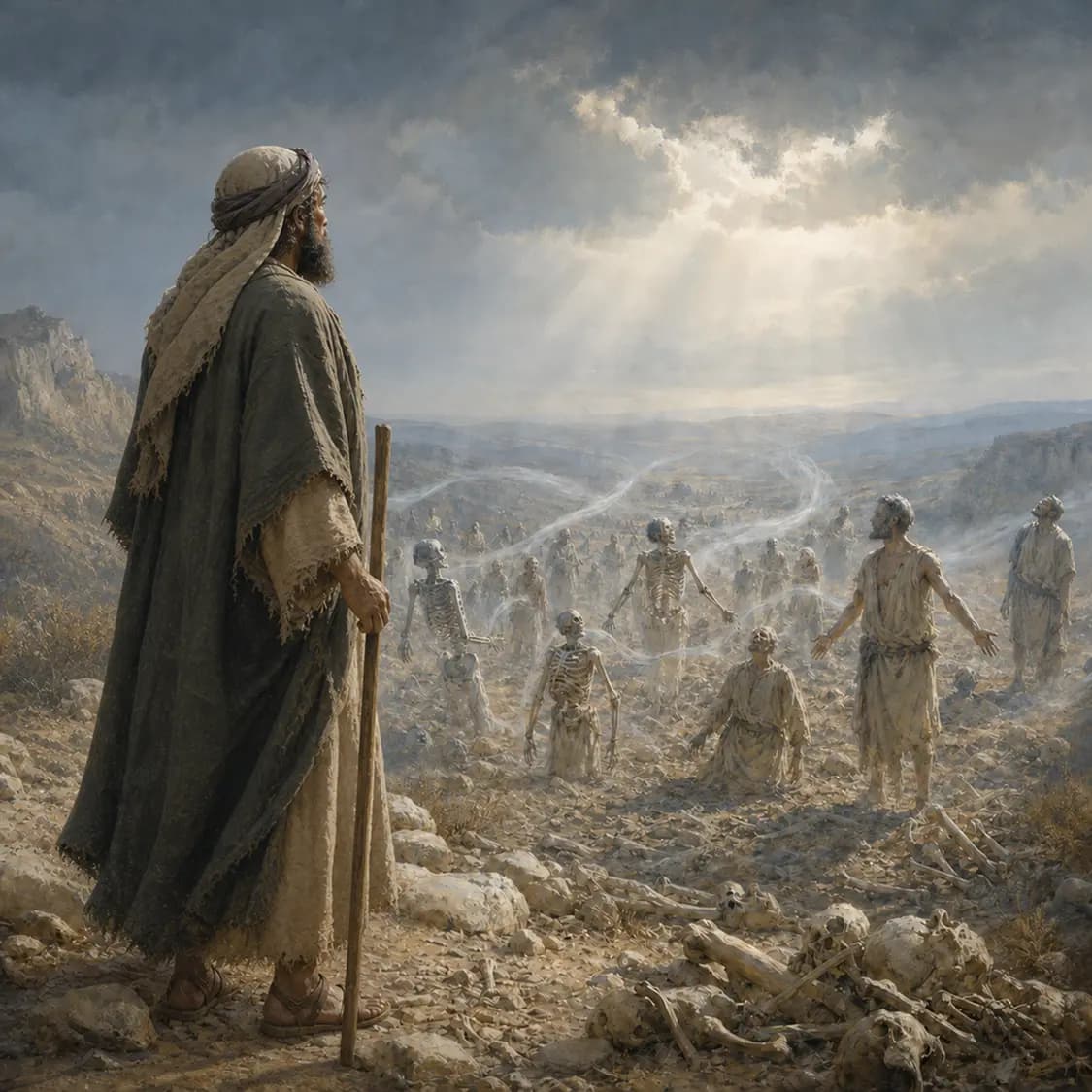
The Valley of Dry Bones
Ezekiel is carried by the Spirit into a valley filled with very dry bones. The Lord asks whether the bones can live and commands Ezekiel to speak. Bones join to bones, sinews and flesh appear, and skin covers them, but they have no breath. Ezekiel prophesies again, breath enters the bodies, and they stand as a vast army. The Lord explains that the bones represent the whole house of Israel and promises to open their graves, bring them to their land, put his Spirit in them, and restore them.
Listen to the story4 min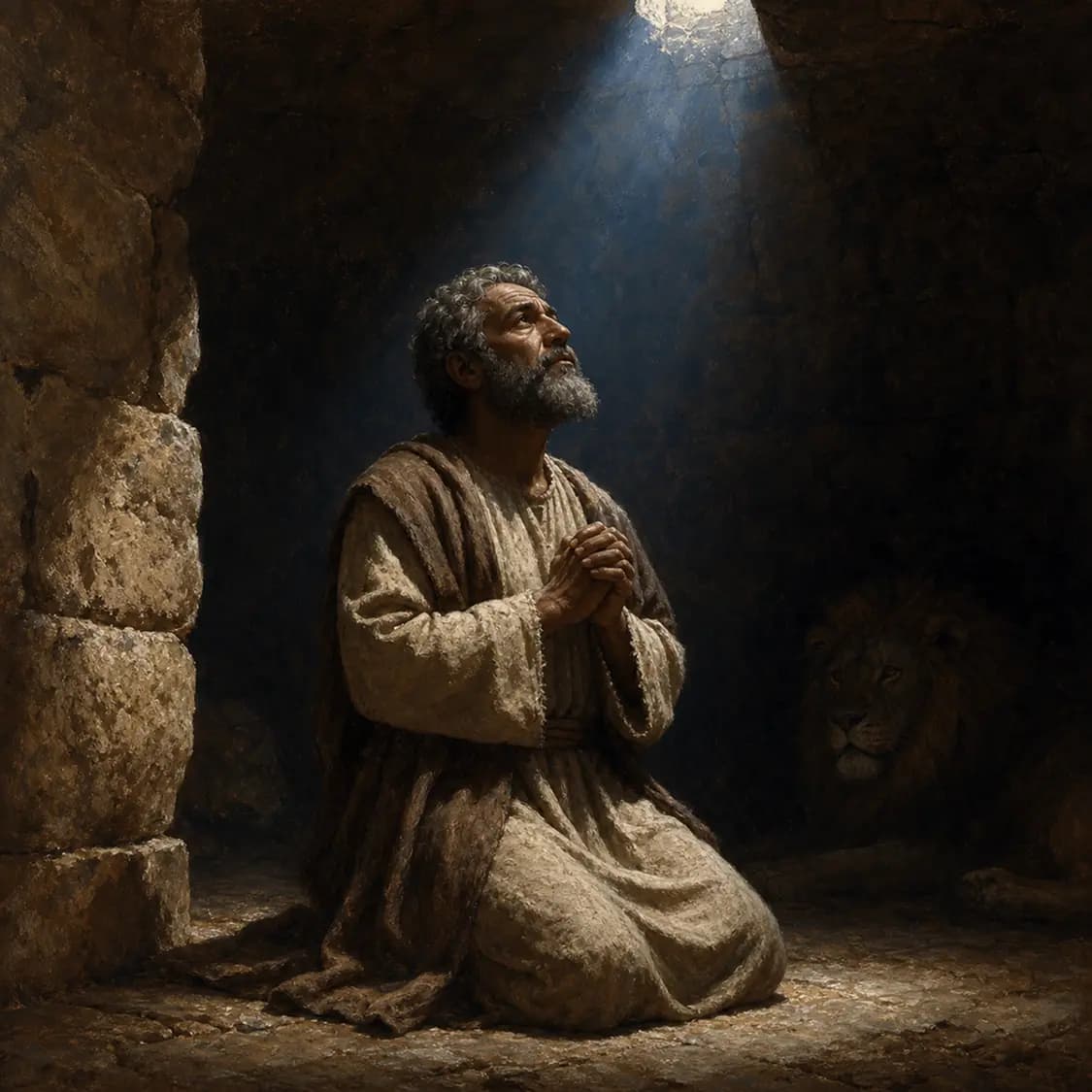
Daniel in the Lions' Den
Daniel's integrity makes Darius plan to place him over the whole kingdom, so rival officials search for a charge and build a trap around his prayer. They persuade the king to sign an unchangeable decree. Daniel continues praying and giving thanks to God, is thrown into the lions' den, and spends the night there. At dawn Darius finds him alive; Daniel says God sent an angel to shut the lions' mouths. The king then declares the living God's kingdom enduring and Daniel's God the rescuer.
Listen to the story5 min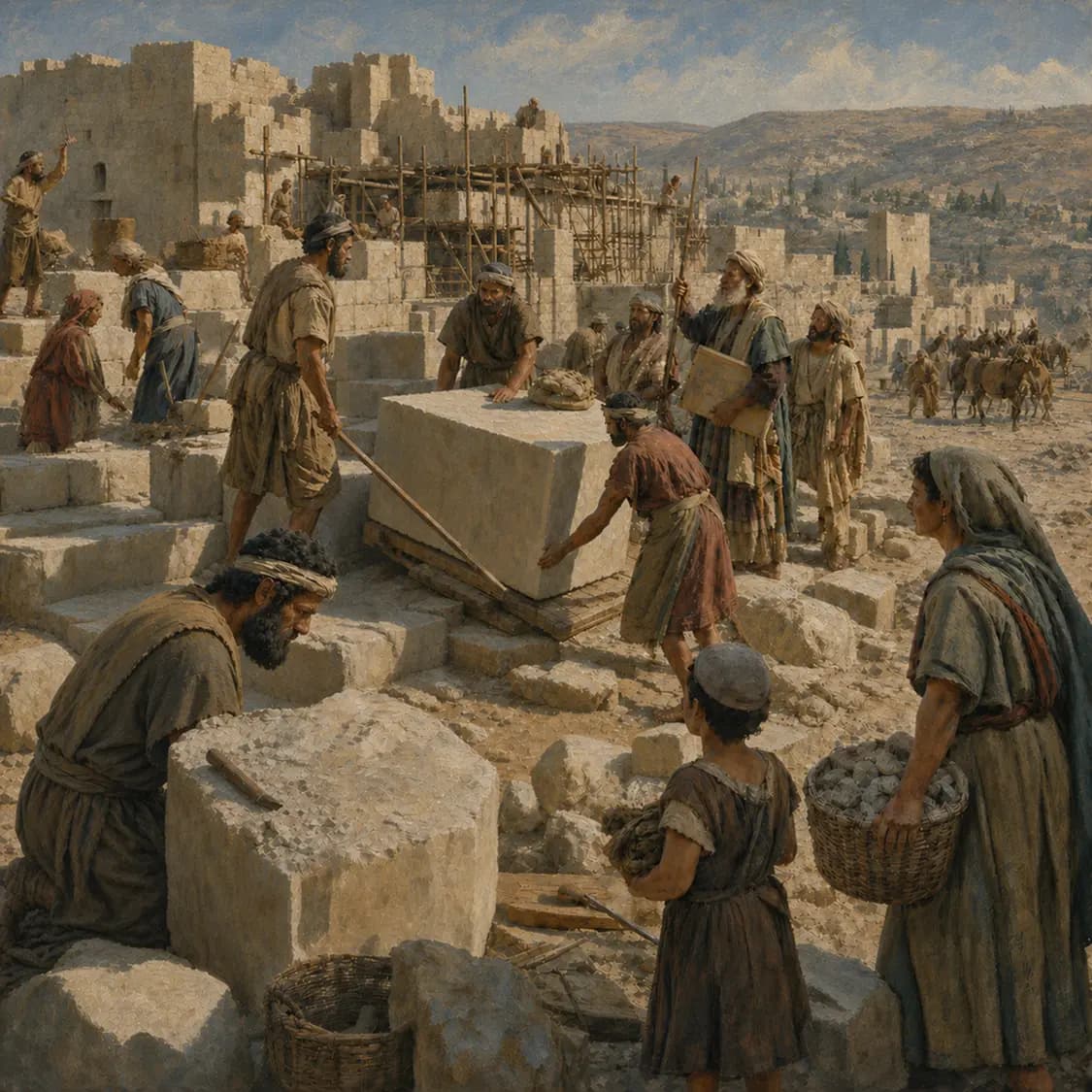
The Exiles Return and Rebuild the Temple
Cyrus of Persia authorizes Judah's exiles to return and rebuild the temple, sends back its vessels, and receives support from neighbors. The people restore the altar and lay the foundation, but opposition stops the work for years. Haggai and Zechariah call the community back to construction, and Darius confirms Cyrus's decree and orders protection and funding. The temple is completed and dedicated with joy, followed by Passover and the Feast of Unleavened Bread. The restoration includes celebration, delay, grief, royal policy, and renewed worship.
Listen to the story7 min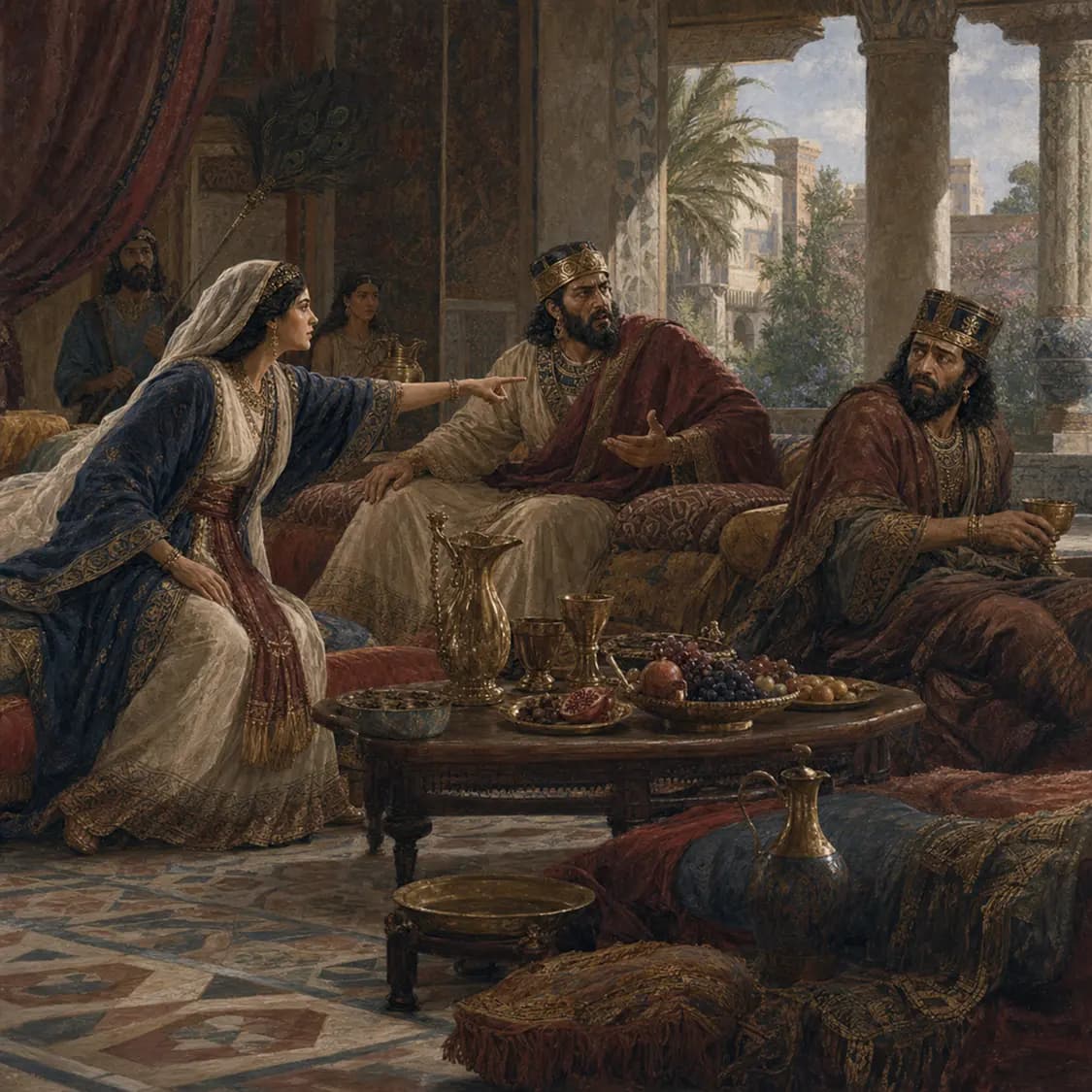
Esther Risks Her Life to Save Her People
Esther, a Jewish orphan raised by Mordecai, becomes queen while keeping her identity hidden. Haman's anger toward Mordecai becomes a decree to destroy the Jews. Esther asks her people to fast, then risks approaching the king without being summoned. Through two banquets she exposes Haman, and his plot turns back on him. Because the first decree cannot be revoked, Esther and Mordecai secure a second decree allowing the Jews to defend themselves. The communities survive, refuse plunder, and establish Purim with feasting, gifts, and generosity toward the poor.
Listen to the story6 min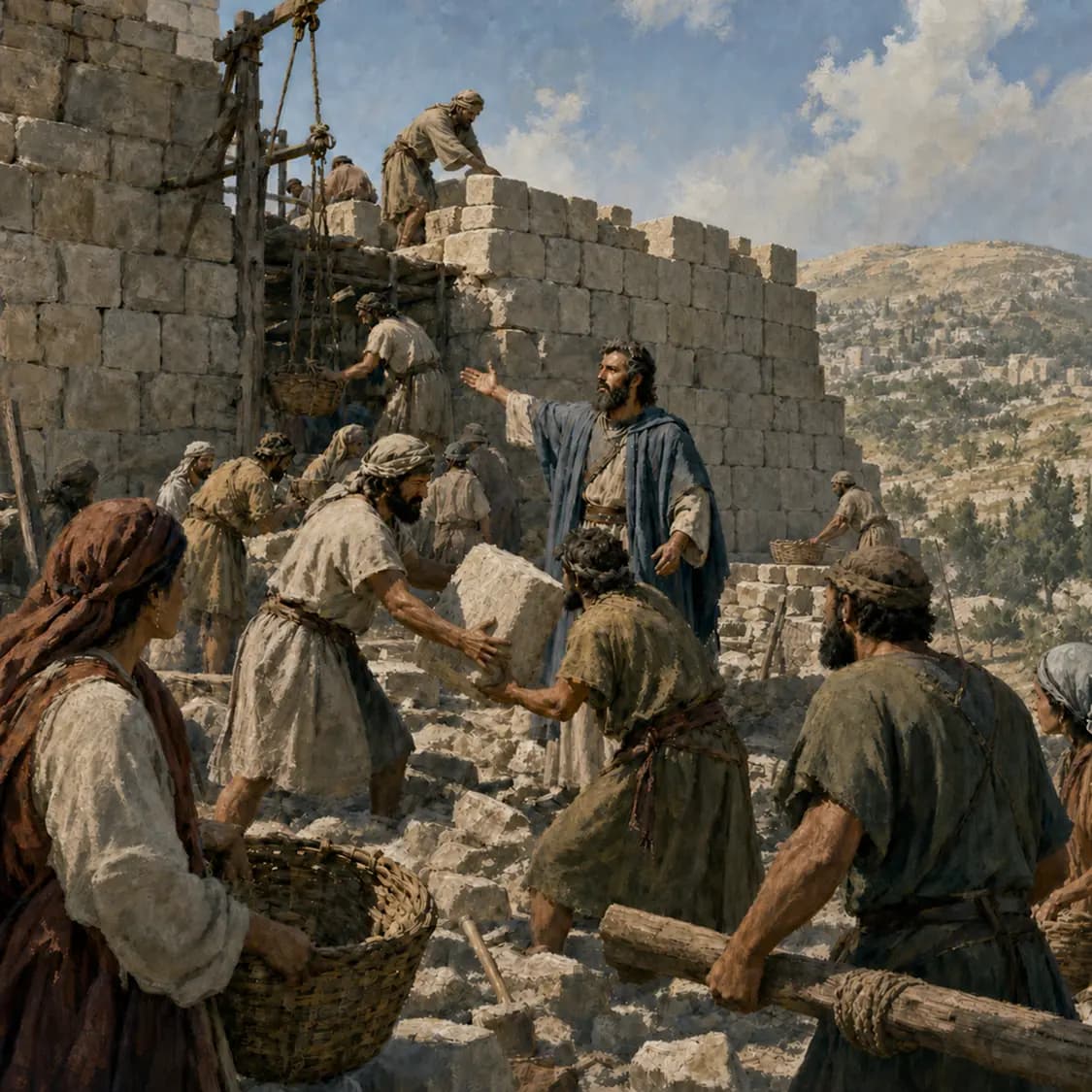
Nehemiah Rebuilds Jerusalem’s Wall
Nehemiah hears that Jerusalem's wall and gates remain ruined, so he mourns, fasts, confesses, and asks Artaxerxes for permission and materials. He inspects the damage at night, organizes families and workers, and combines building with watchfulness as opponents mock and threaten. He also confronts Judean nobles and officials for charging interest and taking fields from their poor neighbors. Sanballat, Tobiah, and Geshem use invitations, threats, and false accusations to distract him, but Nehemiah refuses to stop. The wall is completed in fifty-two days, and the opponents recognize that the work was done with God's help.
Listen to the story6 min
Jesus Comes Near
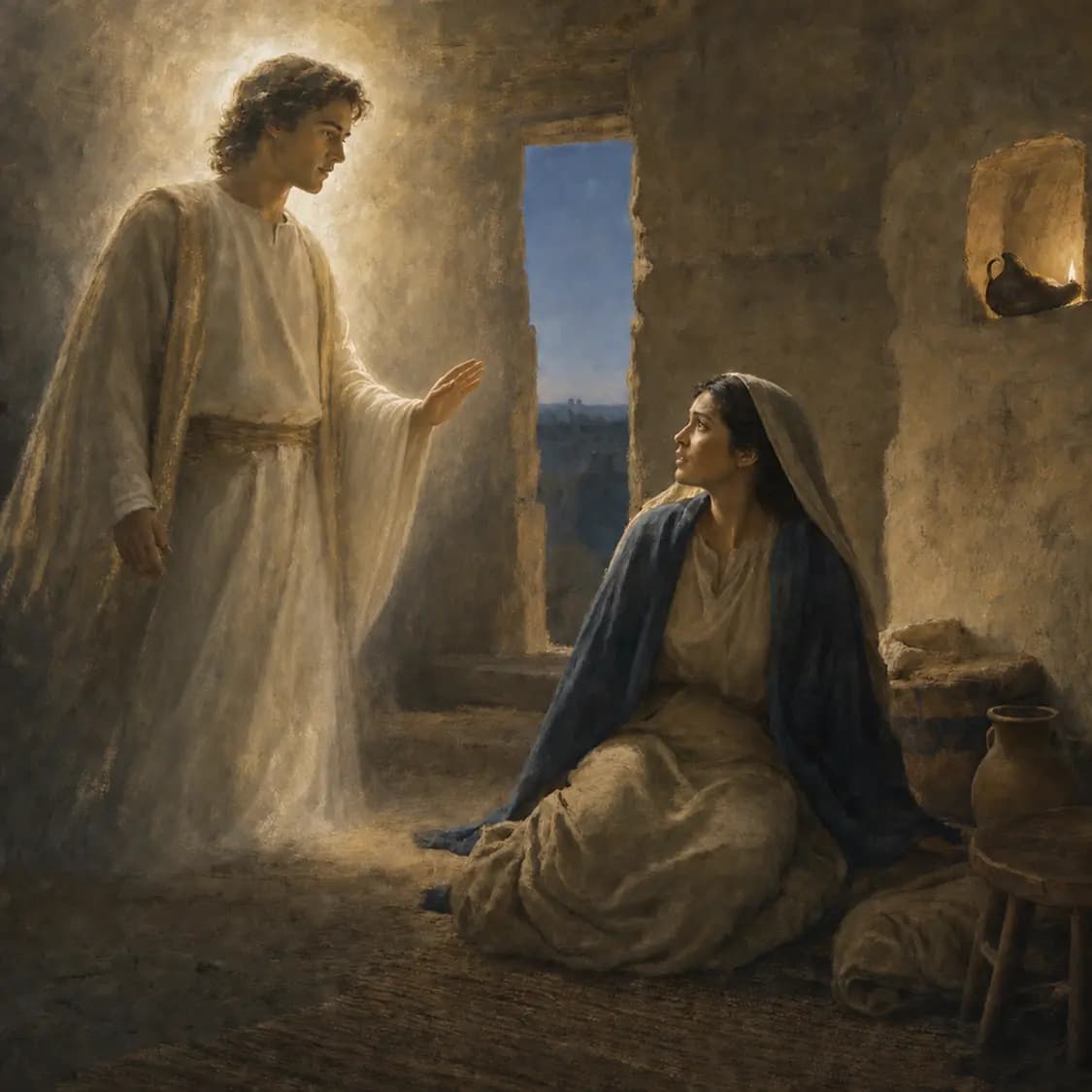
Gabriel Announces Jesus’ Birth to Mary
Gabriel is sent to Nazareth to Mary, a virgin pledged to Joseph, and greets her as one who has received grace. He tells her that she will conceive and bear Jesus, who will be called the Son of the Most High and receive David's throne. Mary asks how this will happen, and Gabriel explains that the Holy Spirit will come upon her; he also points to Elizabeth's pregnancy as a sign that nothing is impossible with God. Mary answers that she is the Lord's servant and accepts the word spoken to her.
Listen to the story3 min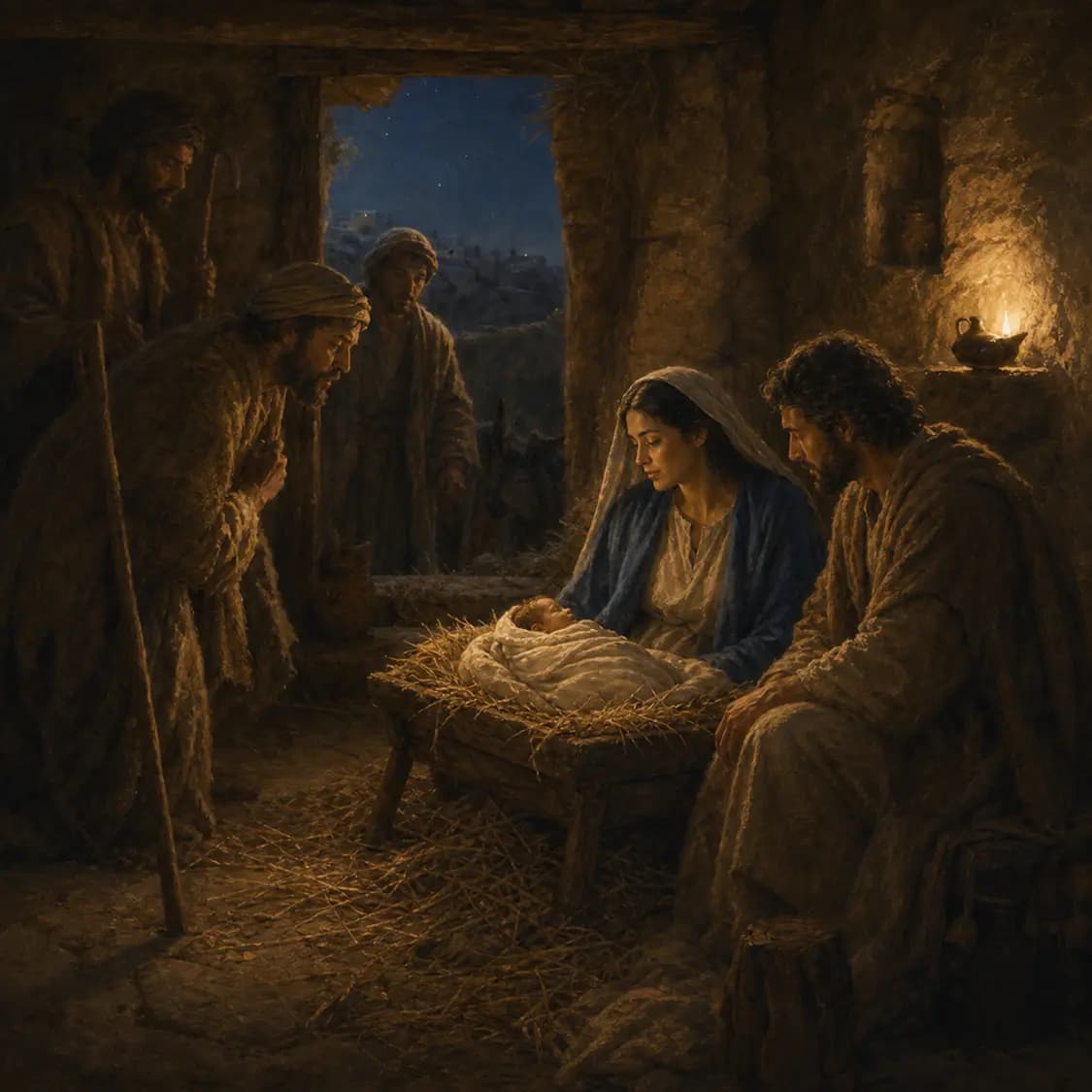
Jesus Is Born and the Shepherds Visit
A decree from Caesar Augustus sends Joseph and Mary to Bethlehem, David's city, because Joseph belongs to David's family. While they are there, Mary gives birth to Jesus, wraps him, and lays him in a manger because there is no guest room available. Nearby shepherds receive an angelic announcement of good news about a Savior, Christ, and Lord. A heavenly multitude praises God. The shepherds hurry to Bethlehem, find Mary, Joseph, and the baby, report what they heard, and return glorifying God. Mary treasures and ponders these things.
Listen to the story4 min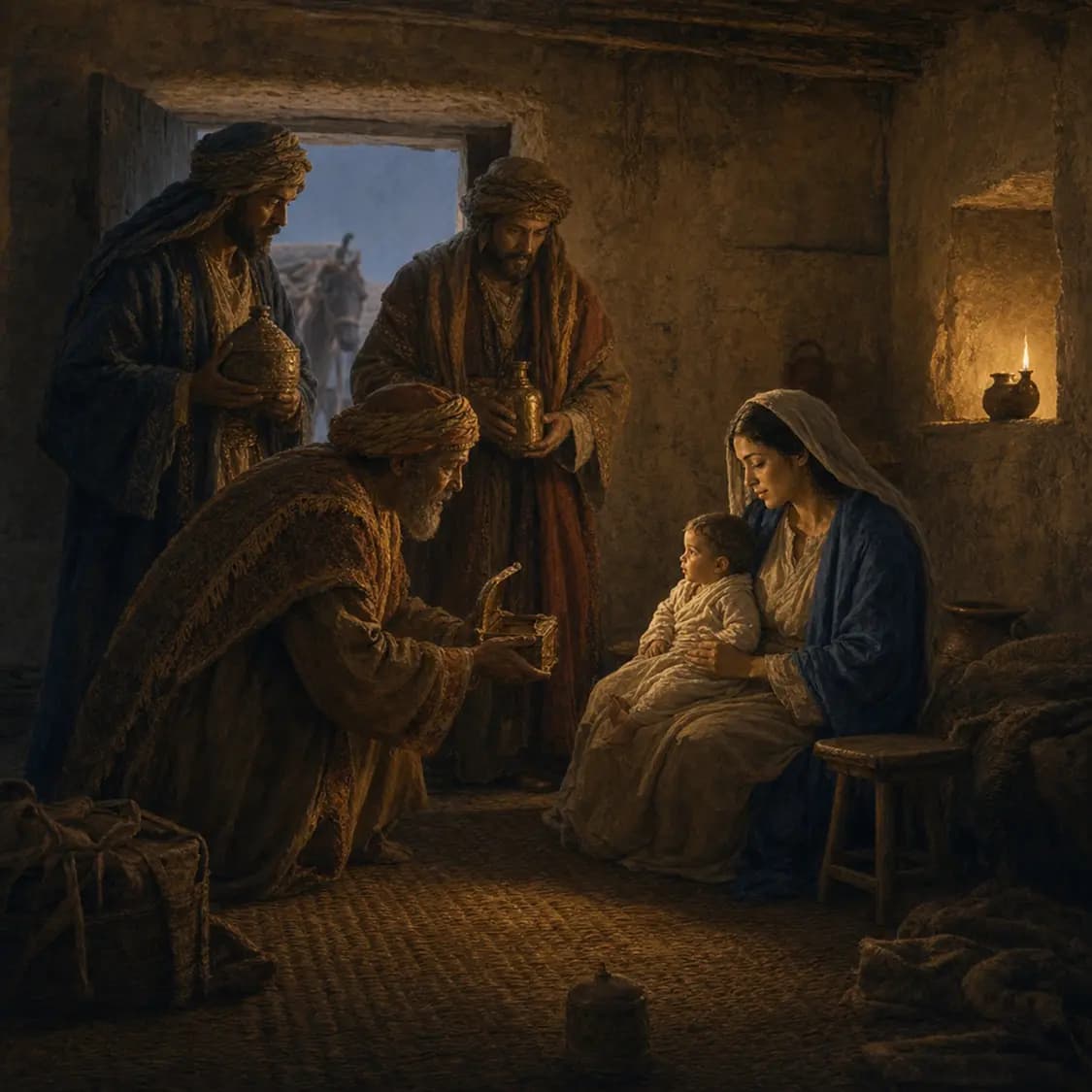
The Wise Men Visit Jesus
Magi from the east arrive in Jerusalem asking where the child born king of the Jews can be found. Herod is troubled, and Jerusalem with him. The chief priests and teachers identify Bethlehem from the prophetic text, so Herod sends the Magi there and asks them to report back. The star leads them to the child and his mother; they fall down, worship, and offer gold, frankincense, and myrrh. Warned in a dream not to return to Herod, they go home by another route.
Listen to the story3 min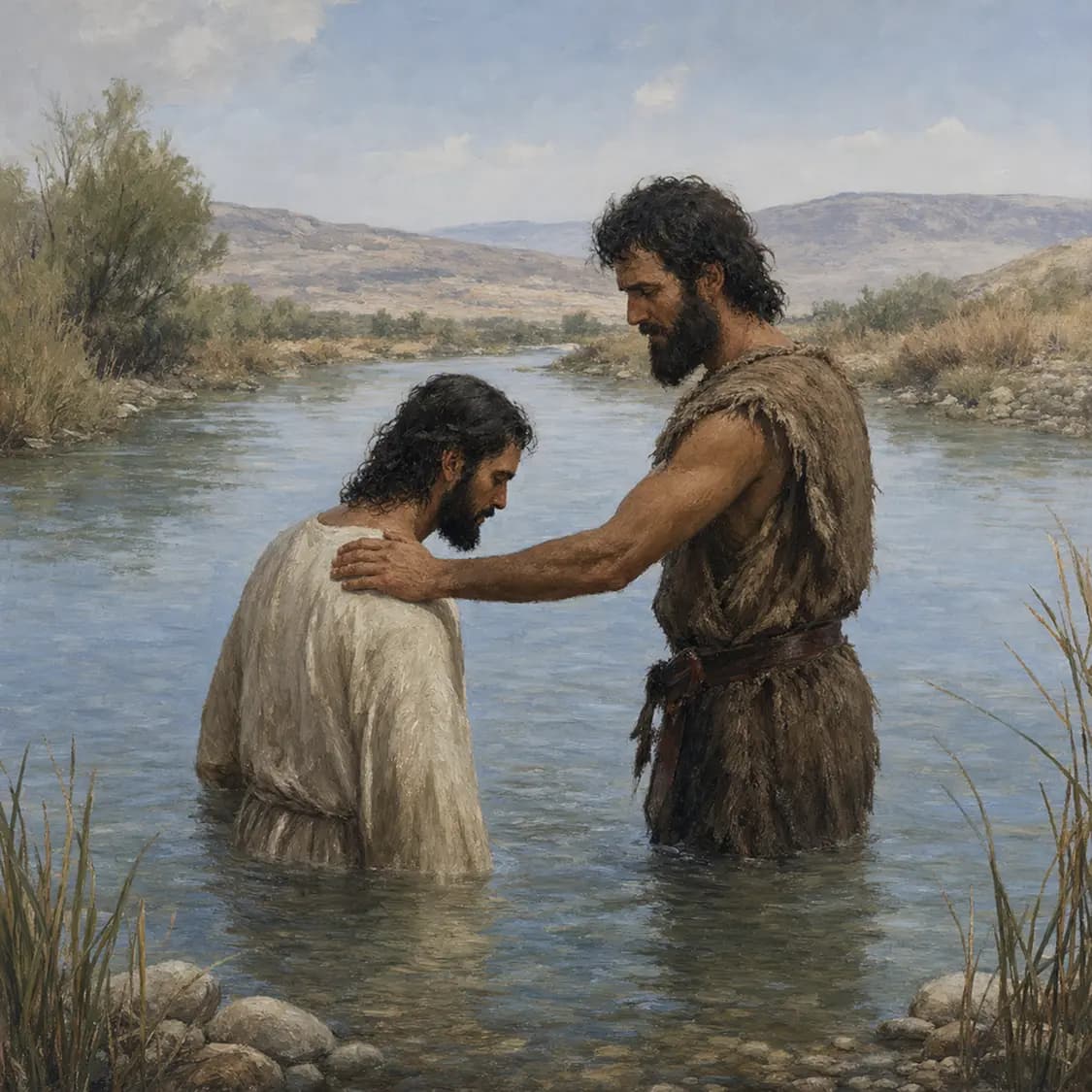
John the Baptist and the Baptism of Jesus
John the Baptist preaches repentance beside the Jordan and baptizes people who confess their sins. He warns religious leaders not to rely on ancestry and points ahead to one stronger than himself. Jesus comes from Galilee to be baptized, and John objects because he recognizes Jesus' greater status. Jesus answers that this is fitting to fulfill all righteousness. After Jesus is baptized, the heavens open, the Spirit descends like a dove, and a voice declares him God's beloved Son. The scene presents Jesus' identity and mission without making baptism a performance for public approval.
Listen to the story4 min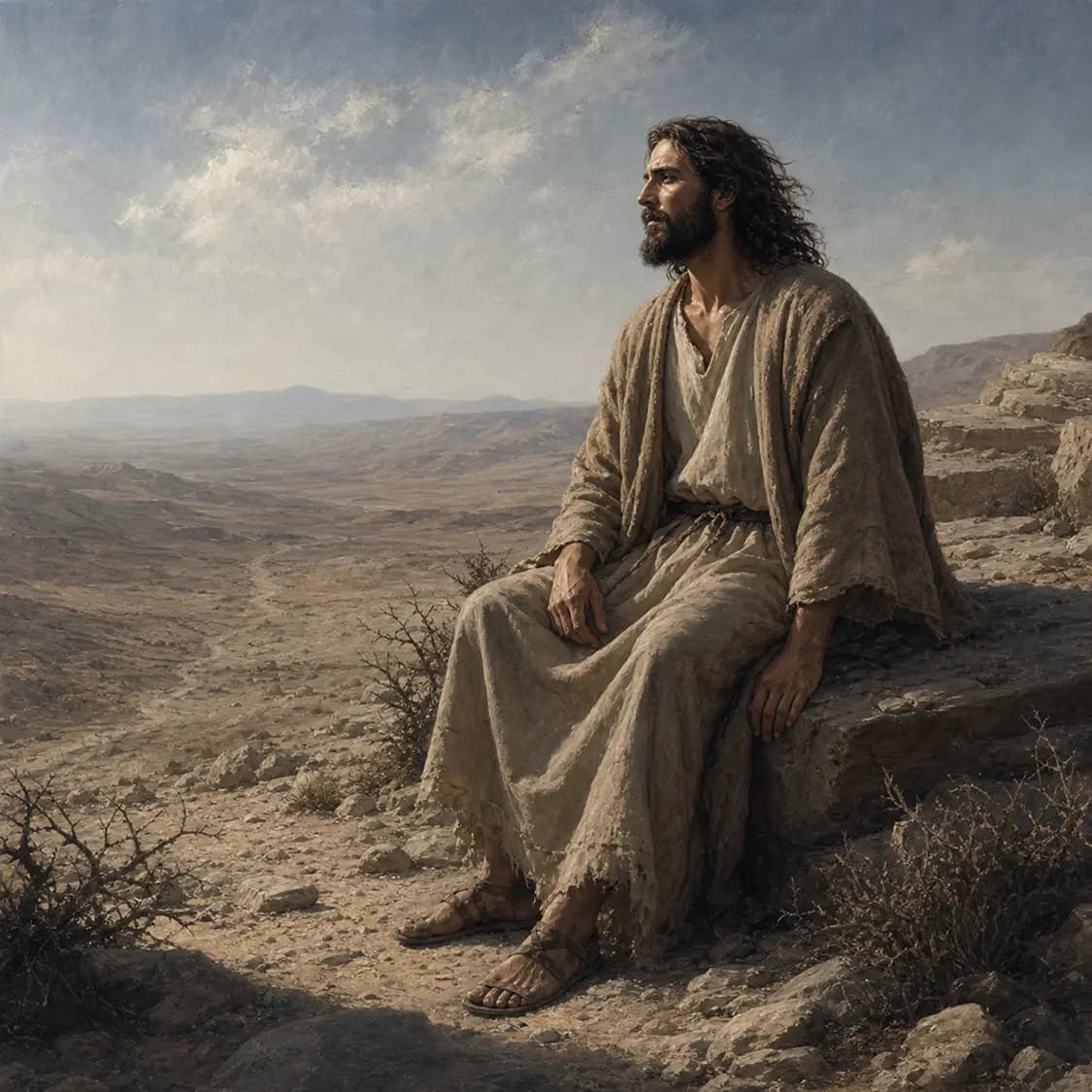
Jesus Is Tempted in the Wilderness
After Jesus' baptism, the Spirit leads him into the wilderness, where he fasts for forty days and nights and becomes hungry. The devil challenges his identity as God's Son, urging him to turn stones into bread, throw himself from the temple, and gain the world's kingdoms by worshiping the tempter. Jesus answers each challenge with Scripture: life depends on God's word, God must not be tested, and only God must be worshiped and served. The devil leaves, and angels come to serve Jesus. The account presents obedience under pressure, not a technique for controlling temptation.
Listen to the story3 min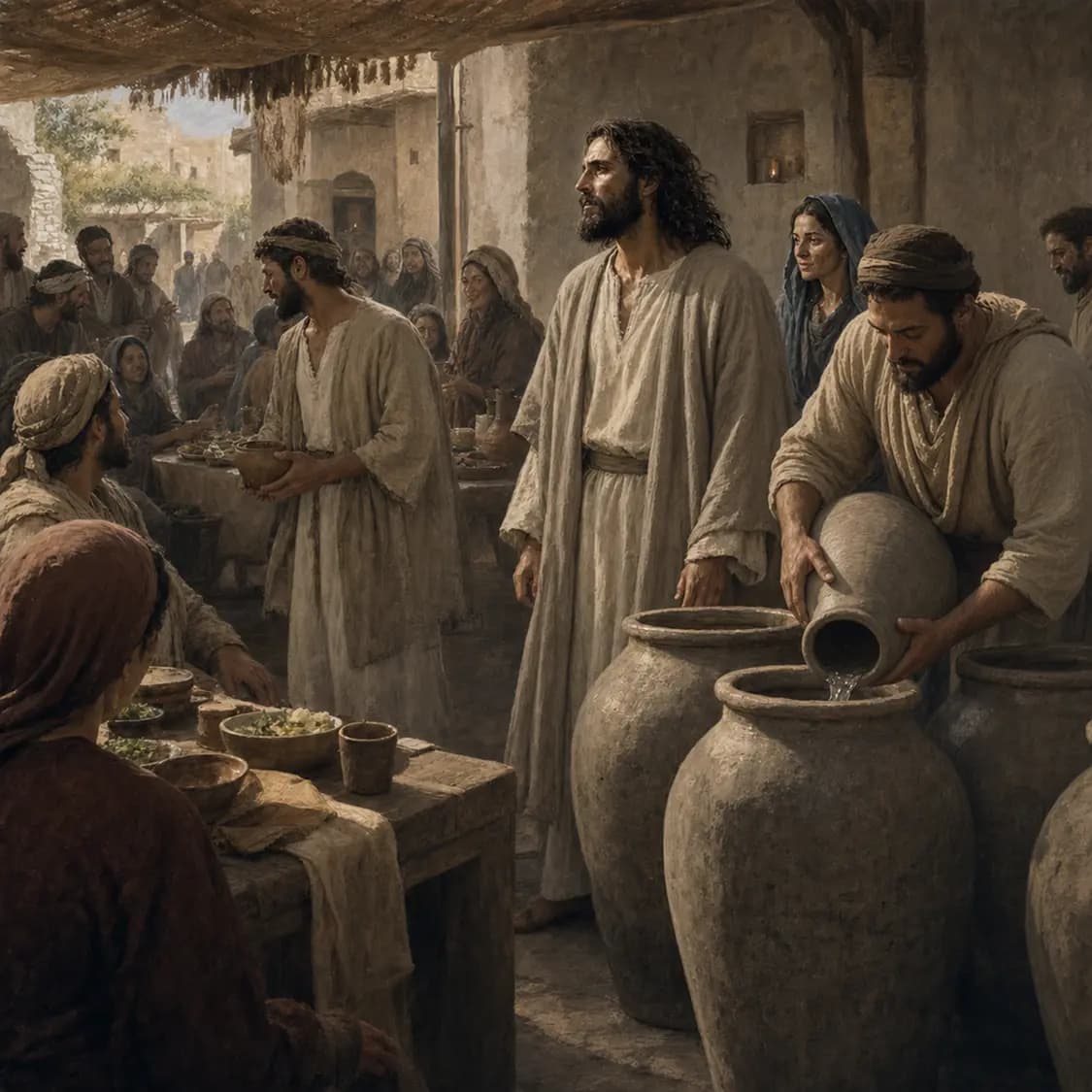
Jesus Turns Water into Wine
At a wedding in Cana of Galilee, the wine runs out, and Jesus' mother tells him about the shortage. Jesus answers that his hour has not yet come, but Mary tells the servants to do whatever he says. Nearby stand six stone jars used for Jewish purification, each holding a large amount. Jesus tells the servants to fill them with water and draw some out. The master of the banquet tastes wine of remarkable quality without knowing its source. This first sign reveals Jesus' glory, and his disciples believe in him.
Listen to the story2 min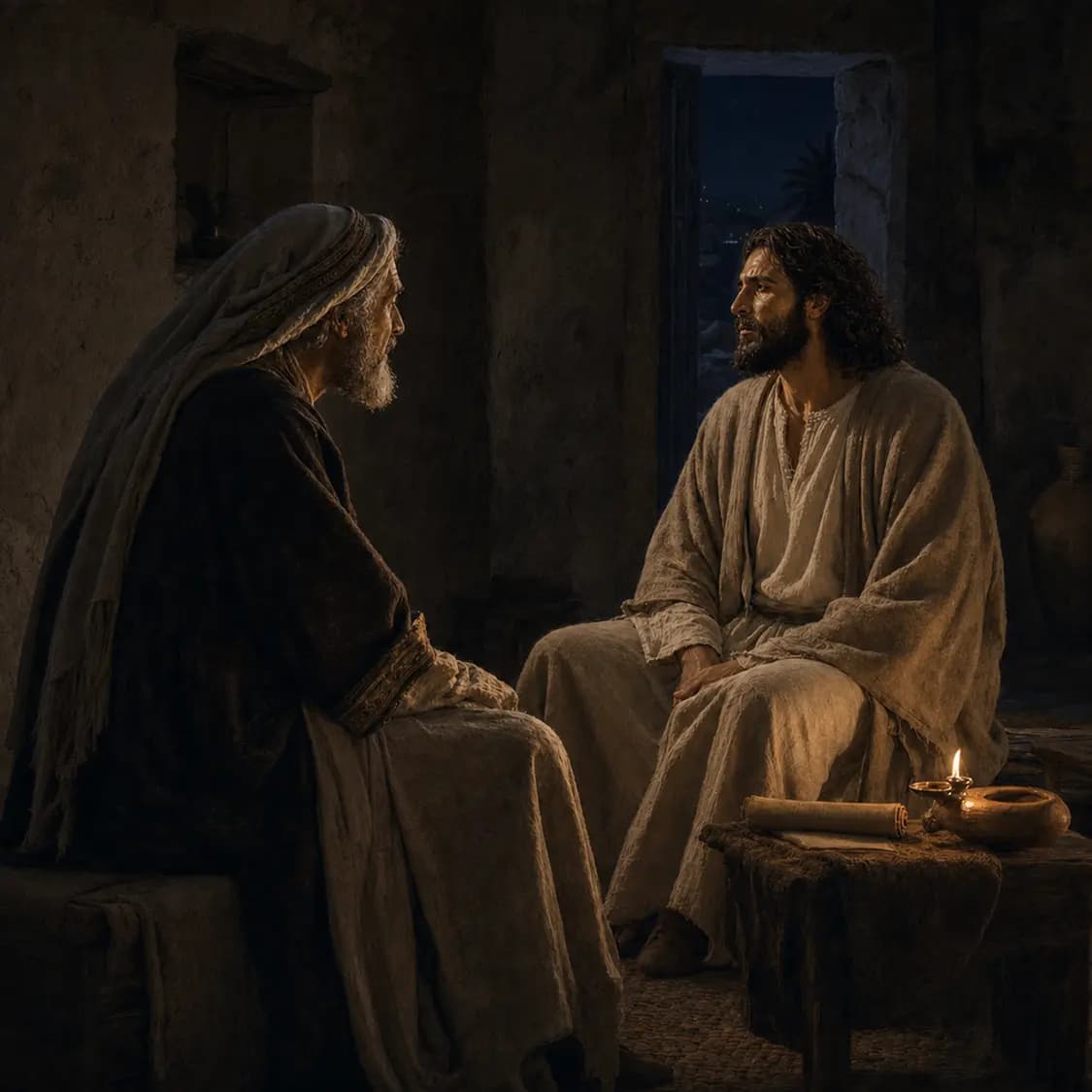
Nicodemus Visits Jesus at Night
Nicodemus, a Pharisee and ruler of the Jews, comes to Jesus at night and acknowledges the signs Jesus has done. Jesus tells him that no one can see God's kingdom without being born again or from above. Nicodemus asks how an adult can be born, and Jesus speaks of birth from water and Spirit, the unpredictable wind, and the Son of Man being lifted up so that believers may have eternal life. The conversation moves from misunderstanding to revelation about God's love, light, truth, and the world's response to Jesus.
Listen to the story5 min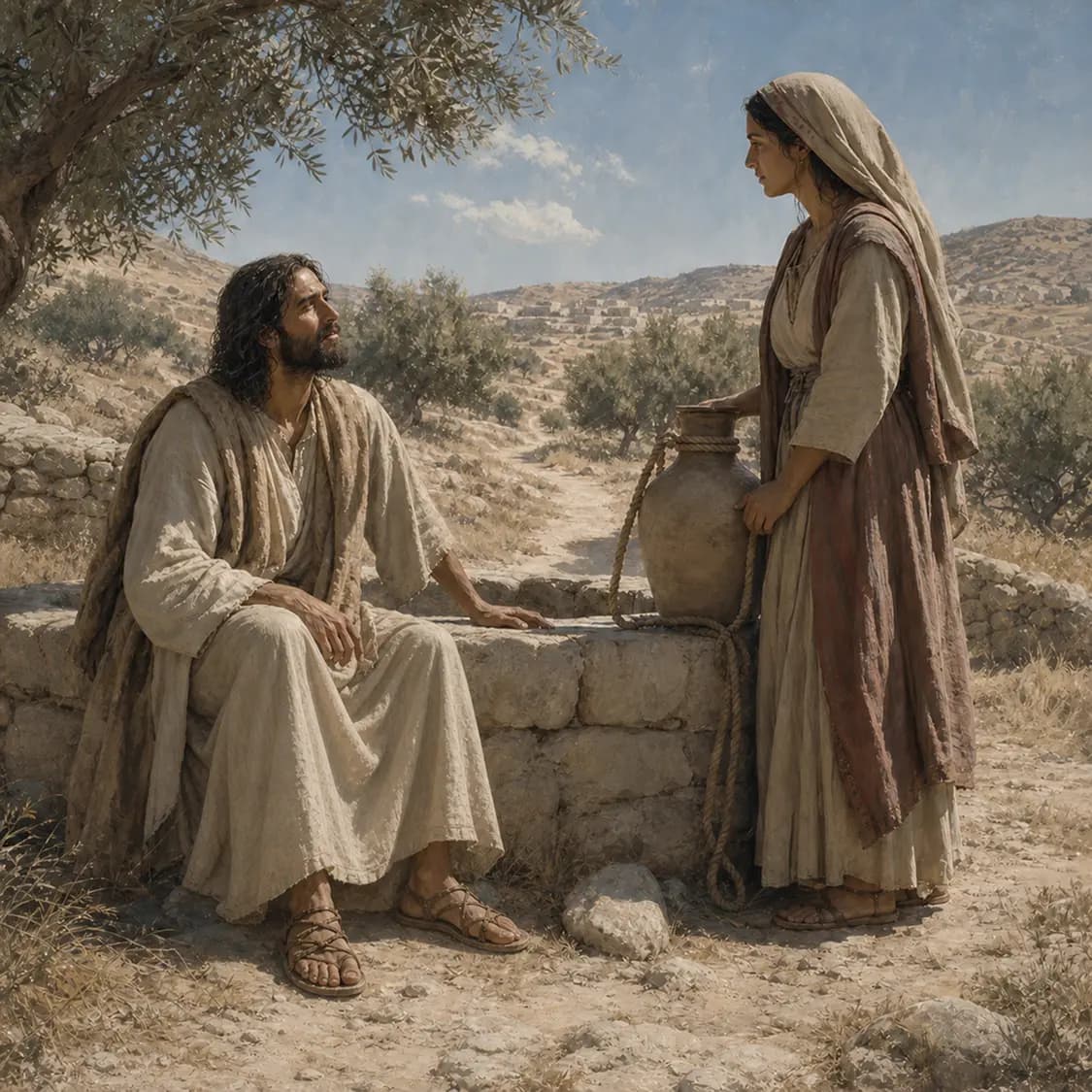
Jesus and the Samaritan Woman at the Well
Jesus travels through Samaria and stops at Jacob's well while his disciples go into town for food. A Samaritan woman comes to draw water, and Jesus asks her for a drink. He offers living water that becomes a spring leading to eternal life, then reveals that he knows about her five husbands and current relationship without turning the conversation into a spectacle. They discuss worship, and Jesus says true worshipers will worship the Father in spirit and truth. When she speaks of the coming Messiah, Jesus identifies himself. Her testimony brings many Samaritans to hear and believe.
Listen to the story5 min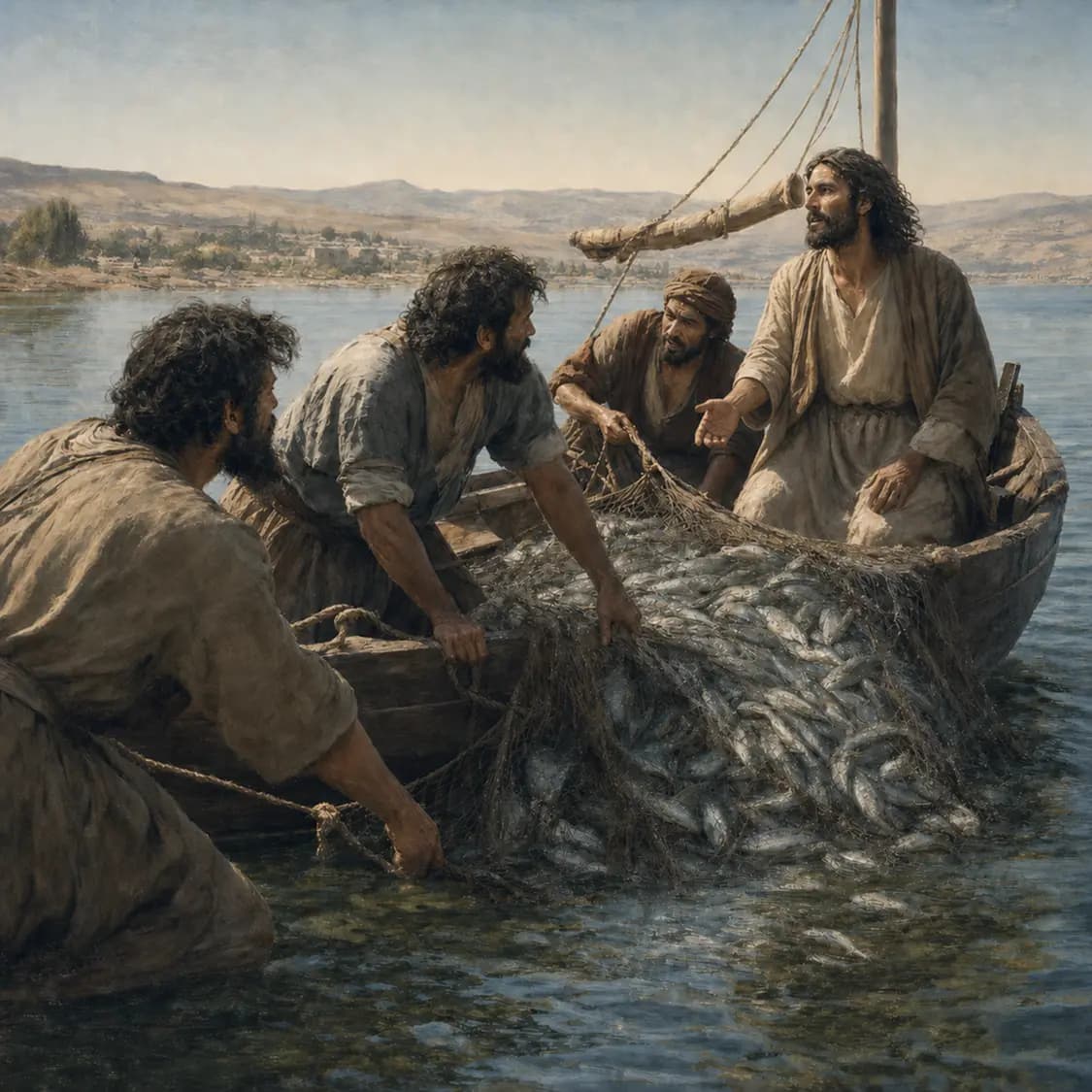
Jesus Calls the Fishermen
Jesus teaches from a boat on the lake of Gennesaret while crowds press around him. He tells Simon to put out into deep water and let down the nets after a night of catching nothing. The nets fill so heavily that Simon signals James and John in the other boat, and both boats begin to sink under the catch. Simon falls at Jesus' knees and confesses his sinfulness. Jesus tells him not to be afraid and says that from then on he will catch people. Simon, James, and John bring the boats to shore, leave everything, and follow Jesus.
Listen to the story4 min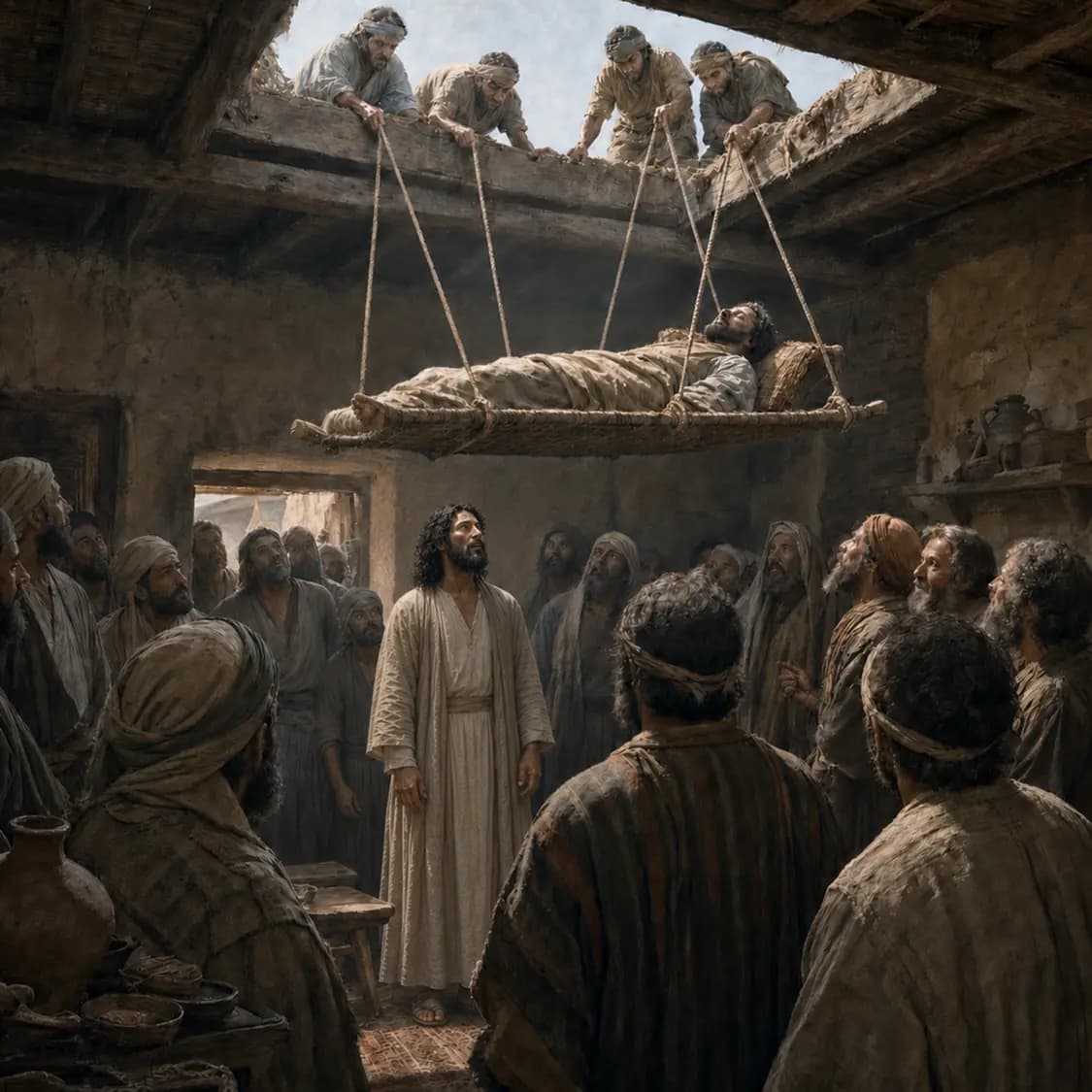
Jesus Forgives and Heals the Paralyzed Man
Jesus is teaching in a crowded house when four people bring a paralyzed man. Unable to reach Jesus through the crowd, they open the roof above him and lower him down. Seeing their faith, Jesus first tells the man that his sins are forgiven. Scribes question in their hearts whether anyone can forgive sins but God. Jesus asks which is easier to say and then commands the man to rise, take his mat, and go home. The man immediately stands, carries the mat, and leaves before the crowd, who glorify God.
Listen to the story4 min
The Kingdom in Word and Power
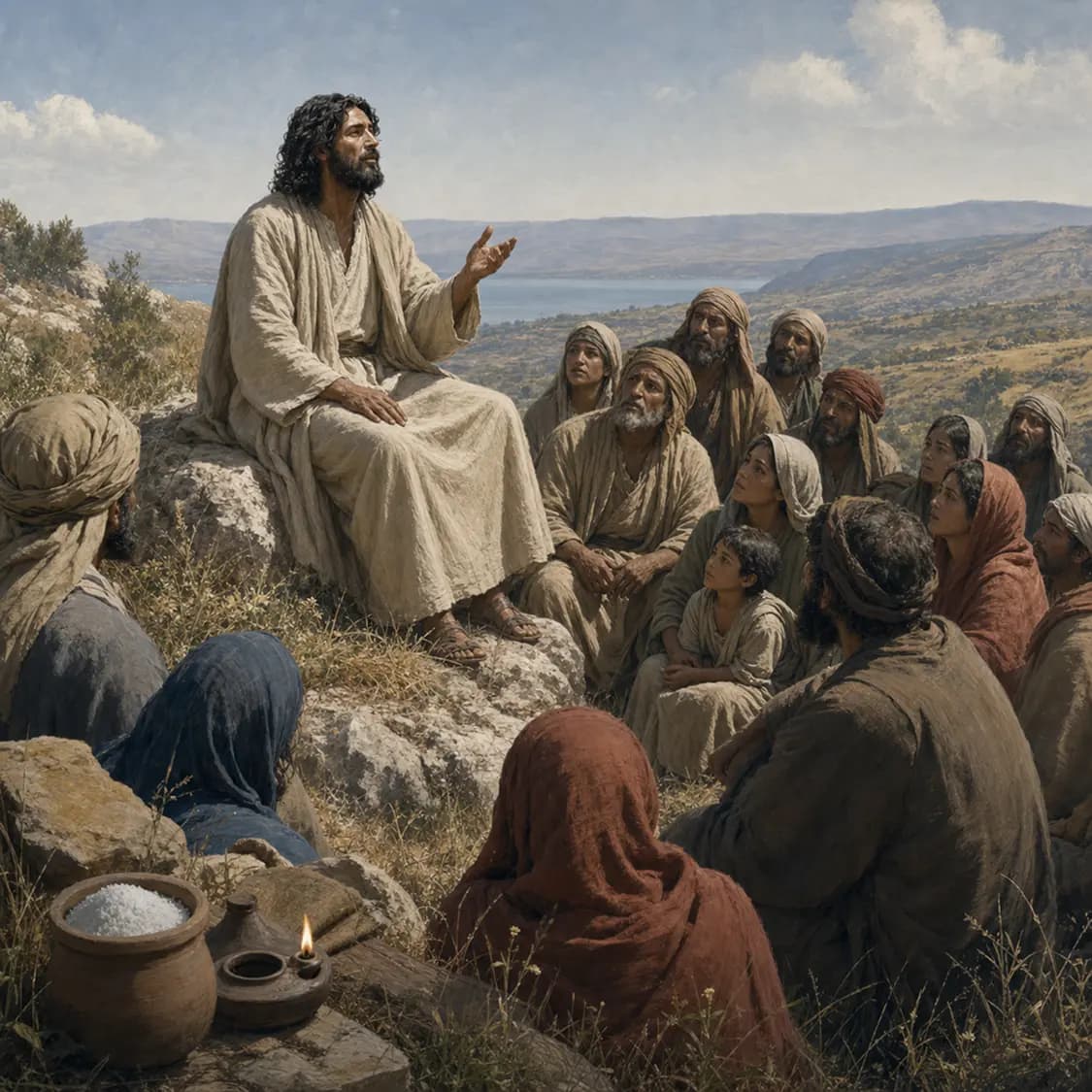
Jesus Teaches About Blessing, Salt, and Light
Jesus sits on a mountain and teaches his disciples, beginning with blessings for the poor in spirit, mourners, the meek, those who hunger for righteousness, the merciful, the pure in heart, peacemakers, and the persecuted. He tells them they are salt of the earth and light of the world. Salt that loses its distinctiveness is useless, while a city on a hill and a lamp on a stand are meant to be seen. Their light should shine through good works so people glorify their Father in heaven.
Listen to the story4 min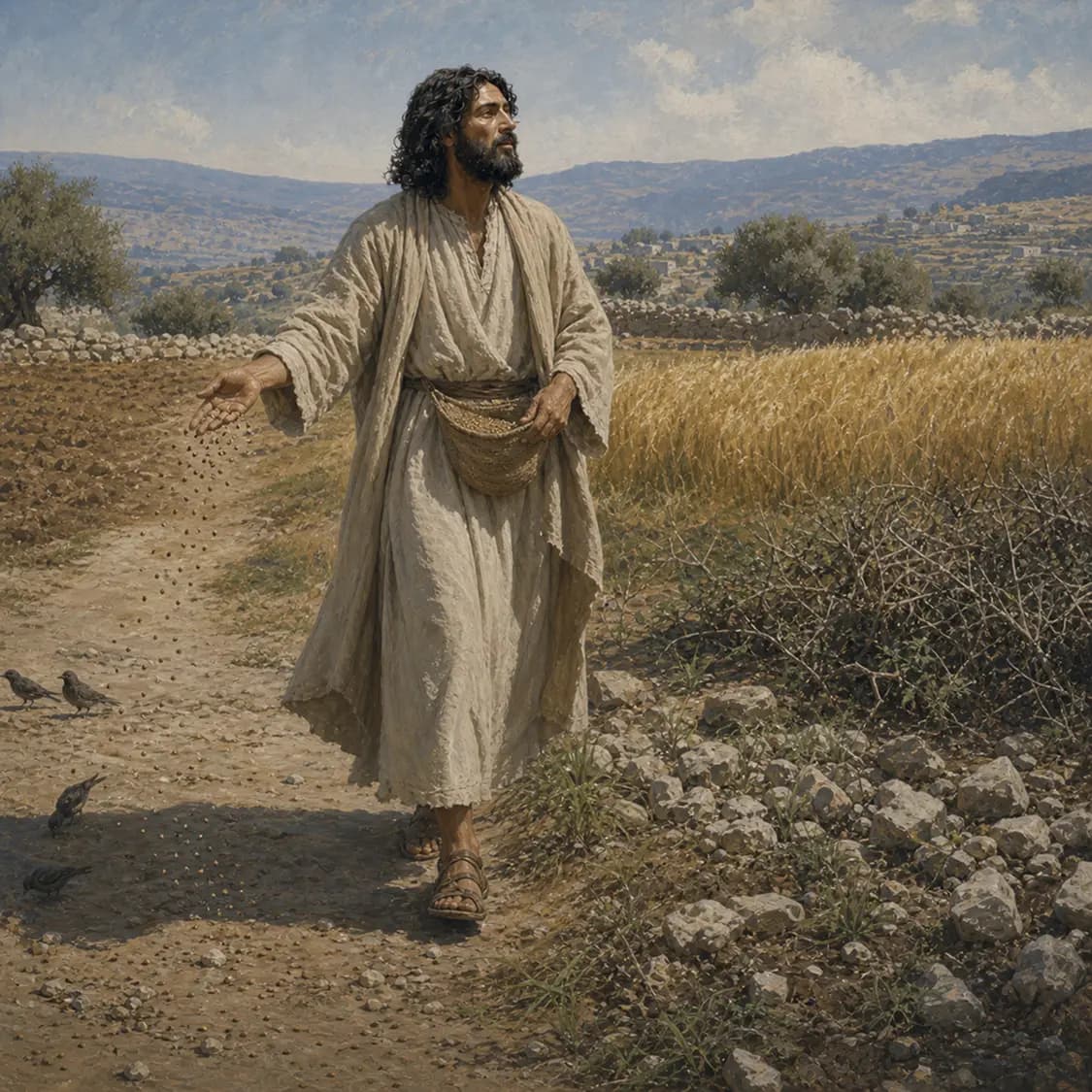
The Parable of the Sower
Jesus tells a crowd about a sower whose seed falls on a path, rocky ground, among thorns, and on good soil. Birds take the seed on the path; rocky plants spring up quickly but wither because they have no root; thorns choke growing plants through worries, deceitful wealth, and desires for other things. On good soil the seed grows and produces thirty-, sixty-, and a hundredfold. Jesus later explains that the seed is the word. The soils picture responses that resist, receive briefly, become crowded, or bear fruit with endurance.
Listen to the story4 min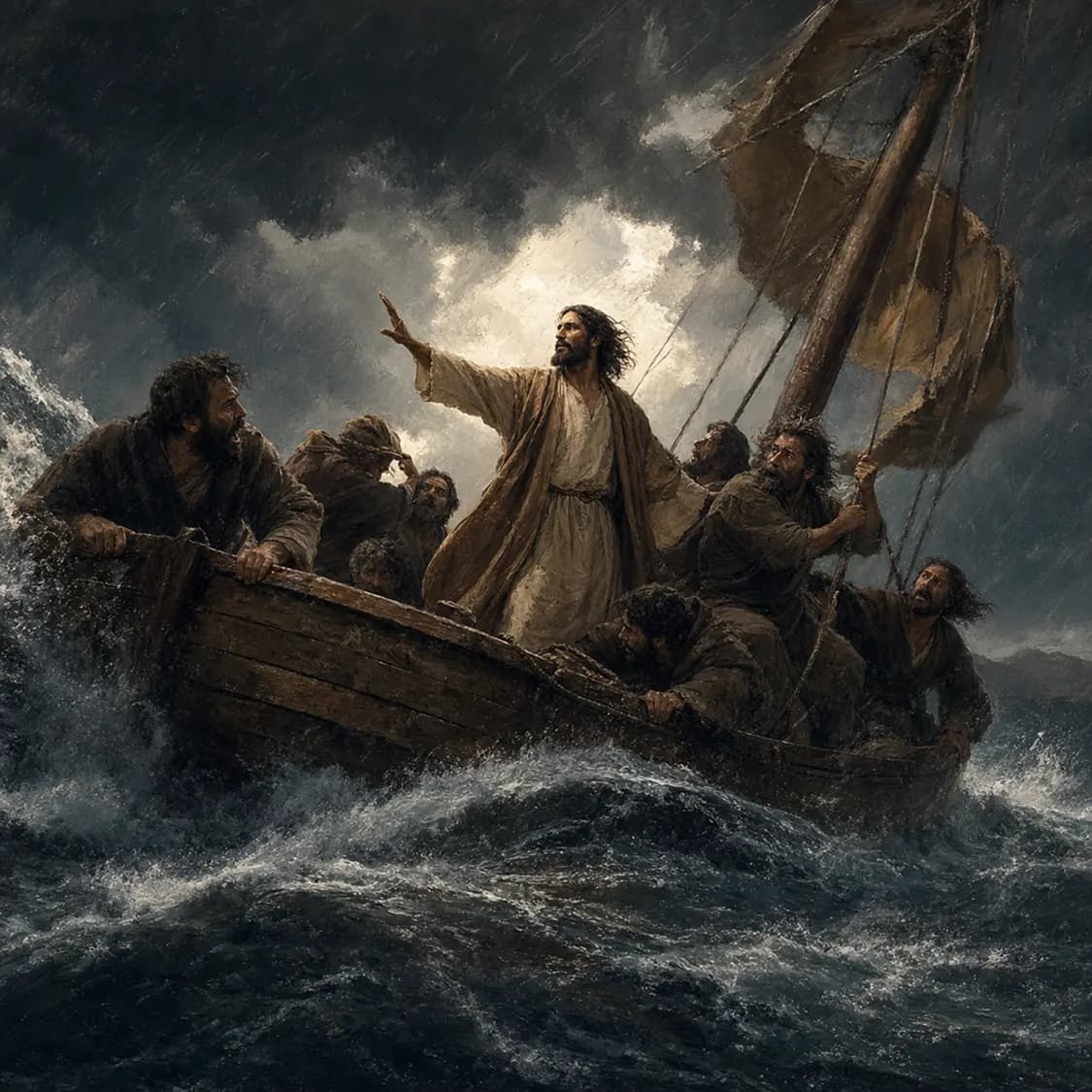
Jesus Calms the Storm
After teaching by the lake, Jesus tells his disciples to cross to the other side and remains in the boat as evening comes. A violent windstorm rises, waves break over the boat, and it begins filling with water. Jesus is asleep on a cushion. The disciples wake him and ask whether he cares that they are about to drown. Jesus rebukes the wind, tells the sea to be still, and the storm becomes completely calm. He asks why they are afraid and whether they still have no faith. The disciples respond with fearful wonder: who is this, that even wind and sea obey him?
Listen to the story3 min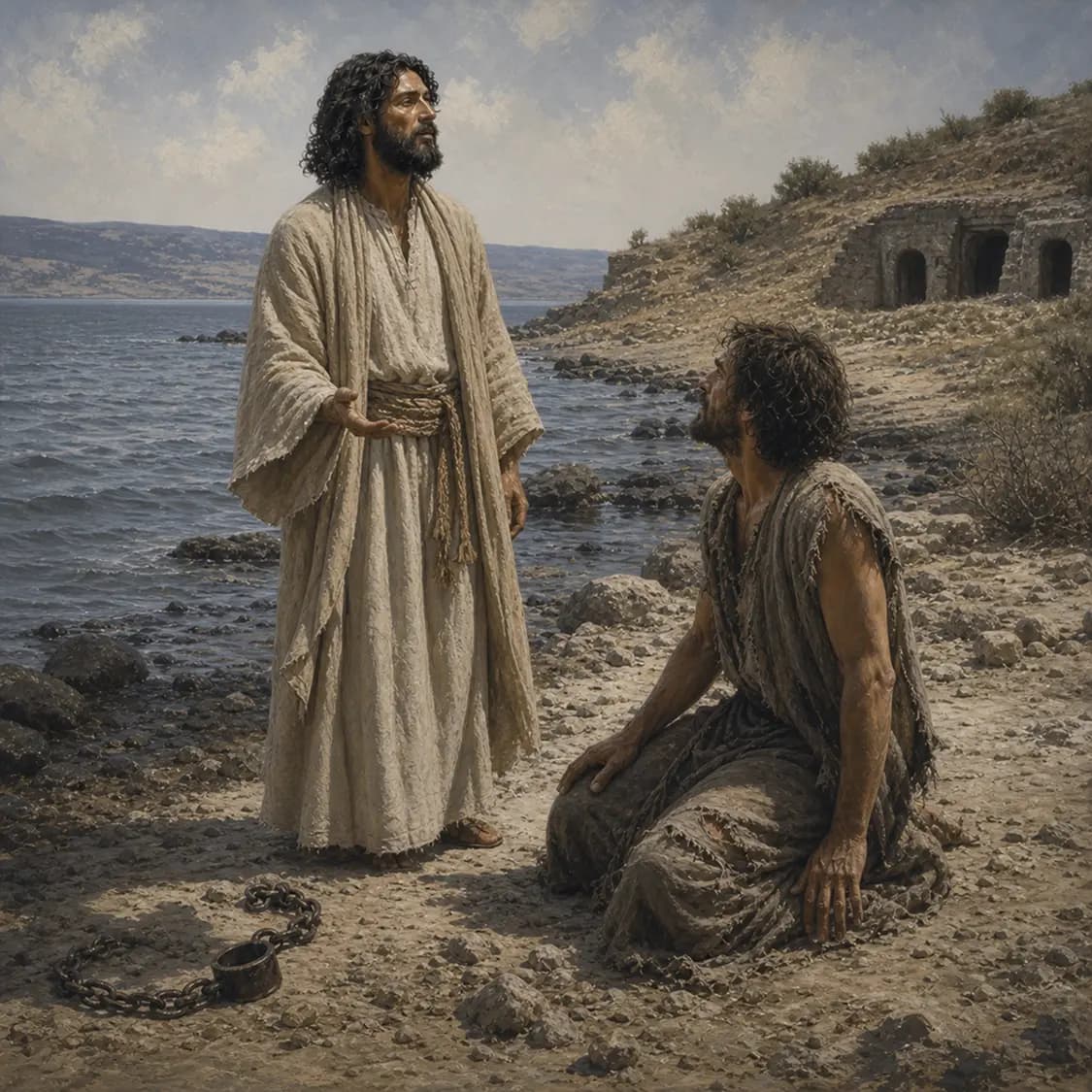
Jesus Frees a Man in the Gerasenes
In the region of the Gerasenes, Jesus meets a man living among tombs under the power of an unclean spirit. The man cannot be restrained and harms himself, while the spirit recognizes Jesus and gives the name Legion because many spirits are present. Jesus permits them to enter a nearby herd of about two thousand pigs, which rushes down the bank and drowns. The man is then seen clothed and in his right mind. The local people ask Jesus to leave, but Jesus sends the restored man home to tell his people what the Lord has done.
Listen to the story4 min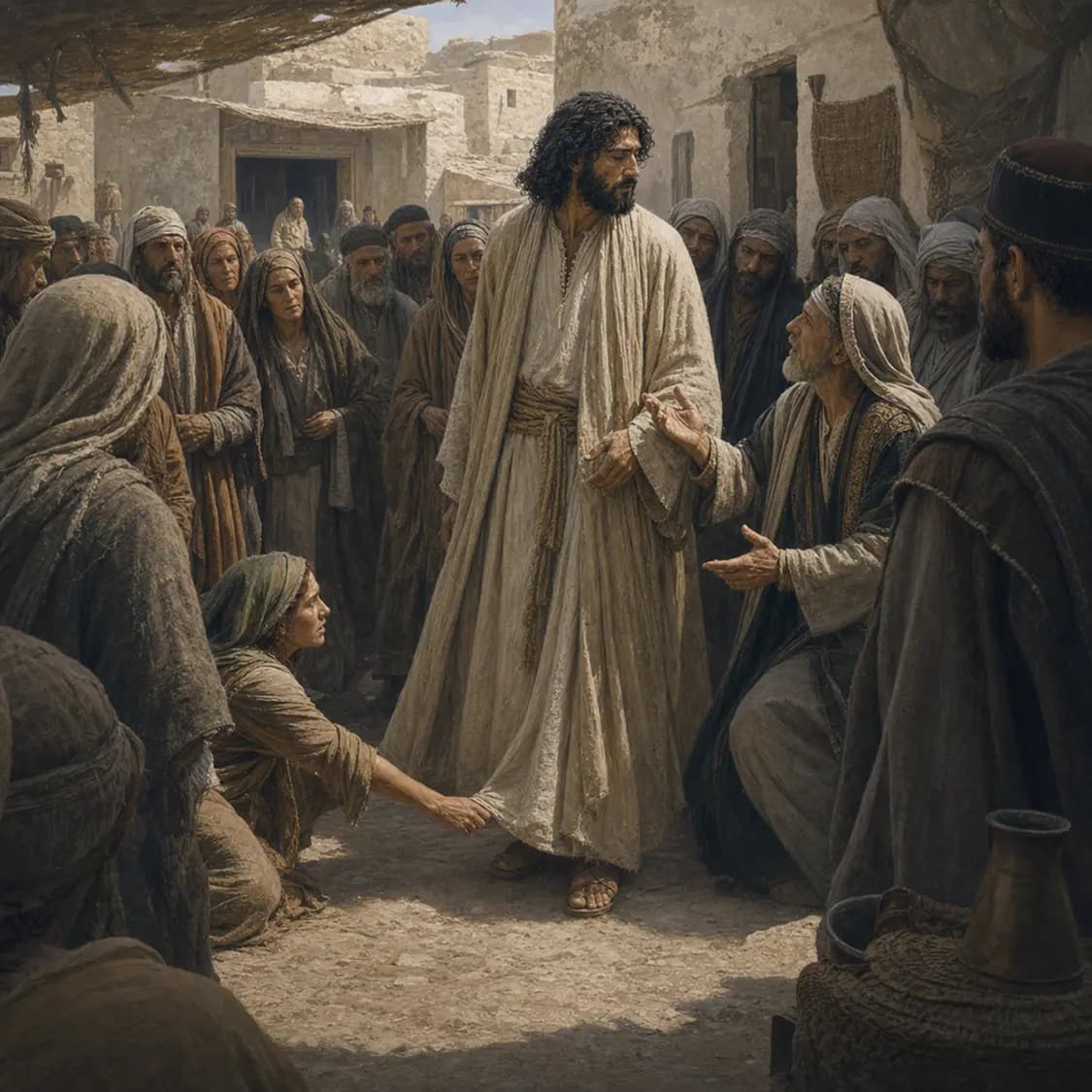
Jairus’s Daughter and the Woman Who Touched Jesus
Jairus, a synagogue leader, begs Jesus to heal his dying daughter. On the way, a woman who has suffered bleeding for twelve years touches Jesus' garment and is healed immediately. Jesus stops, calls her “Daughter,” and sends her away in peace. Messengers then tell Jairus that his child has died, but Jesus tells him not to fear and to keep believing. With Peter, James, and John, Jesus enters the girl's room, takes her hand, and commands her to rise. She stands and walks, and Jesus tells her family to give her something to eat.
Listen to the story4 min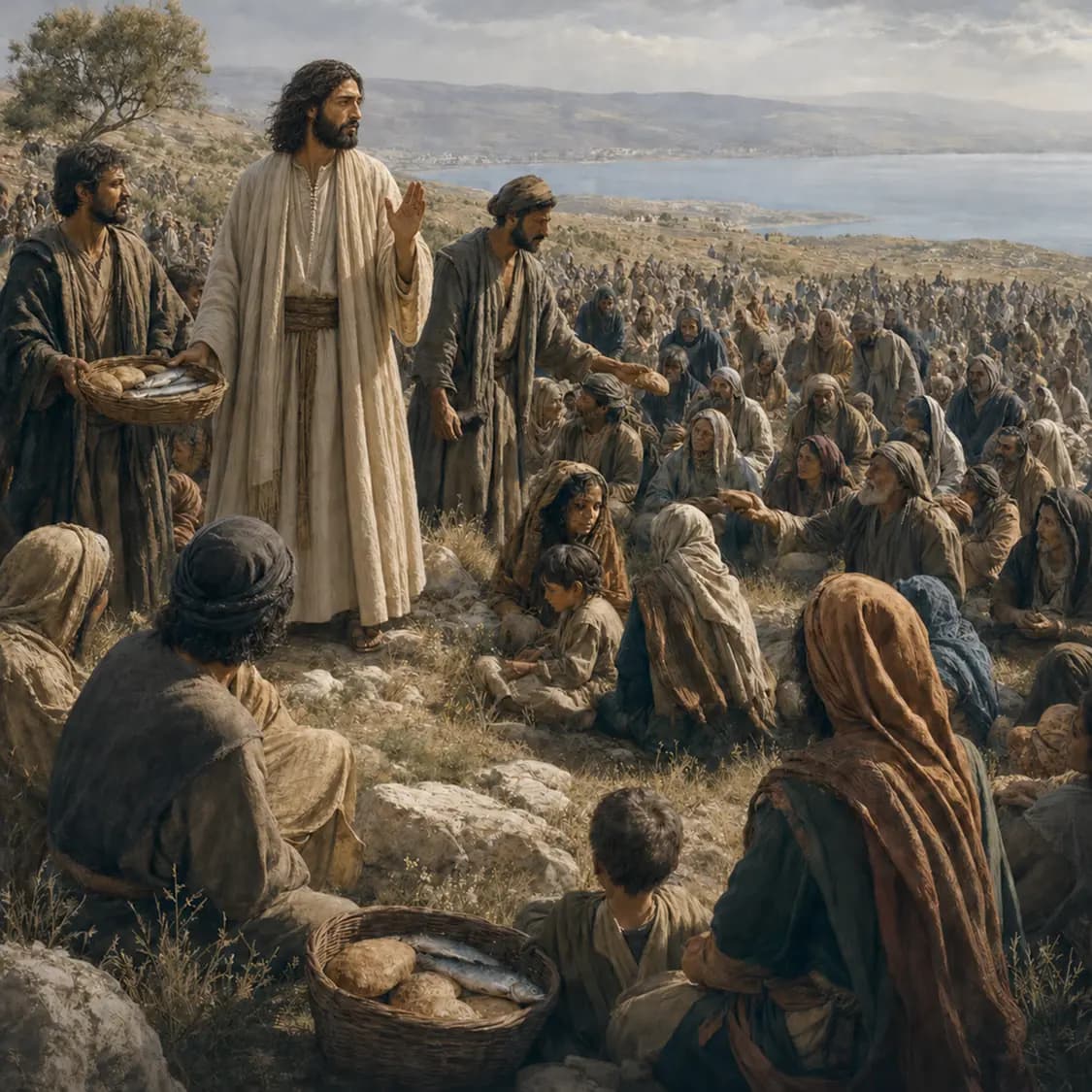
Jesus Feeds Five Thousand
Jesus withdraws by boat to a remote place, but crowds follow on foot. Seeing them, he has compassion, heals the sick, and refuses to send them away when evening comes. The disciples suggest that the people buy food, but Jesus tells them to feed the crowd. They have only five loaves and two fish. Jesus has the people sit, blesses and breaks the food, and gives it to the disciples to distribute. Everyone eats and is satisfied, and the disciples gather twelve baskets of pieces. Matthew counts about five thousand men besides women and children.
Listen to the story3 min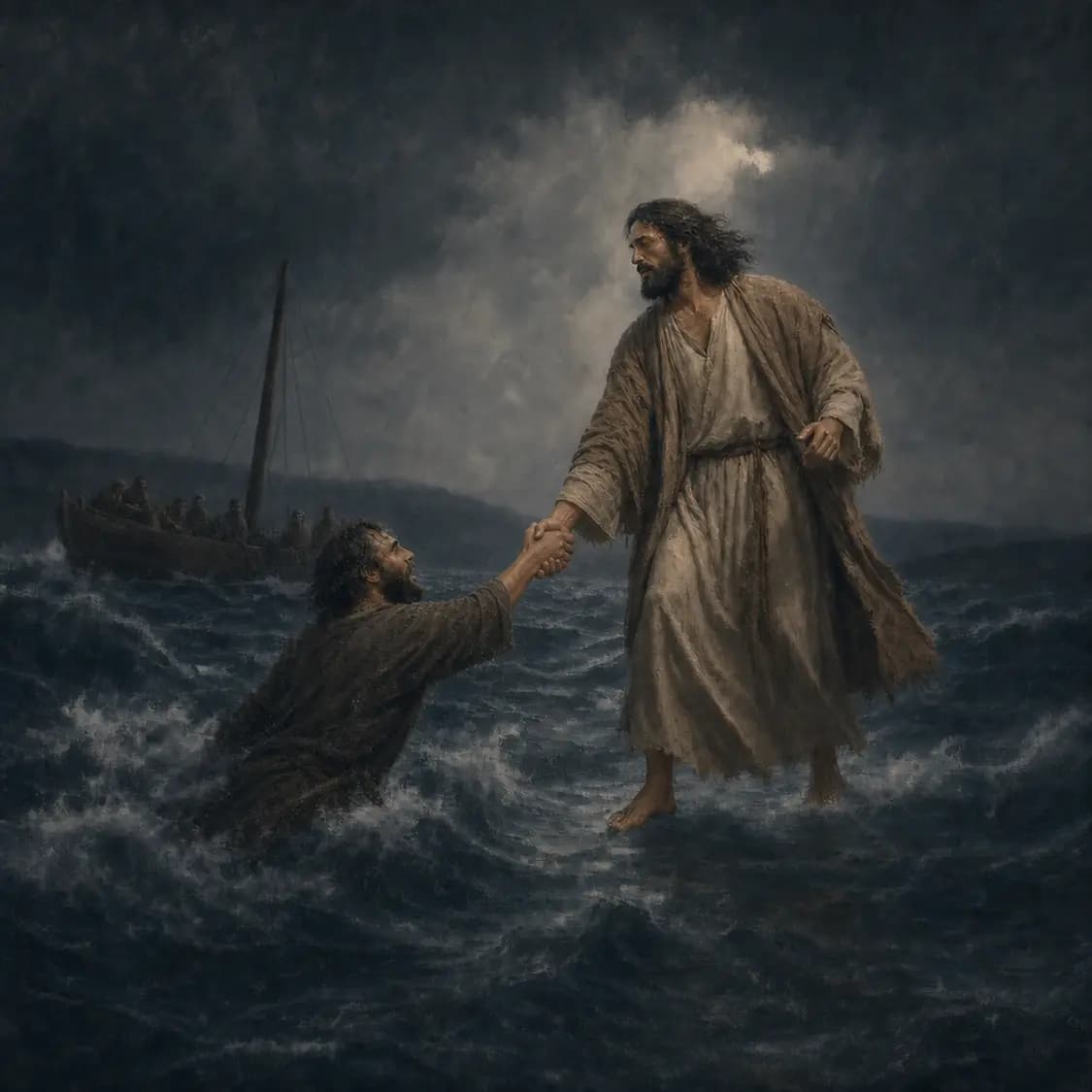
Jesus Walks on Water
Jesus sends the disciples across the lake, dismisses the crowd, and goes up a mountain alone to pray. Before dawn, the disciples are struggling against wind and waves when Jesus comes toward them walking on the water. They mistake him for a ghost until he tells them to take courage. Peter asks to come, and Jesus says, “Come.” Peter walks toward him but begins to sink when fear takes over. Jesus immediately catches him. When they enter the boat, the wind stops, and the disciples worship Jesus as the Son of God.
Listen to the story4 min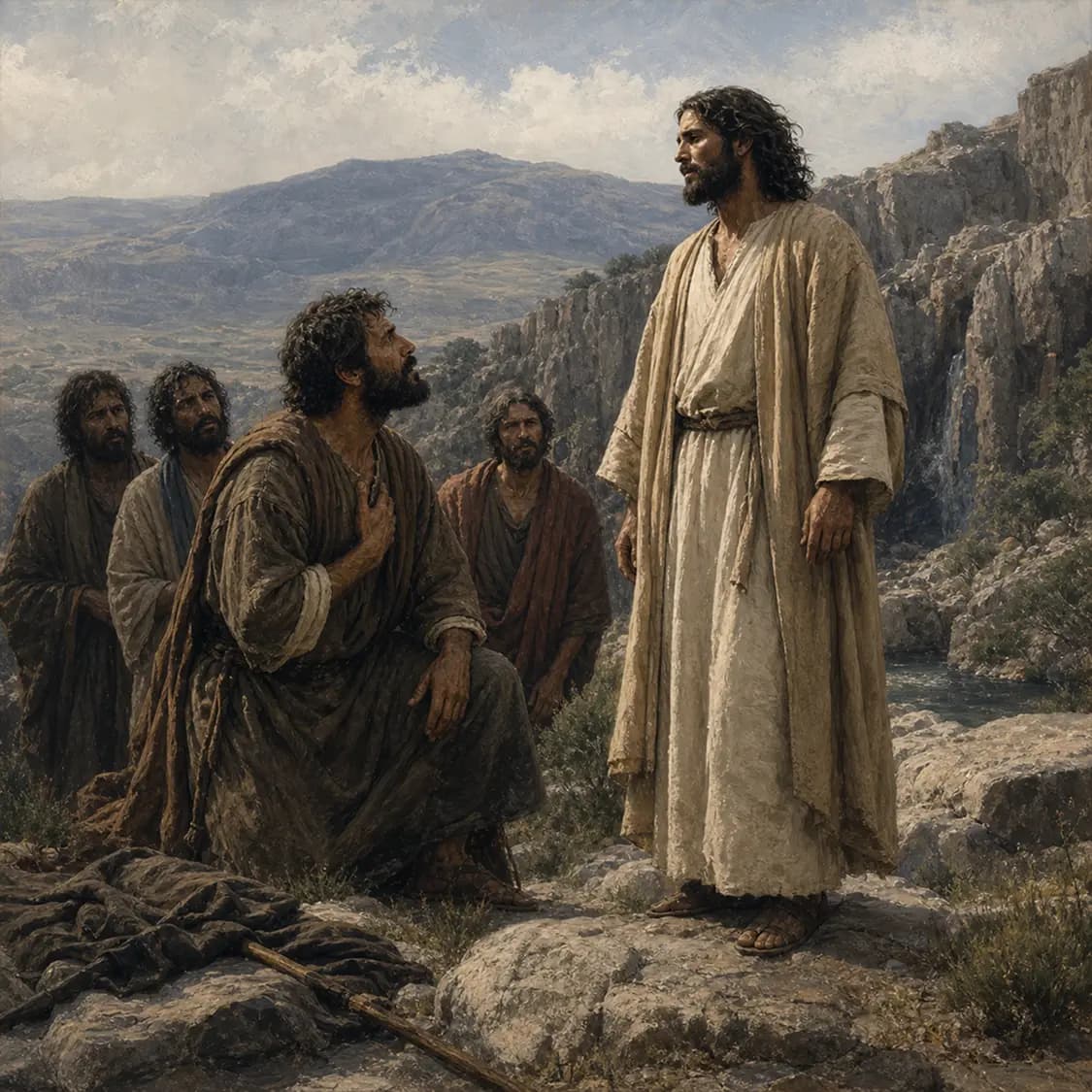
Peter Declares That Jesus Is the Messiah
Near Caesarea Philippi, Jesus asks his disciples who people say the Son of Man is. They report several answers—John the Baptist, Elijah, Jeremiah, or another prophet. Jesus then asks who the disciples themselves say he is. Simon Peter answers that Jesus is the Messiah, the Son of the living God. Jesus says the Father in heaven revealed this, promises to build his church, and speaks of the keys of the kingdom with binding and loosing. He then orders the disciples not to tell anyone that he is the Messiah.
Listen to the story3 min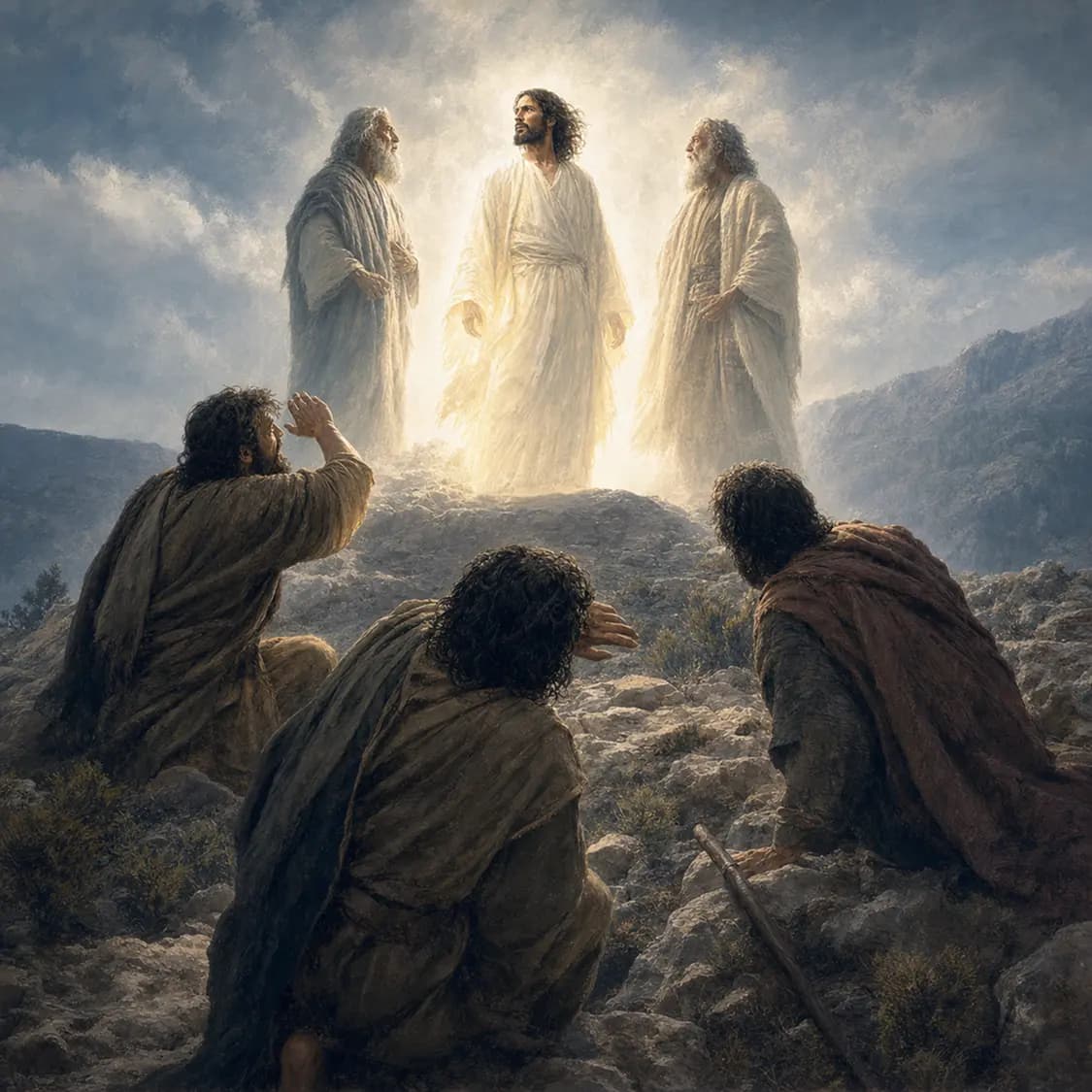
The Transfiguration of Jesus
Jesus takes Peter, James, and John up a high mountain, where his appearance changes: his face shines and his clothes become white as light. Moses and Elijah appear and speak with him, while Peter offers to build three shelters. A bright cloud covers them, and a voice identifies Jesus as God's beloved Son and commands the disciples to listen to him. They fall facedown in fear, but Jesus touches them and tells them not to be afraid. On the descent he connects the expected Elijah with John the Baptist and says the Son of Man will suffer.
Listen to the story4 min
Stories of Grace and Change
The Good Samaritan
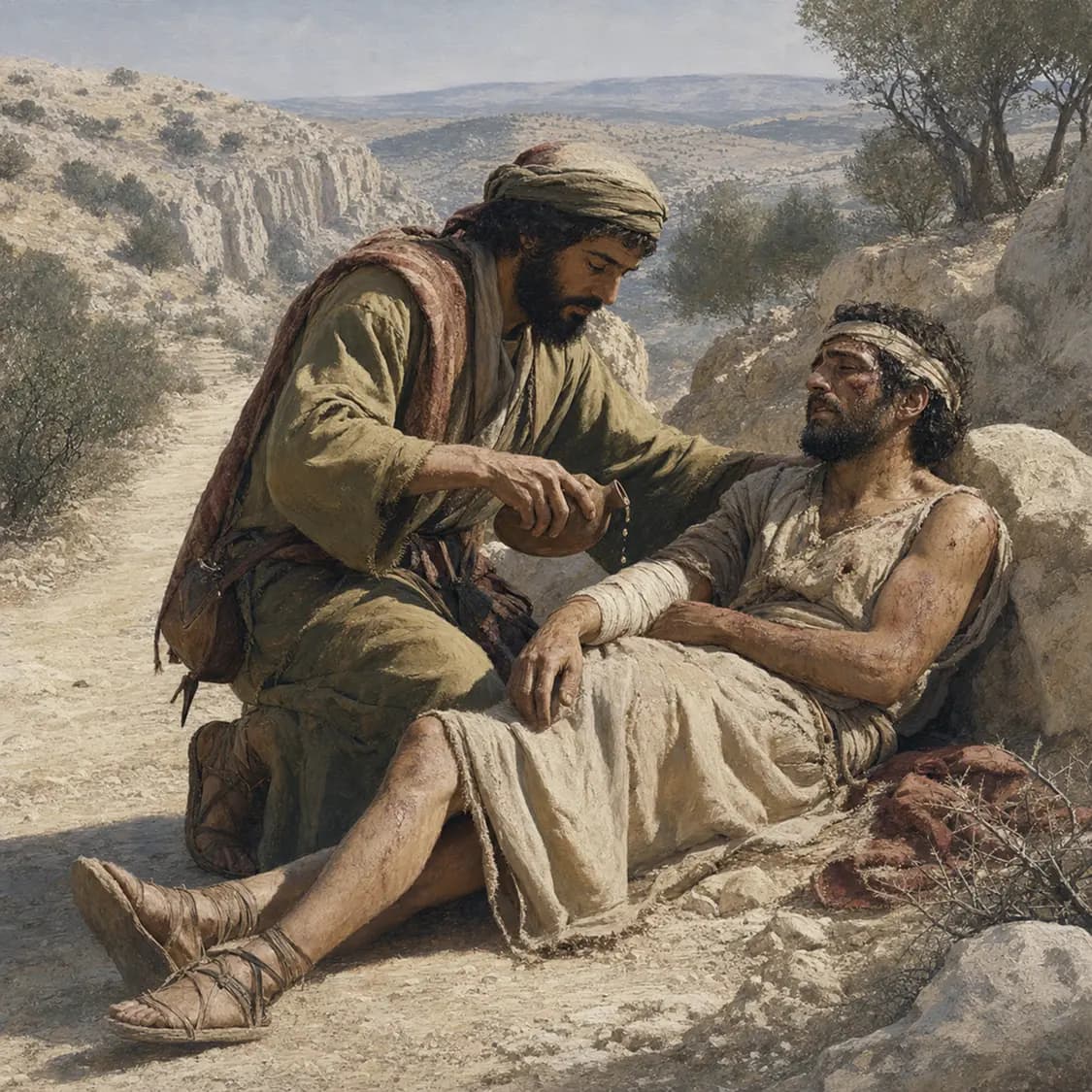
An expert in the law asks Jesus what he must do to inherit eternal life and, seeking to justify himself, asks who his neighbor is. Jesus tells of a man assaulted on the road from Jerusalem to Jericho. A priest and a Levite pass by, but a Samaritan tends the man’s wounds, transports him to an inn, pays the innkeeper two denarii, and promises to cover further expense. Jesus asks which traveler became a neighbor; the expert identifies the one who showed mercy, and Jesus directs him to act likewise.
Listen to the story4 min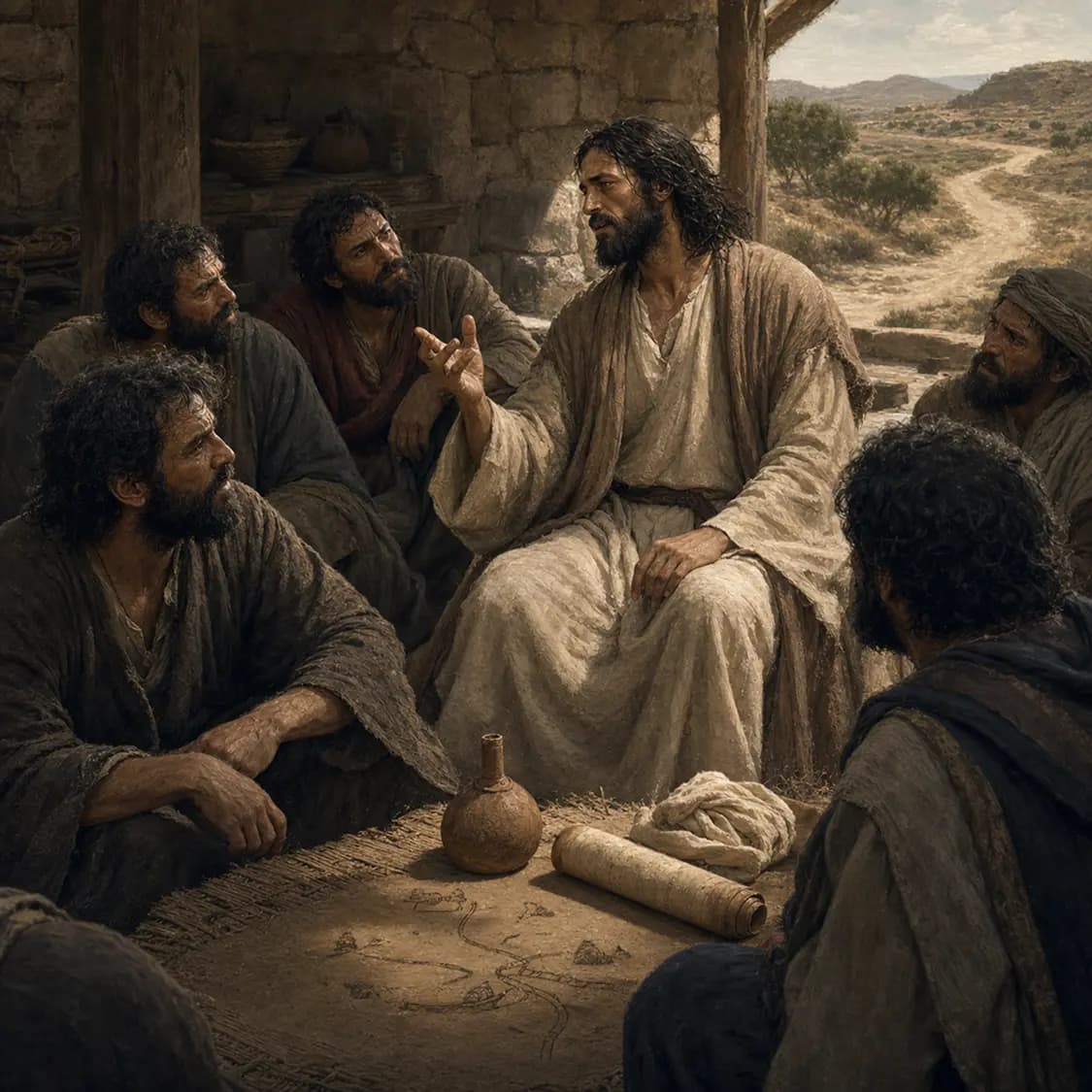
Jesus Teaches His Disciples to Pray
After Jesus prays, a disciple asks him to teach them to pray. Jesus gives a pattern that honors the Father and seeks God’s kingdom, daily bread, forgiveness joined to forgiving others, and deliverance from temptation. He follows it with a midnight friend who asks for bread and receives help because of persistent boldness, then teaches his disciples to ask, seek, and knock. Jesus compares God’s generosity to human parents giving good gifts and says the heavenly Father gives the Holy Spirit to those who ask him.
Listen to the story4 min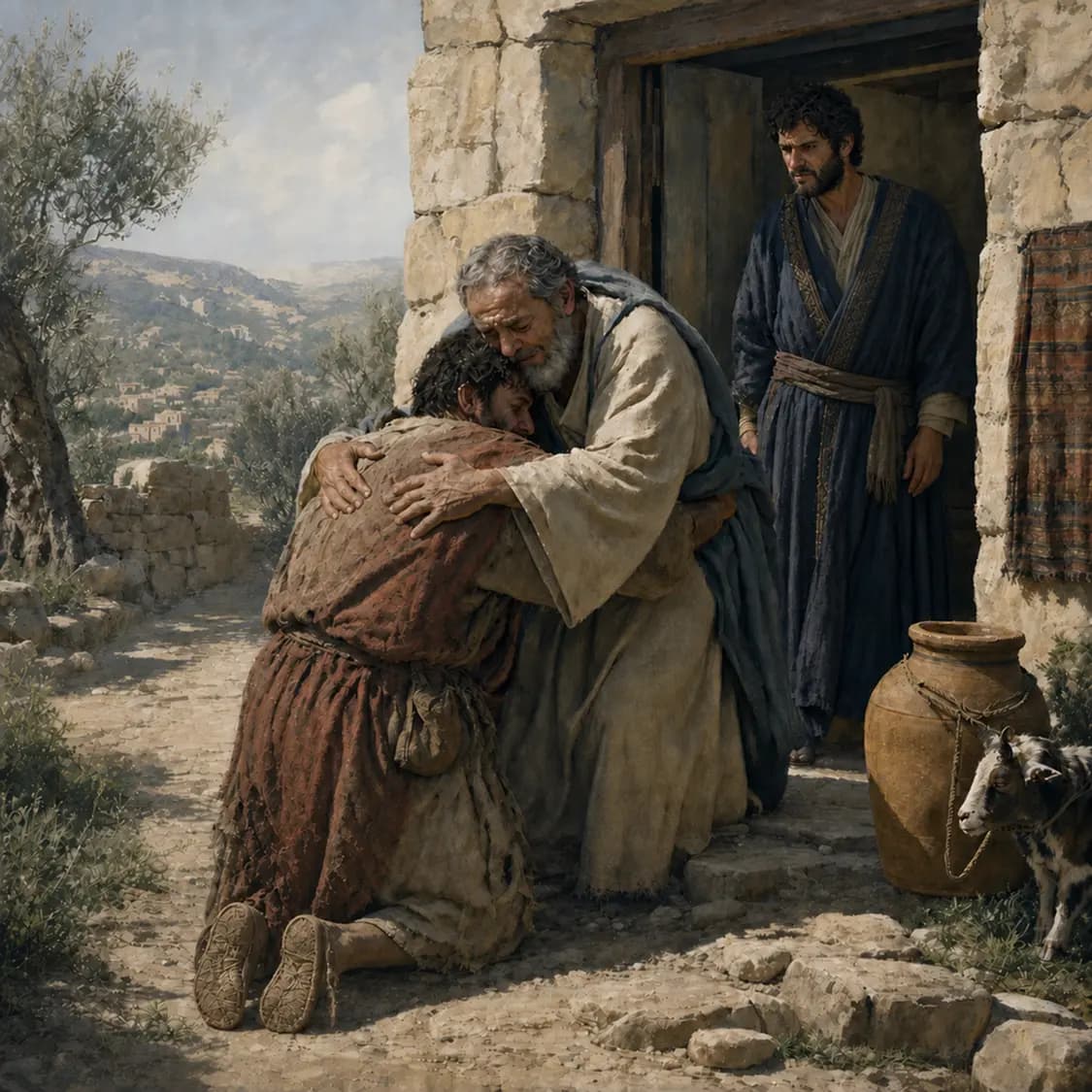
The Father and His Two Sons
Jesus tells of a younger son who asks for his share of his father’s property, wastes it in a distant country, and returns in hunger prepared to confess his sin and seek hired work. His father sees him, runs to him, restores him with robe, ring, and sandals, and celebrates his return. The older son becomes angry and refuses to join the feast, protesting his own service and his brother’s welcome. The father assures the older son that all he has is his, while insisting that celebration is fitting because his brother was lost and has been found.
Listen to the story5 min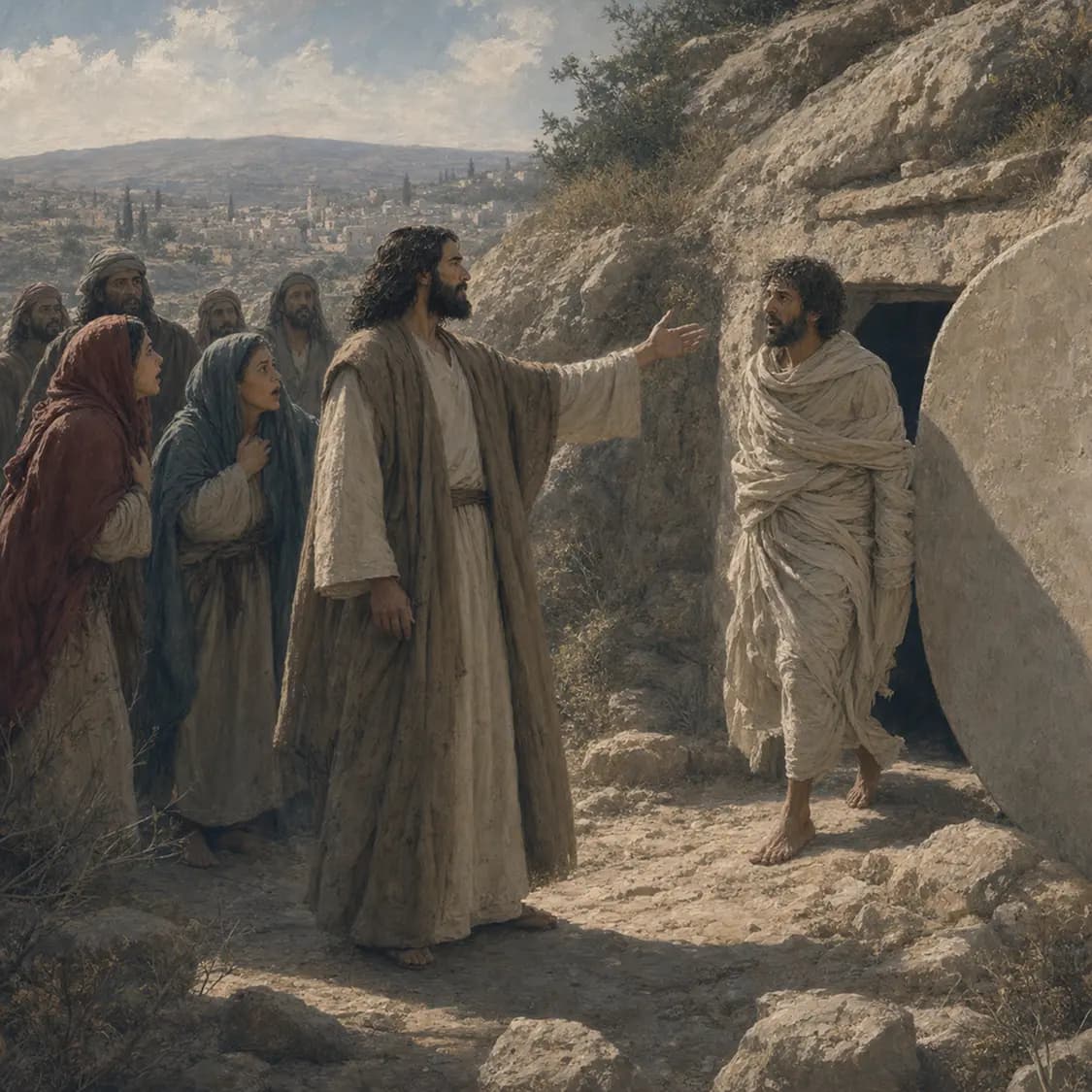
Jesus Raises Lazarus
Lazarus is sick, and his sisters Martha and Mary send word to Jesus. Jesus remains where he is two more days, later tells the disciples that Lazarus has died, and travels to Bethany, where Lazarus has been in the tomb four days. Jesus speaks with Martha about resurrection and life, weeps with Mary and the mourners, and calls Lazarus from the tomb after prayer to the Father. Lazarus comes out still bound in burial cloths, and Jesus directs those present to unbind him.
Listen to the story5 min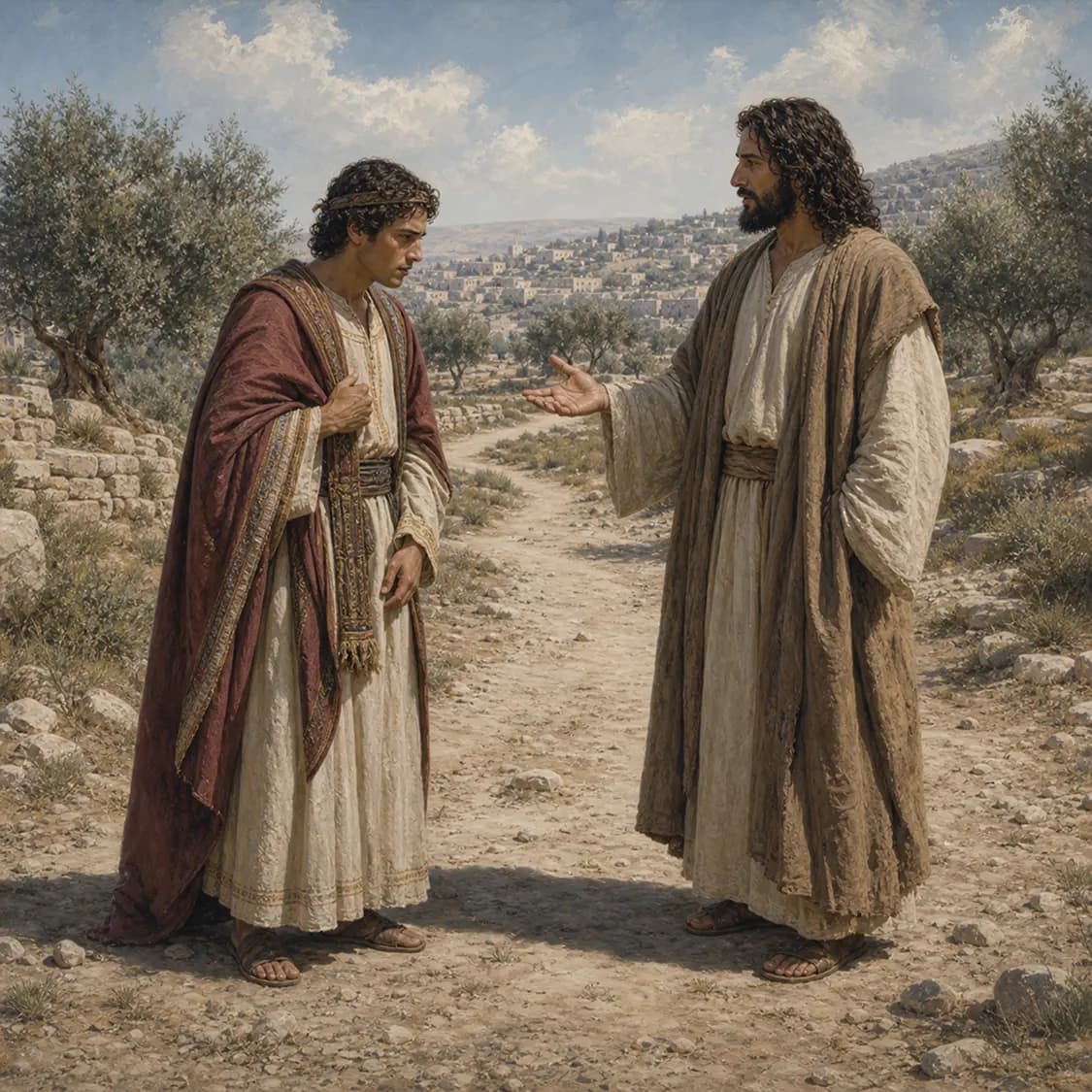
The Rich Man Who Asked About Eternal Life
A man runs to Jesus and asks what he must do to inherit eternal life. Jesus cites commandments concerning life with others. When the man says he has kept them, Jesus calls him to sell what he has, give to the poor, gain treasure in heaven, and follow him; the man leaves grieving because he has many possessions. Jesus teaches that wealth makes entrance into God’s kingdom difficult, uses the image of a camel and a needle’s eye, and says what is impossible for humans is possible for God. He promises that those who leave home or family and land for him and the good news will receive much, with persecutions now and eternal life in the age to come.
Listen to the story4 min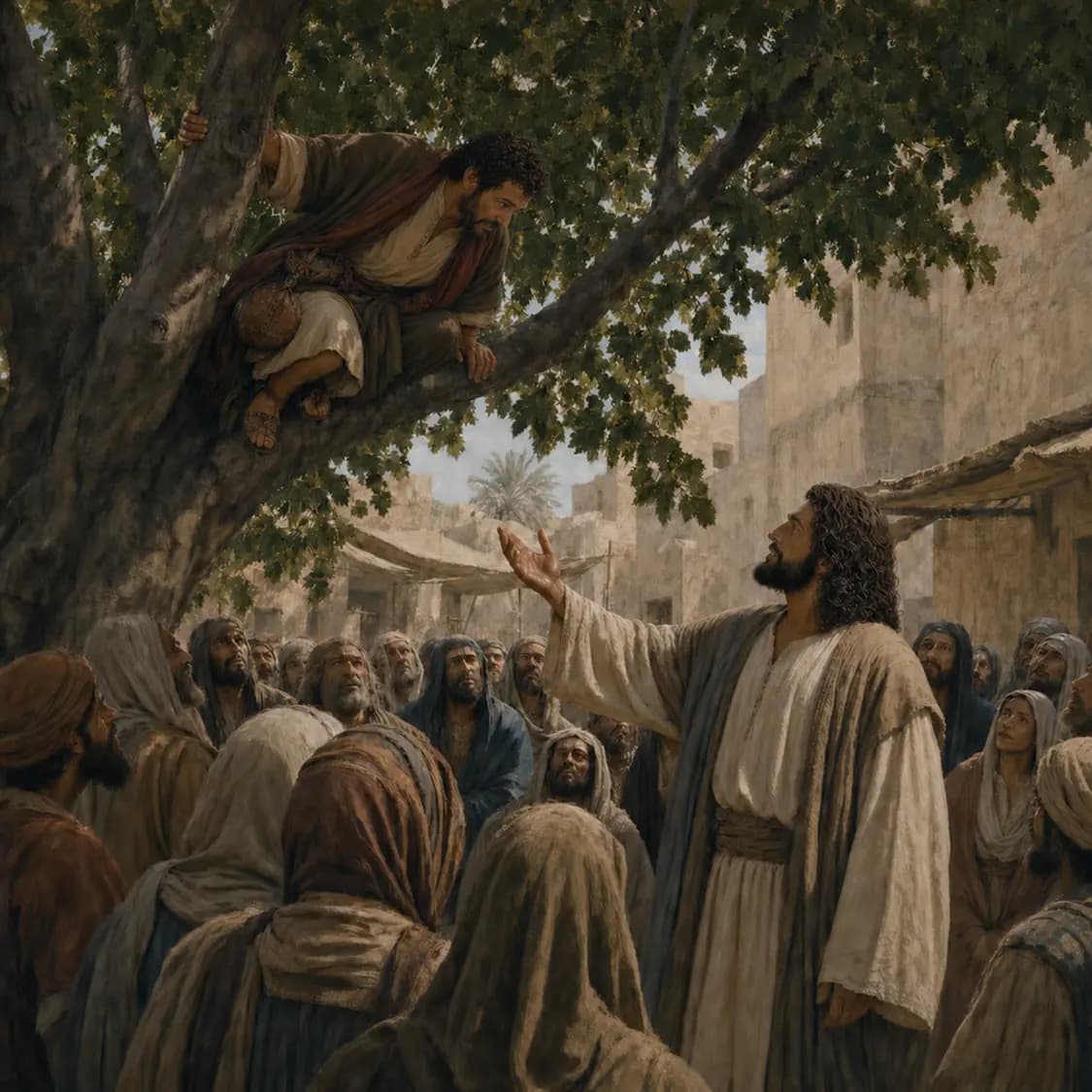
Zacchaeus Meets Jesus
Jesus passes through Jericho, where Zacchaeus, a chief tax collector and a rich man, wants to see him but cannot see over the crowd. Zacchaeus climbs a sycamore-fig tree, and Jesus calls him by name and tells him that he must stay at his house. People complain that Jesus has gone to a sinner’s house. Zacchaeus pledges half of his possessions to the poor and fourfold repayment if he has defrauded anyone. Jesus announces that salvation has come to the house, calls Zacchaeus a son of Abraham, and explains that the Son of Man came to seek and save the lost.
Listen to the story3 min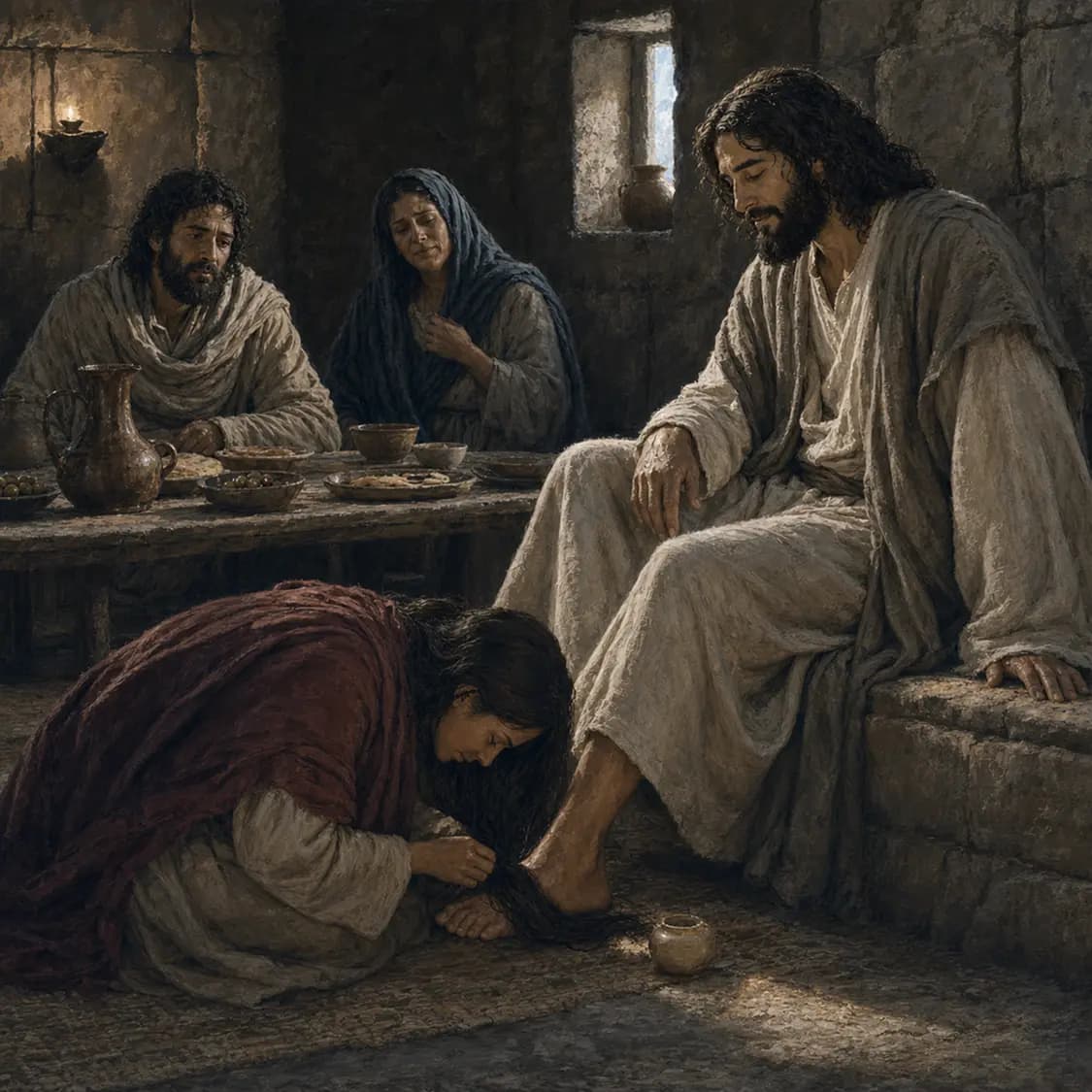
Mary Anoints Jesus at Bethany
Six days before Passover, Jesus comes to Bethany, where a dinner is given in his honor. Martha serves, Lazarus reclines at the table, and Mary anoints Jesus’ feet with costly pure nard and wipes them with her hair. Judas Iscariot objects that the perfume could have been sold for three hundred denarii and given to the poor; John explains that Judas kept the common purse and stole from it. Jesus tells Judas to leave Mary alone, connects her action with his burial, and says the poor remain while he will not always be with them.
Listen to the story3 min
The Road to the Cross
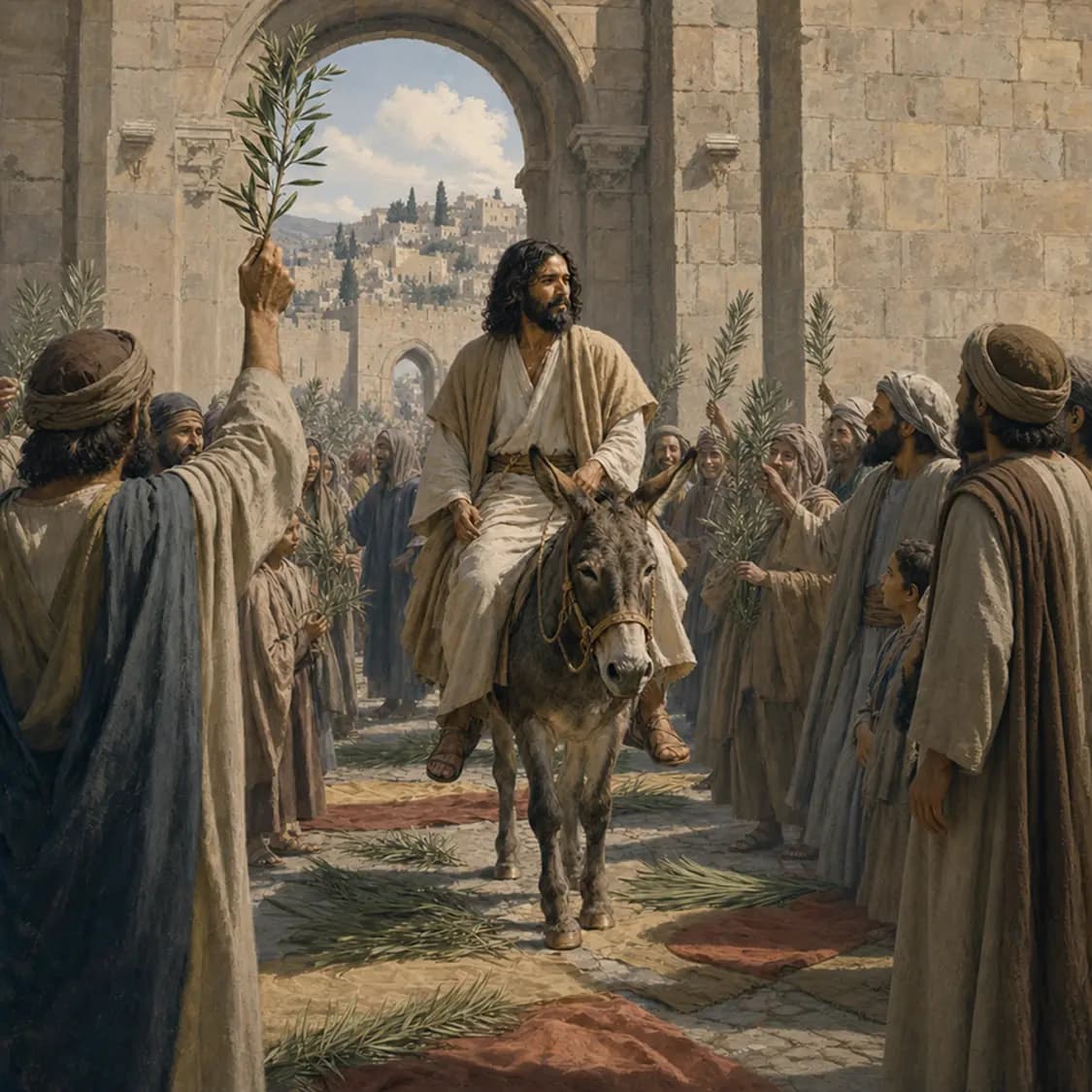
Jesus Enters Jerusalem
Near Jerusalem at Bethphage by the Mount of Olives, Jesus sends two disciples to bring a donkey and her colt. The disciples place their cloaks on the animals, and Jesus enters Jerusalem in a way Matthew connects to prophetic Scripture about Zion’s king coming gently on a donkey. A large crowd spreads cloaks and branches on the road and cries out in praise to the Son of David. Jerusalem is stirred, and the crowds identify Jesus as the prophet from Nazareth in Galilee.
Listen to the story3 min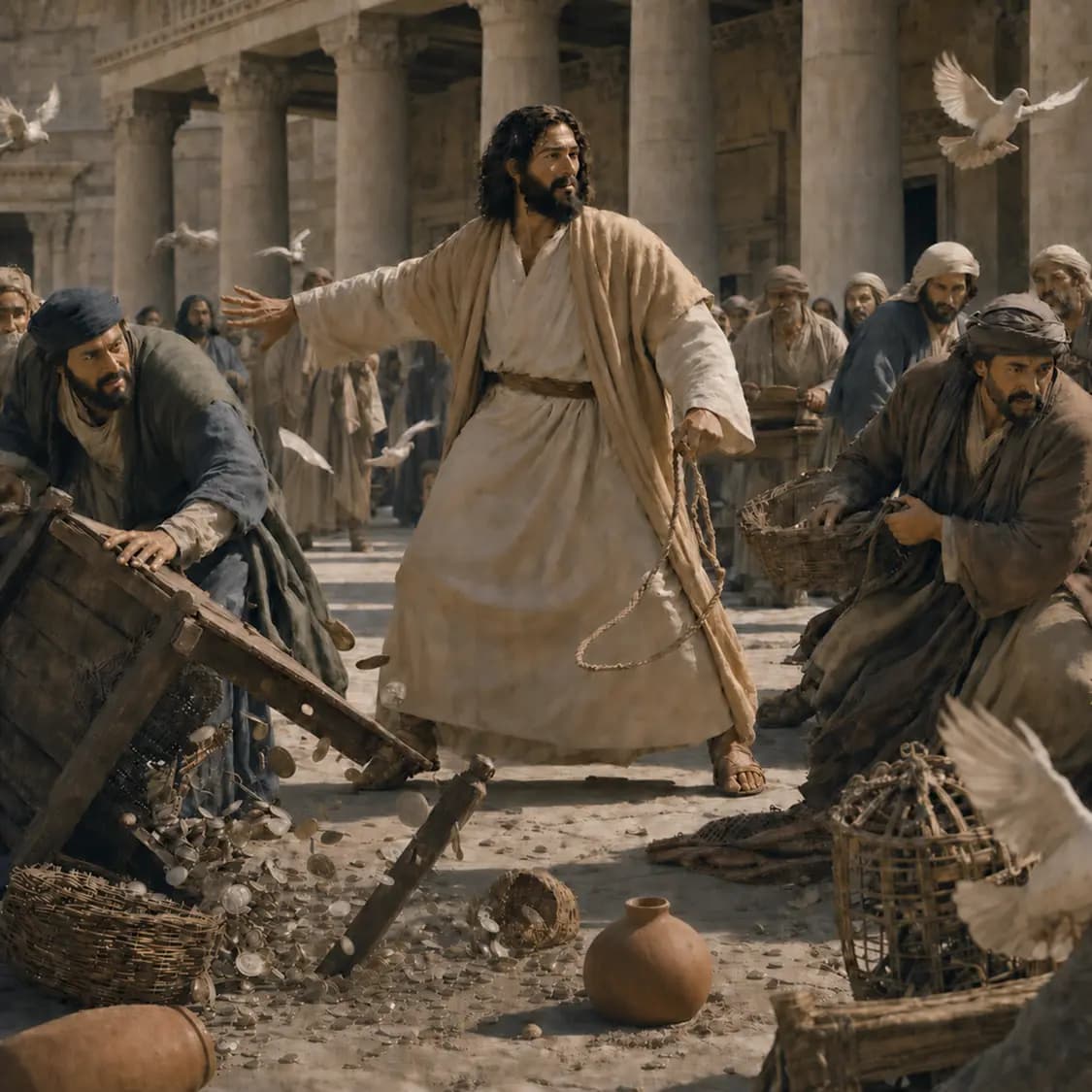
Jesus Cleanses the Temple
Jesus enters the temple courts and drives out those buying and selling. He overturns the money changers’ tables and the seats of dove sellers, declaring from Scripture that God’s house is to be called a house of prayer rather than a den of robbers. Blind and lame people come to him in the temple, and he heals them. Chief priests and teachers of the law are indignant at the children’s praise of Jesus as Son of David, but Jesus answers with Scripture about praise from children and infants before leaving for Bethany.
Listen to the story3 min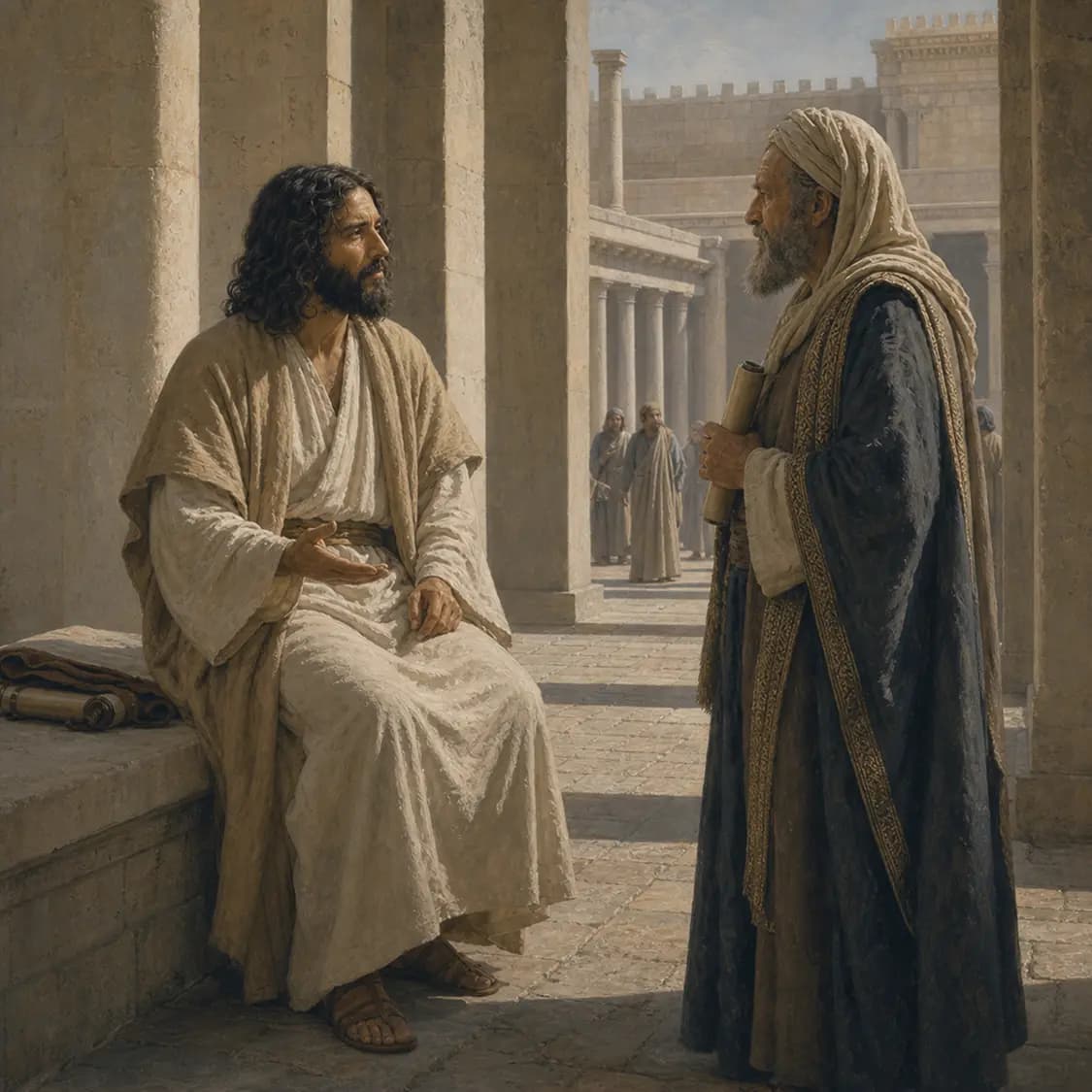
The Greatest Commandment
A scribe hears Jesus answer other questions well and asks which commandment is most important. Jesus affirms the oneness of God and commands wholehearted love for God with heart, soul, mind, and strength, then names love of neighbor as oneself as the second command. The scribe agrees and says that such love is greater than all burnt offerings and sacrifices. Jesus tells him that he is not far from the kingdom of God, after which no one dares ask another question.
Listen to the story3 min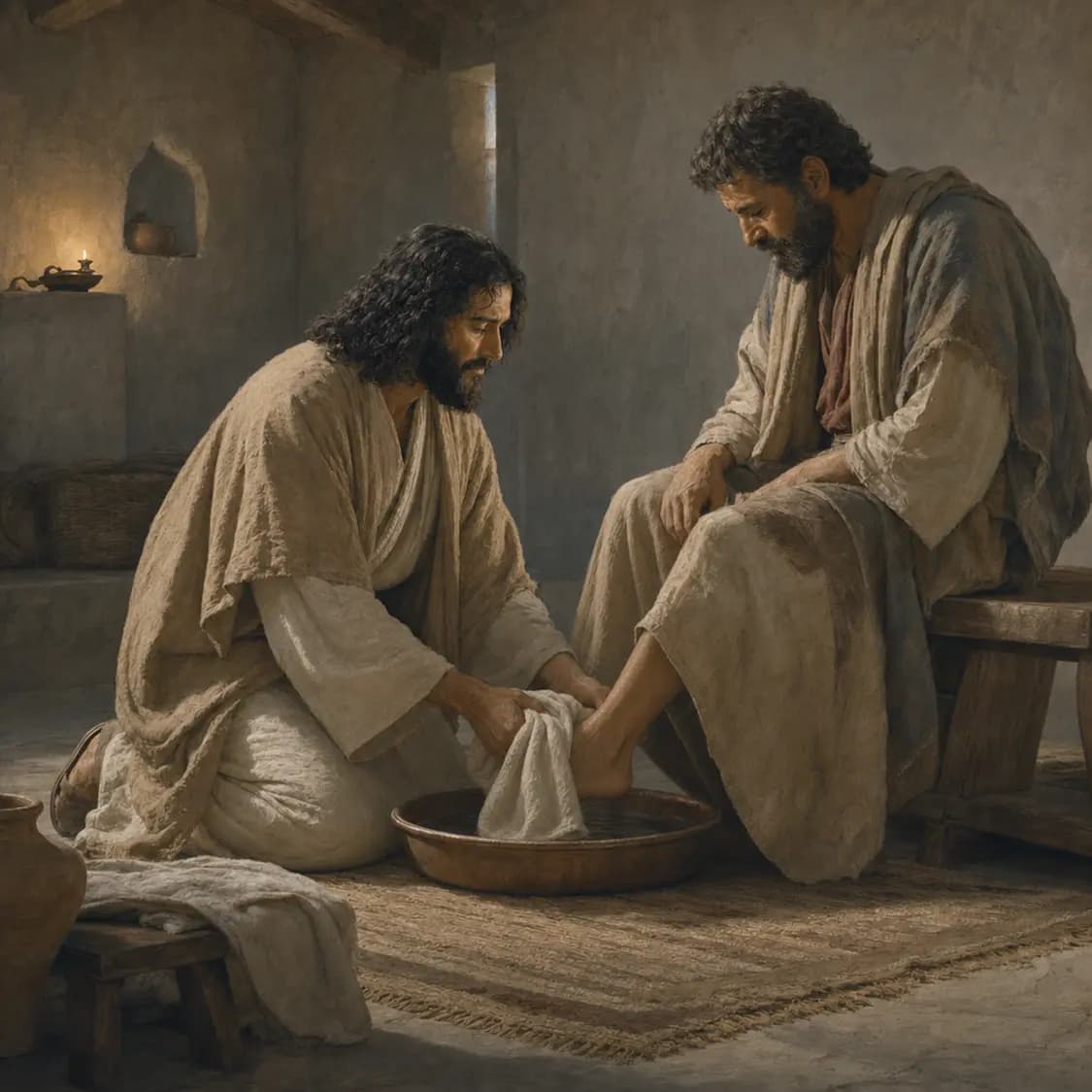
Jesus Washes His Disciples’ Feet
Before the Passover Festival, Jesus knows that his hour has come and washes his disciples’ feet during supper, despite knowing that Judas will betray him. He removes his outer clothing, takes a towel and basin, and washes and dries their feet. Peter initially refuses, then asks for more washing when Jesus says that without it Peter has no share with him. Jesus explains that the disciples are clean but not all of them, returns to the table, and says that their Lord and Teacher has given them an example of serving one another.
Listen to the story4 min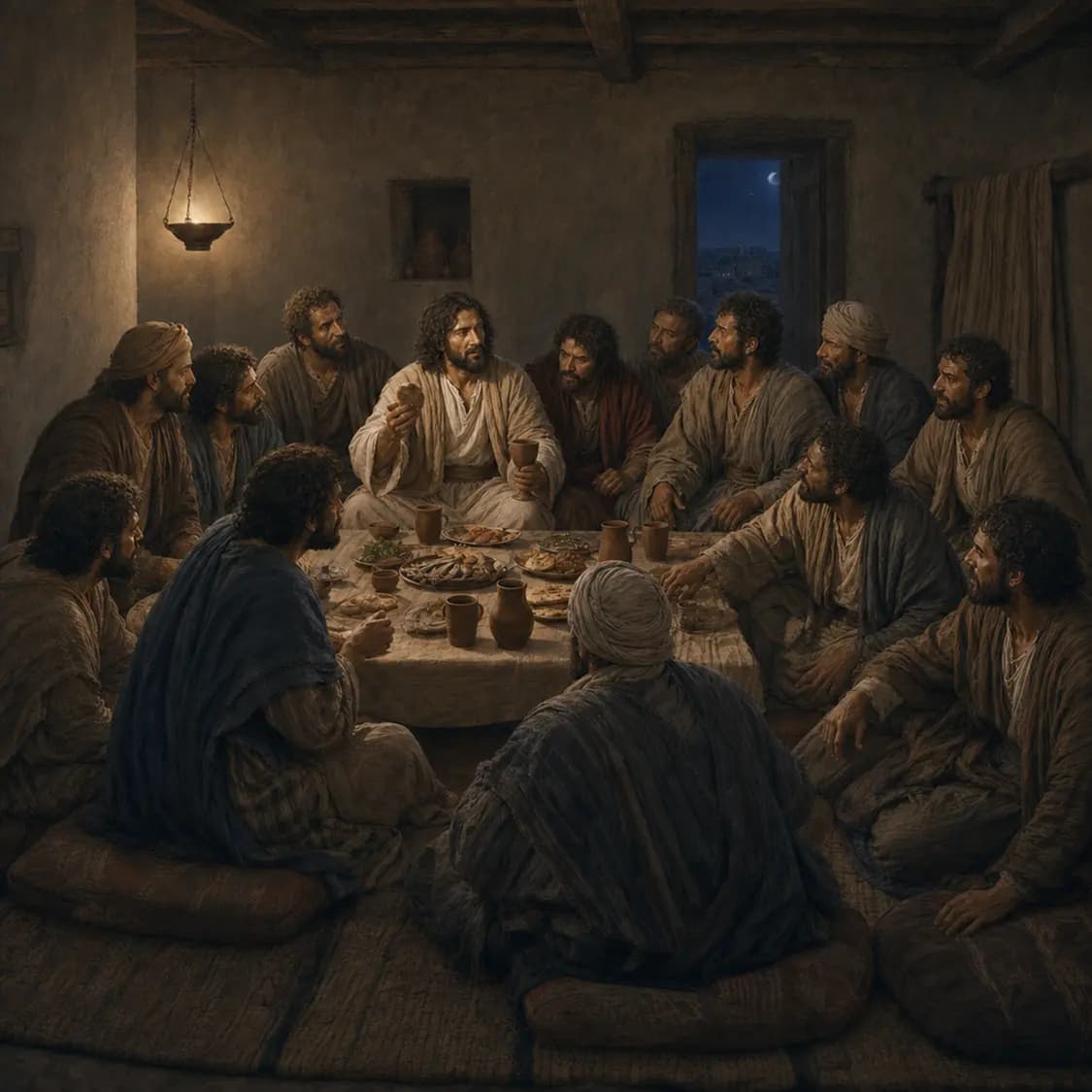
The Last Supper
On the day of Unleavened Bread when the Passover lamb was to be sacrificed, Jesus sends Peter and John to prepare the Passover. He tells them to follow a man carrying a jar of water and ask a house owner for the furnished upstairs room. At the meal Jesus tells the twelve apostles he has desired to eat this Passover with them before suffering. He shares a cup, breaks bread in remembrance of his body given for them, and after supper speaks of the cup as the new covenant in his blood poured out for them. He also announces that his betrayer is present, and the apostles question one another.
Listen to the story4 min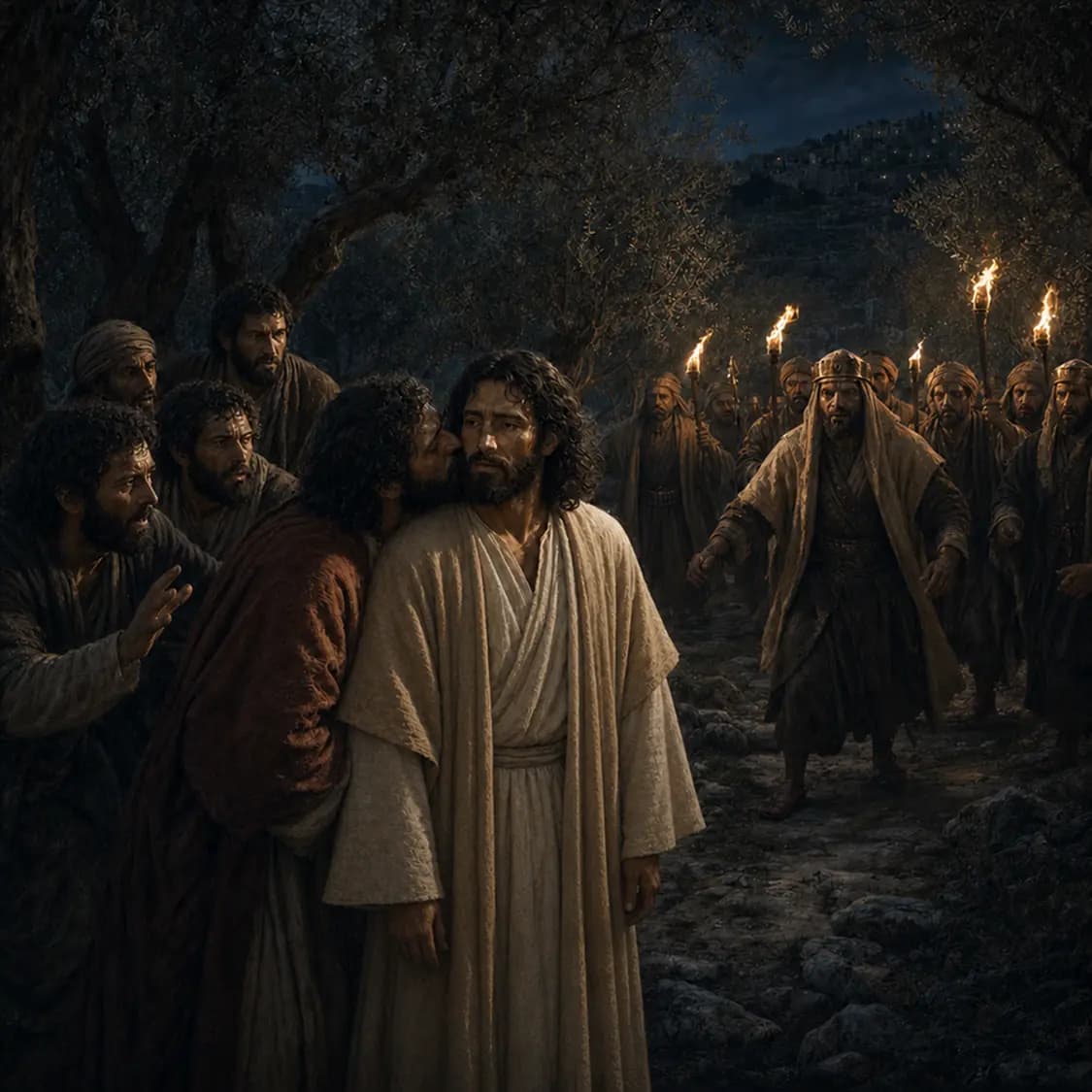
Jesus Prays in Gethsemane and Is Arrested
At Gethsemane, Jesus asks the disciples to sit while he takes Peter, James, and John farther with him. Deeply distressed, he prays that the hour and cup might pass if possible, yet submits to the Father’s will. Three times he finds the disciples sleeping and warns them to watch and pray. Judas arrives with an armed crowd sent by chief priests, teachers of the law, and elders, identifies Jesus with a kiss, and Jesus is arrested. One bystander cuts off the high priest’s servant’s ear, Jesus challenges the manner of his arrest while saying the Scriptures must be fulfilled, and all his disciples flee; a young man also escapes leaving his linen cloth behind.
Listen to the story4 min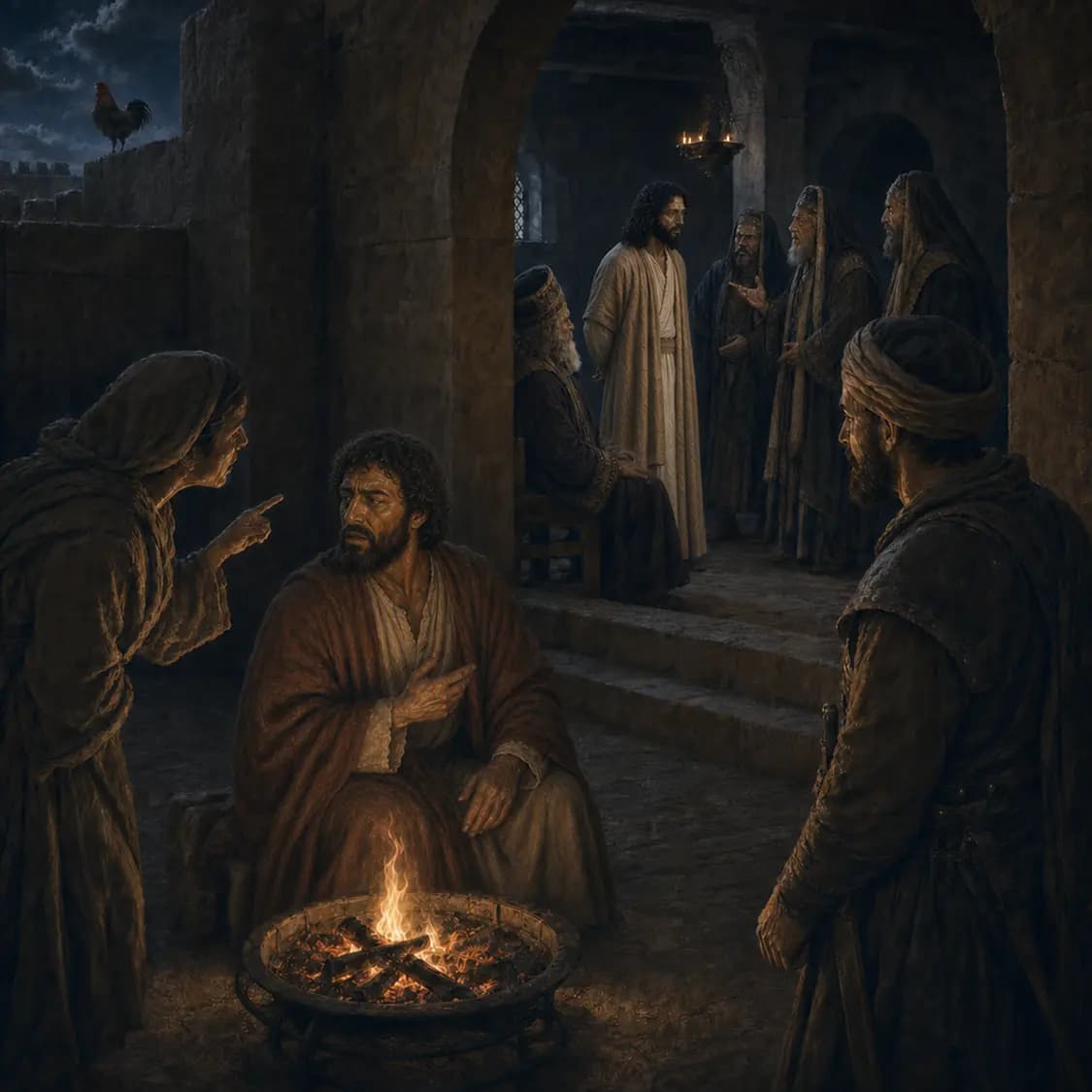
Jesus Before the Council and Peter’s Denial
Jesus is taken to the high priest, where chief priests, elders, and teachers of the law seek testimony against him but cannot secure agreeing accounts. When asked whether he is the Messiah, the Son of the Blessed One, Jesus answers and speaks of the Son of Man at God’s right hand and coming with the clouds. The Council condemns him as deserving death and he is mocked and struck. In the courtyard Peter denies knowing Jesus three times: first to a servant girl, again after her accusation, and then to bystanders who identify him as a Galilean. A rooster crows a second time, Peter remembers Jesus’ prediction, and he breaks down weeping.
Listen to the story4 min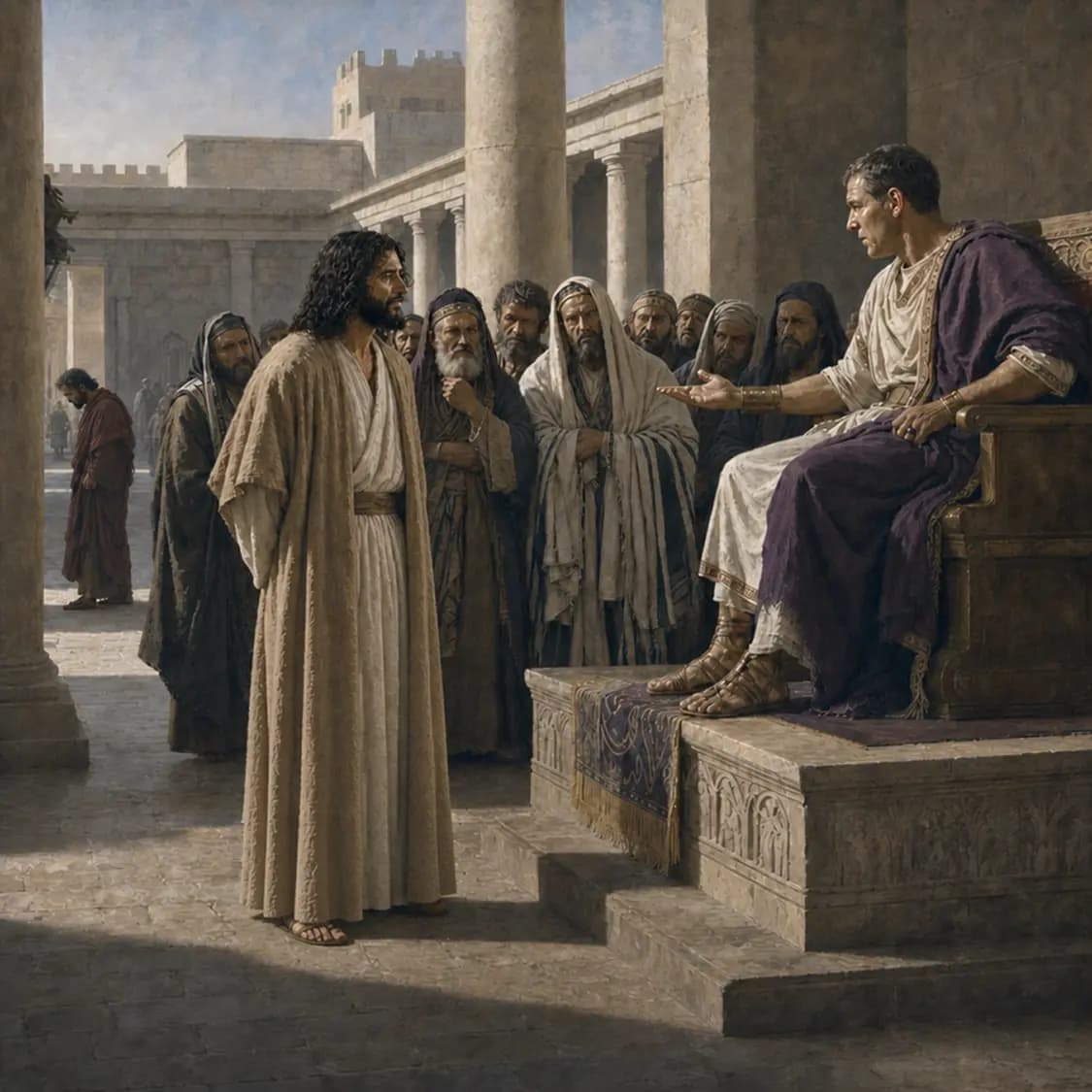
Jesus Before Pilate
The assembly brings Jesus before Pilate and charges him with misleading the nation, opposing taxes to Caesar, and claiming to be Messiah, a king. Pilate finds no basis for a charge. Learning that Jesus is a Galilean, Pilate sends him to Herod, who questions Jesus, mocks him with his soldiers, and returns him to Pilate without finding a capital offense. Pilate tells the chief priests, rulers, and people that neither he nor Herod has found anything deserving death and proposes punishment and release. The crowd demands Barabbas, imprisoned for insurrection and murder, and repeatedly calls for crucifixion. Pilate ultimately releases Barabbas and hands Jesus over to their will.
Listen to the story4 min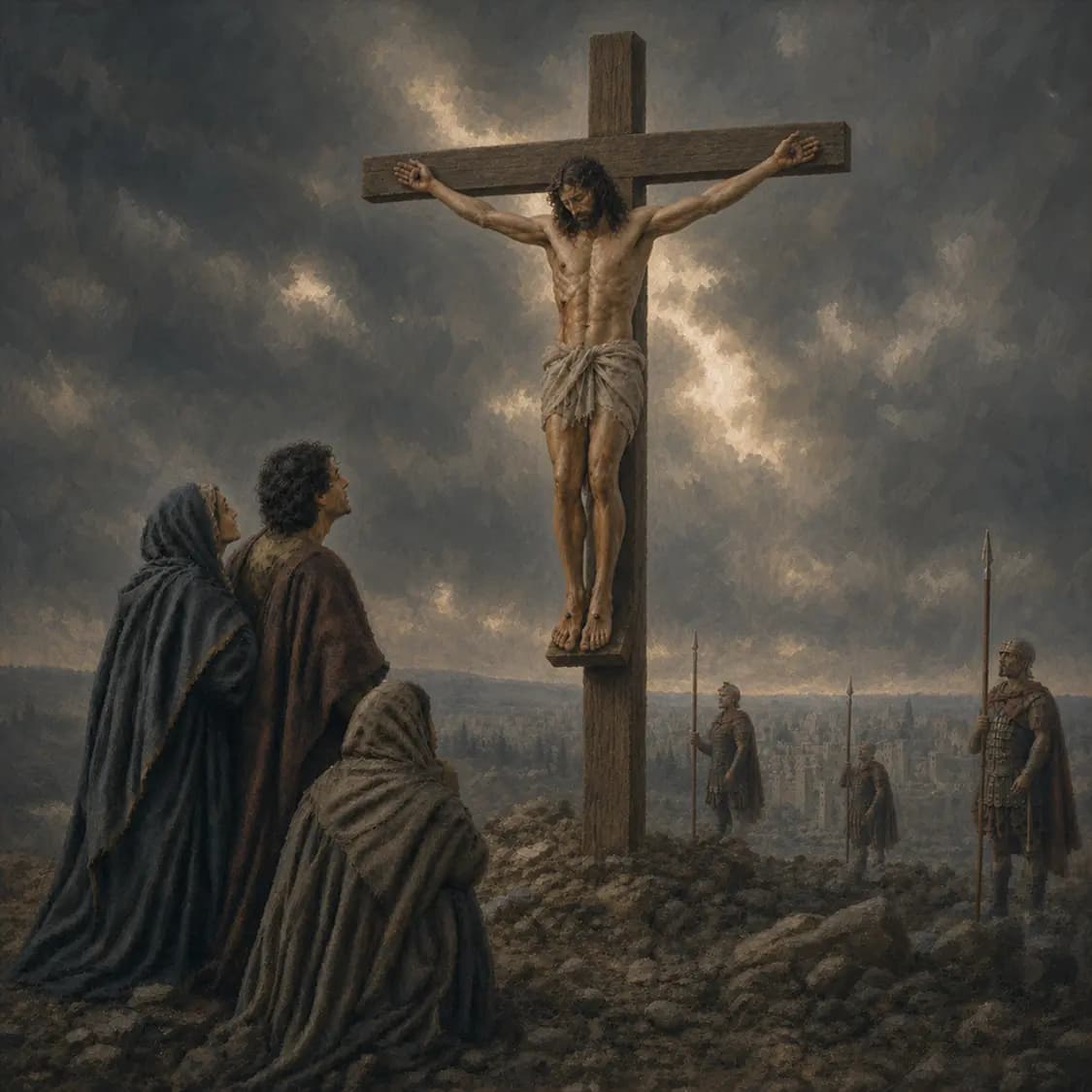
The Crucifixion and Burial of Jesus
As Jesus is led away, Simon of Cyrene is compelled to carry the cross behind him. At the place called the Skull, Jesus is crucified between two criminals; he prays for forgiveness, while leaders, soldiers, and one criminal mock him. The other criminal acknowledges his own guilt, declares Jesus innocent, and asks to be remembered; Jesus promises him paradise. Darkness comes from about noon until three, the temple curtain is torn, and Jesus dies after entrusting his spirit to the Father. A centurion praises God and calls him righteous. Joseph of Arimathea buries Jesus in a new rock-cut tomb, while women from Galilee observe the burial, prepare spices, and rest on the Sabbath.
Listen to the story5 min
The Risen Jesus
The Empty Tomb
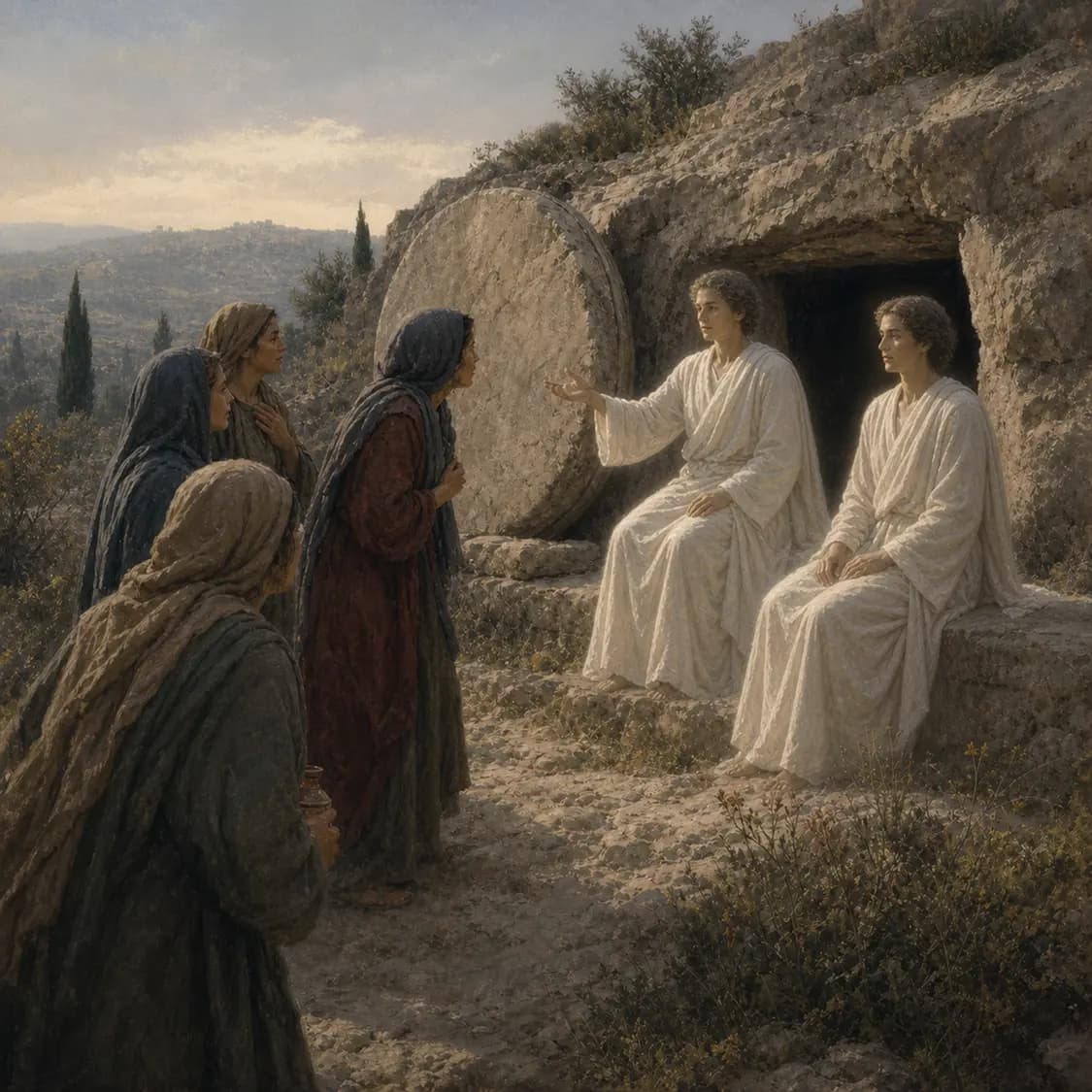
On the first day of the week, women take prepared spices to Jesus' tomb and find the stone rolled away and his body absent. Two men in dazzling clothes remind them that Jesus had said the Son of Man would be crucified and rise on the third day. Mary Magdalene, Joanna, Mary the mother of James, and other women report this to the apostles, who initially do not believe them. Peter runs to the tomb, sees the linen cloths, and leaves wondering what happened.
Listen to the story3 min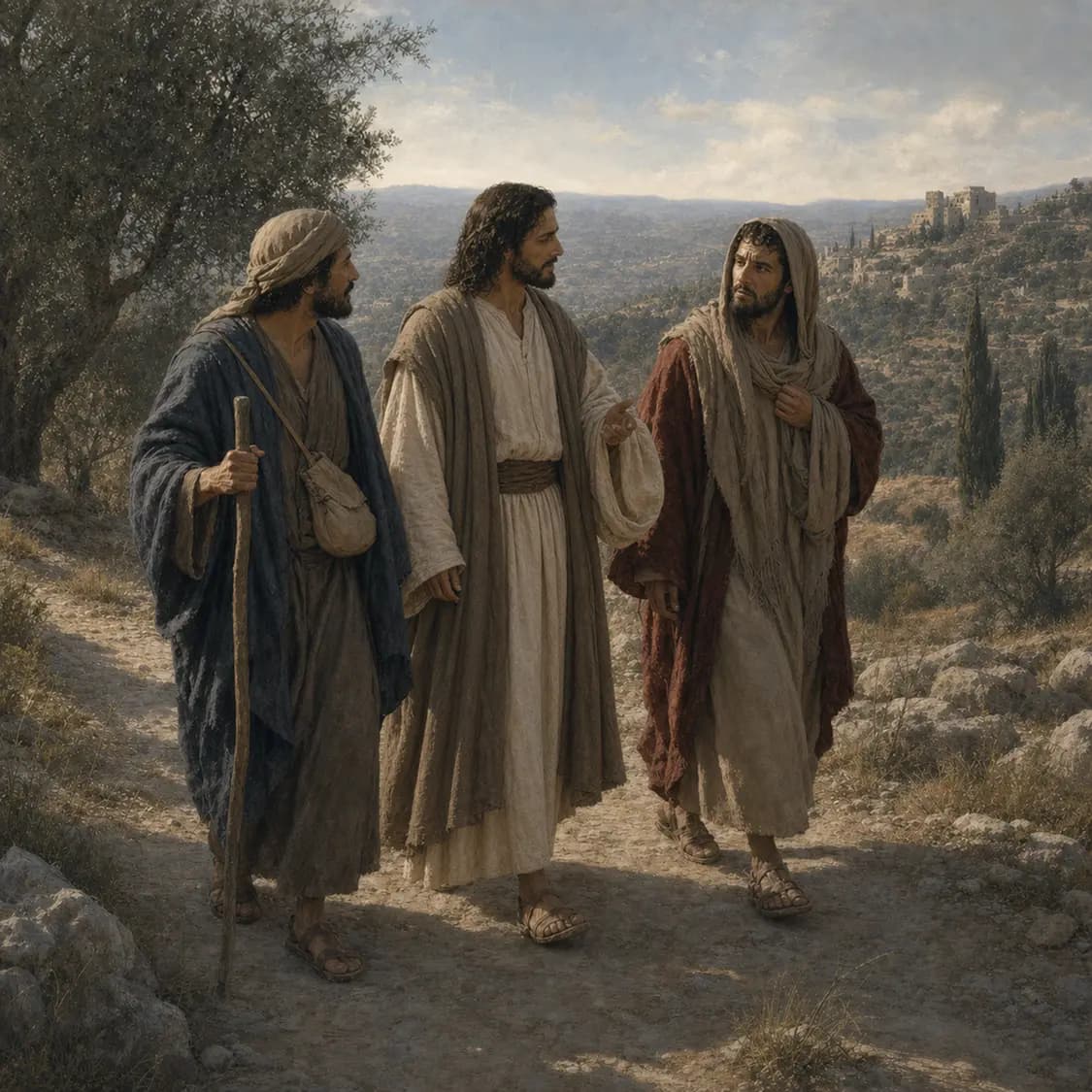
On the Road to Emmaus
On the day of the resurrection, two followers of Jesus travel from Jerusalem to Emmaus; one is named Cleopas. The risen Jesus walks with them, but they are kept from recognizing him. He explains that the Messiah had to suffer and enter glory, beginning with Moses and the Prophets. At their table, when he takes, blesses, breaks, and gives bread, they recognize him and he vanishes from their sight. They return to Jerusalem at once to tell the gathered disciples.
Listen to the story5 min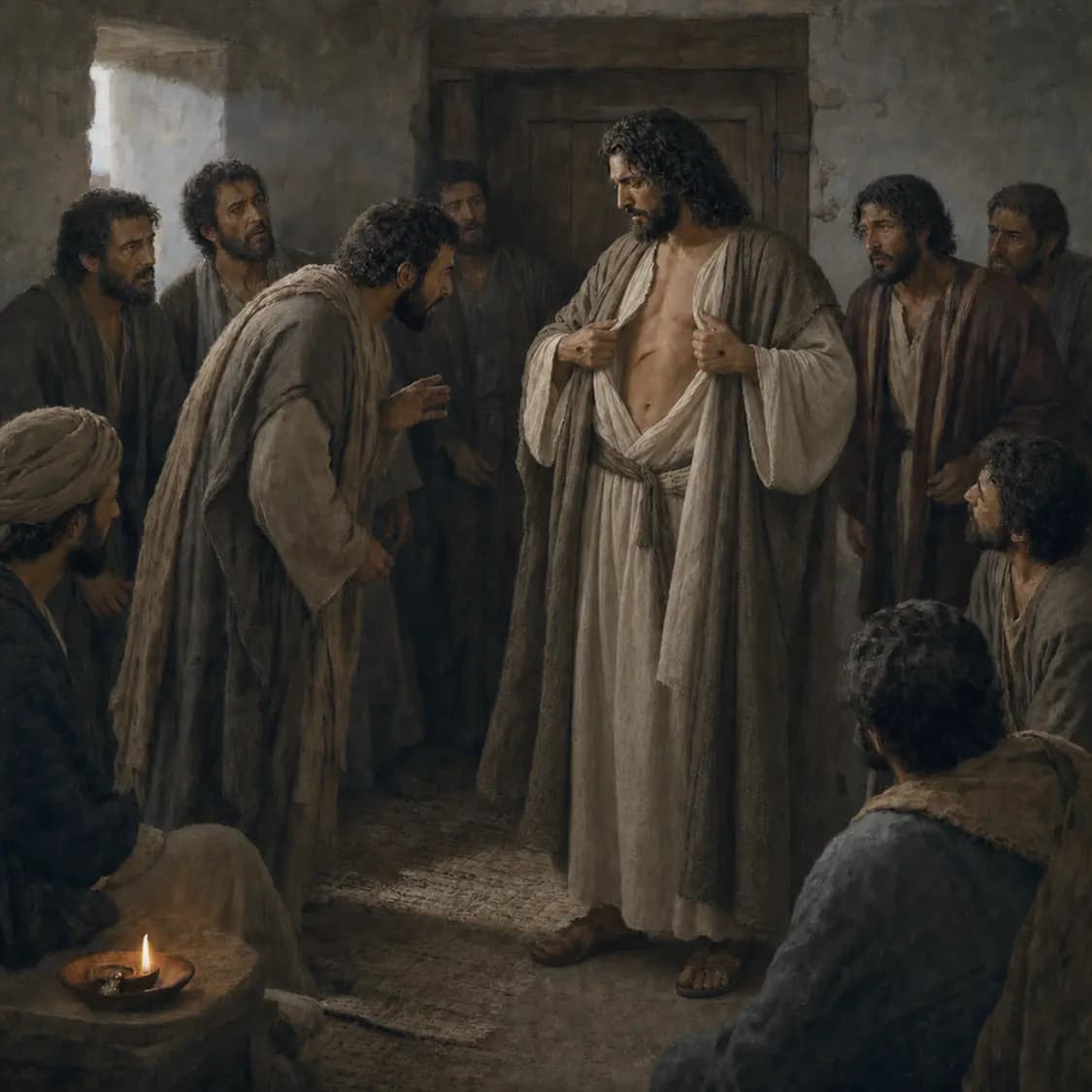
Thomas Sees the Risen Jesus
On the evening of the first day of the week, the risen Jesus appears to disciples gathered behind locked doors, shows them his hands and side, speaks peace, sends them as the Father sent him, and tells them to receive the Holy Spirit. Thomas is absent and says he will not believe unless he sees the marks and touches Jesus' wounds. Eight days later Jesus appears again, invites Thomas to examine the wounds, and Thomas confesses him as Lord and God. Jesus blesses those who have not seen and yet believe.
Listen to the story3 min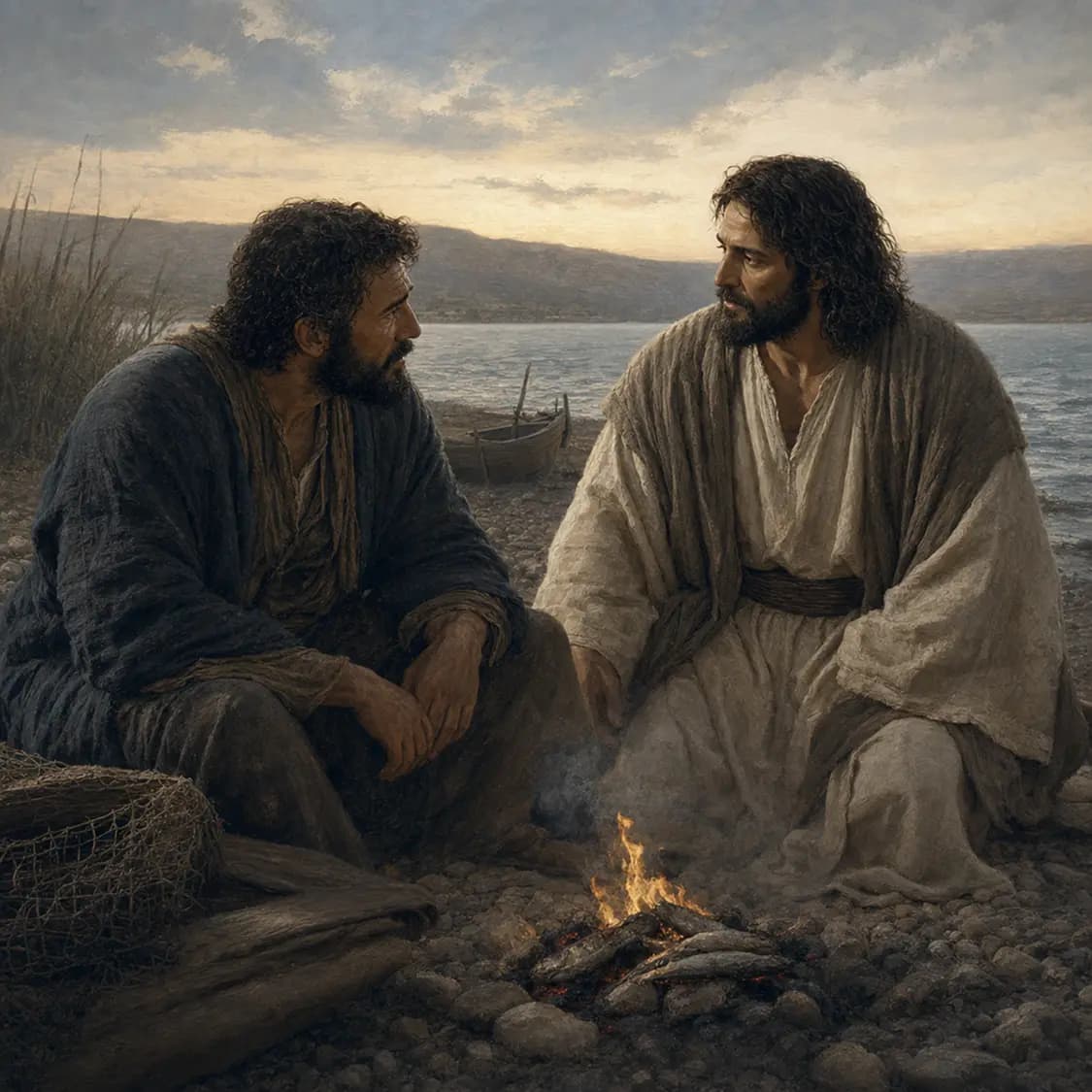
Jesus Restores Peter
At the Sea of Tiberias, seven disciples fish all night without success. The risen Jesus, unrecognized on the shore, directs them to cast the net on the right side, and they catch many fish. After breakfast, Jesus asks Simon Peter three times whether he loves him and repeatedly entrusts him with care for his sheep. Peter is grieved by the third question and appeals to Jesus’ knowledge. Jesus then tells Peter that his future faithfulness will be costly and calls him to follow.
Listen to the story4 min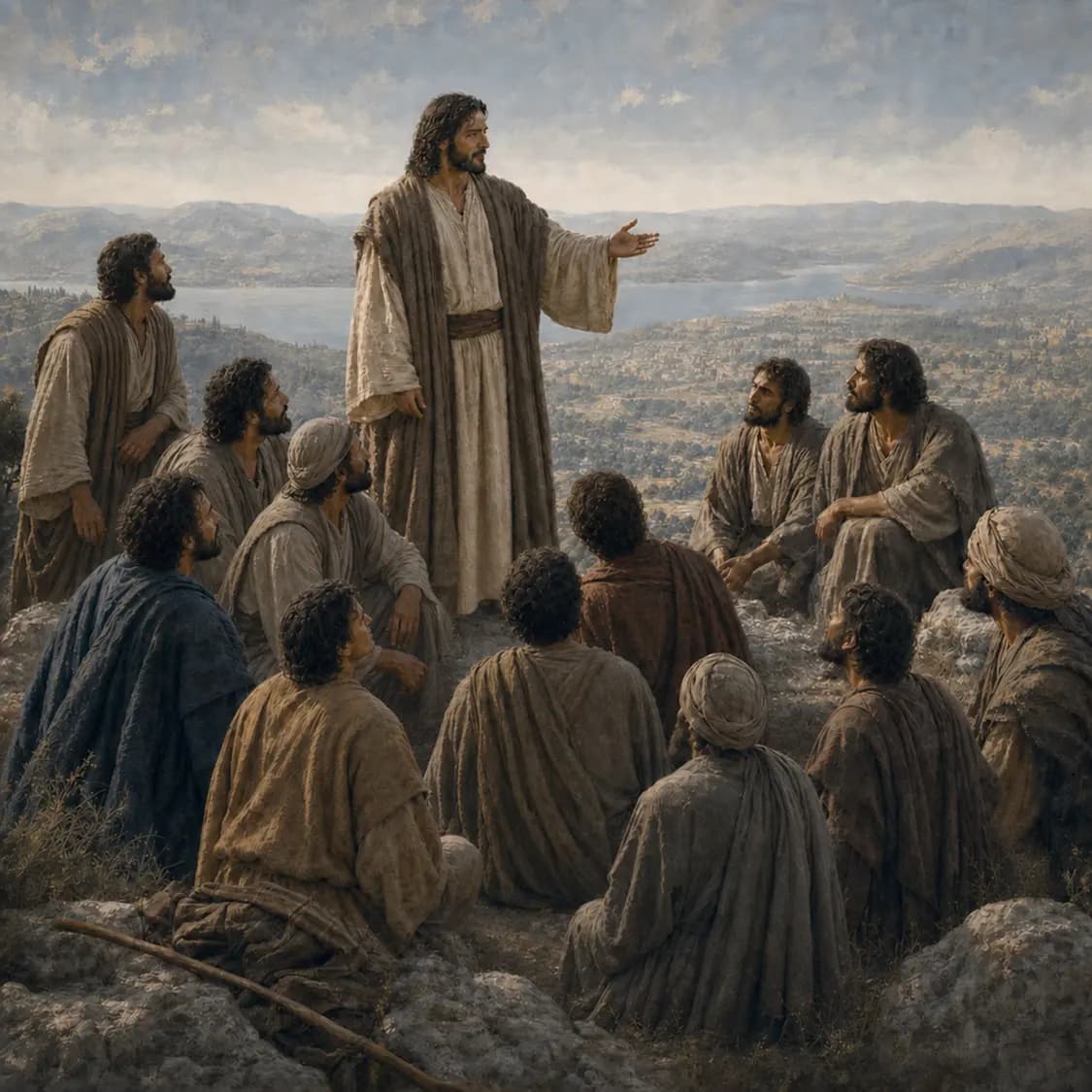
Jesus Sends His Disciples to All Nations
The eleven disciples meet the risen Jesus on a mountain in Galilee. They worship him, though some doubt. Jesus declares that all authority in heaven and on earth has been given to him, then commands them to make disciples of all nations, baptize them in the name of the Father, Son, and Holy Spirit, and teach them to obey all he commanded. The scene holds worship and doubt together as the eleven receive a mission that reaches every nation. Jesus promises to be with them to the end of the age.
Listen to the story3 min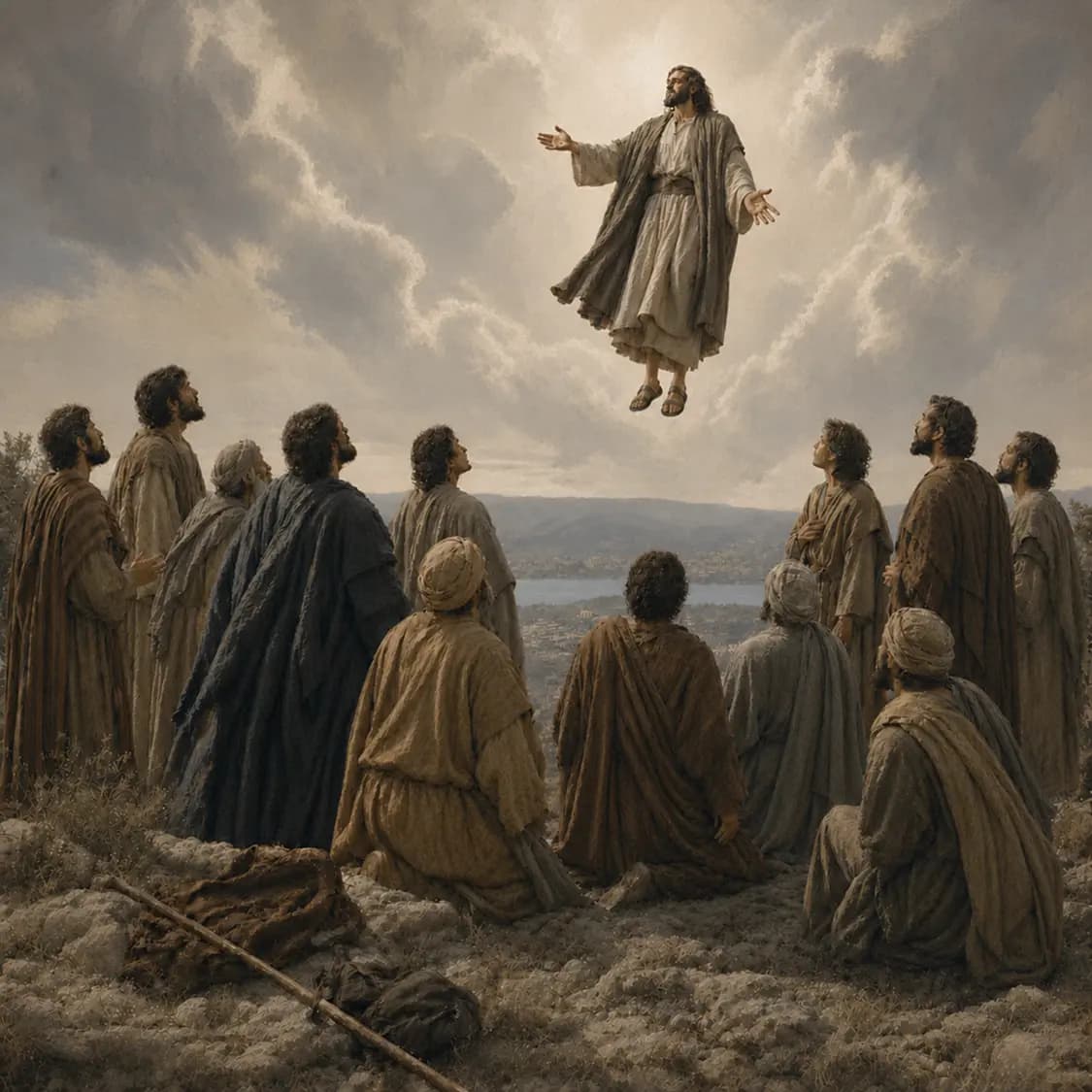
Jesus Ascends to Heaven
After his suffering, Jesus appears to the apostles over forty days and speaks about God's kingdom. He tells them to wait in Jerusalem for the Father's promise and says they will receive power when the Holy Spirit comes so that they can witness in Jerusalem, Judea, Samaria, and to the ends of the earth. When they ask about restoring Israel's kingdom, he declines to give the Father's timetable. Jesus is taken up as they watch, and two men in white say that he will come in the same way they saw him go.
Listen to the story3 min
The Good News Goes Out
The Holy Spirit Comes at Pentecost
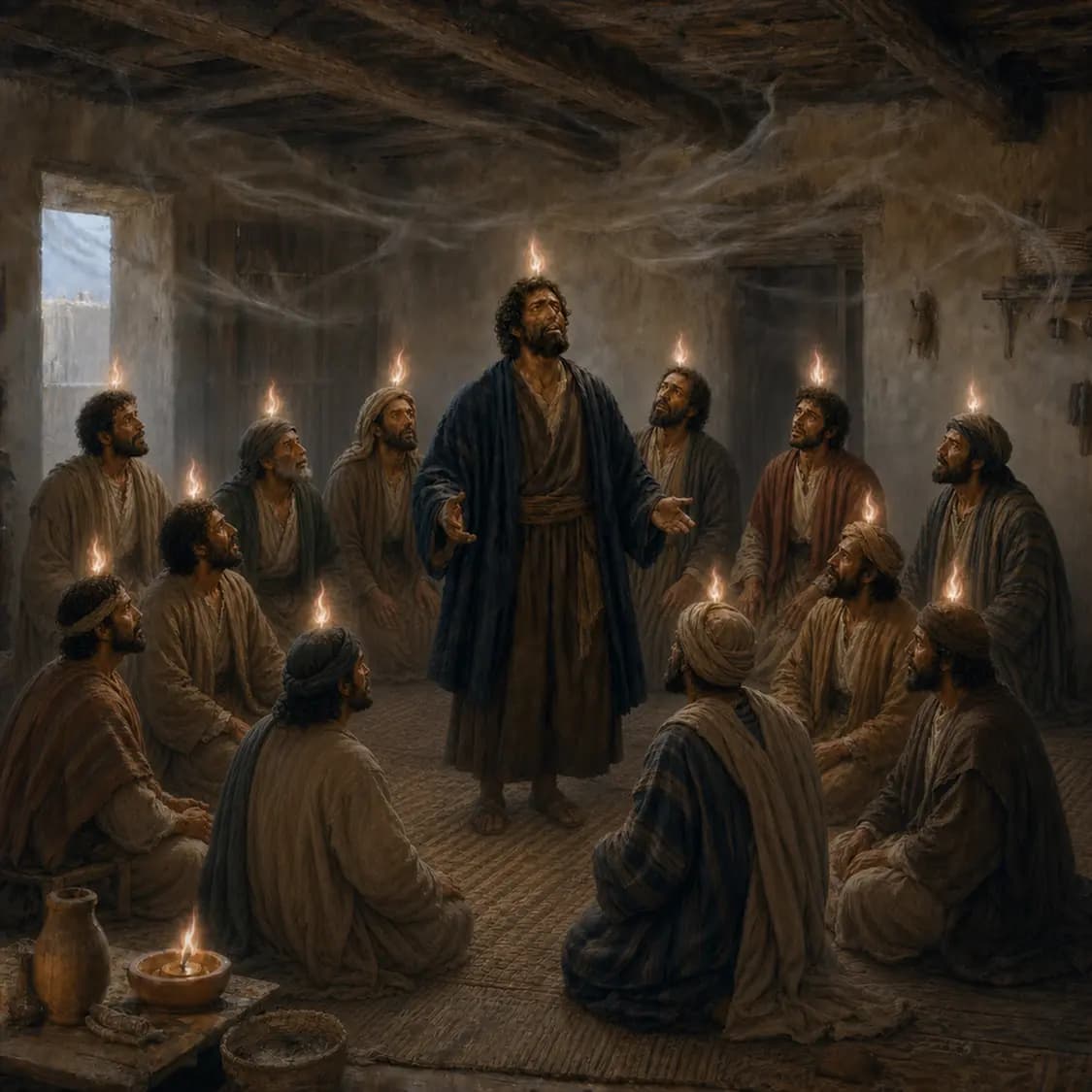
At Pentecost, Jesus' followers are together when a sound like a rushing wind fills the house and tongues like fire rest on them. Filled with the Holy Spirit, they speak in other languages as the Spirit enables them, and visitors hear God's mighty works in their own native languages. Peter explains the event through Joel and proclaims Jesus' death, resurrection, exaltation, and lordship. About three thousand receive his message and are baptized; the new community devotes itself to teaching, fellowship, shared meals, prayers, praise, and care for those in need.
Listen to the story6 min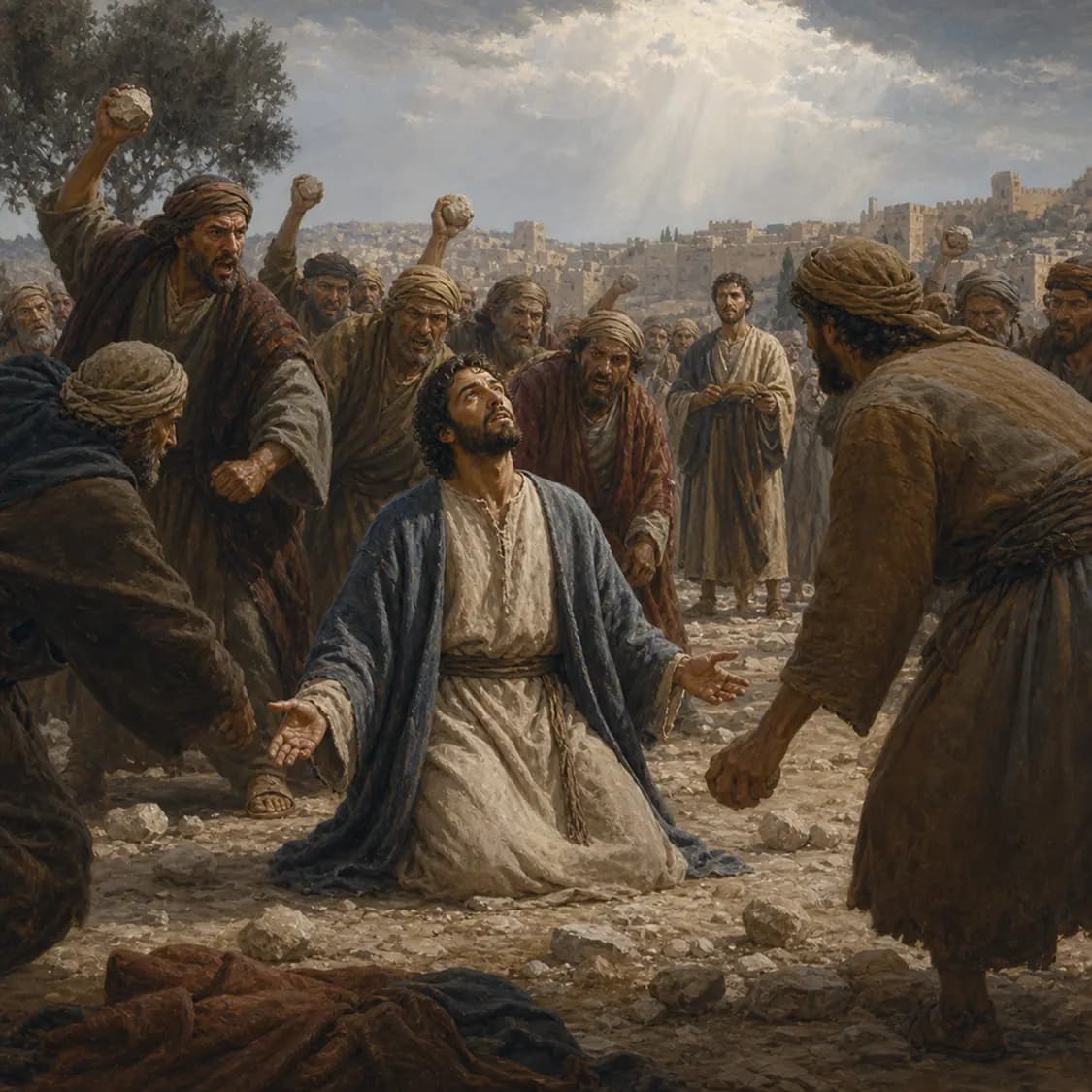
Stephen’s Witness and Martyrdom
Stephen, full of grace and power, faces opposition from people who cannot withstand the wisdom and Spirit with which he speaks. False witnesses accuse him of speaking against Moses, God, the temple, and the law, and he is brought before the council. In his speech Stephen recounts Israel's history and accuses his hearers of resisting the Holy Spirit and betraying the Righteous One. He sees the glory of God and the Son of Man standing at God's right hand; the council stones him outside the city while Saul watches the witnesses' garments. Stephen entrusts his spirit to the Lord Jesus and asks that his killers not be held guilty.
Listen to the story4 min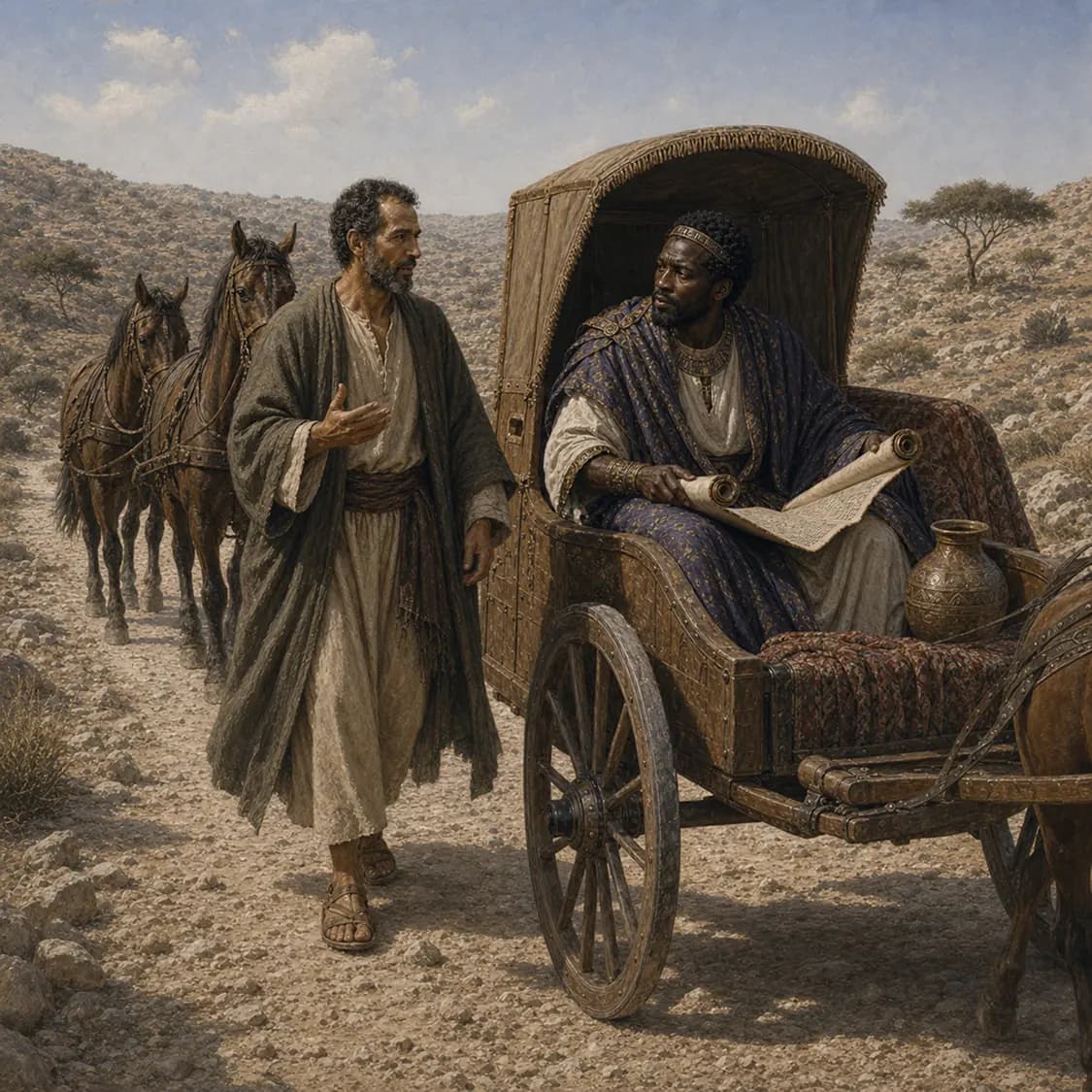
Philip and the Ethiopian Official
An angel directs Philip to the road from Jerusalem toward Gaza, where he meets an Ethiopian eunuch who serves the queen's treasury and is reading Isaiah after worshiping in Jerusalem. The Spirit tells Philip to approach the chariot. When the official asks whom Isaiah's suffering figure describes, Philip begins with that Scripture and tells him the good news about Jesus. At water along the road Philip baptizes the official, who continues rejoicing, while Philip is taken away by the Spirit and later preaches from Azotus to Caesarea.
Listen to the story4 min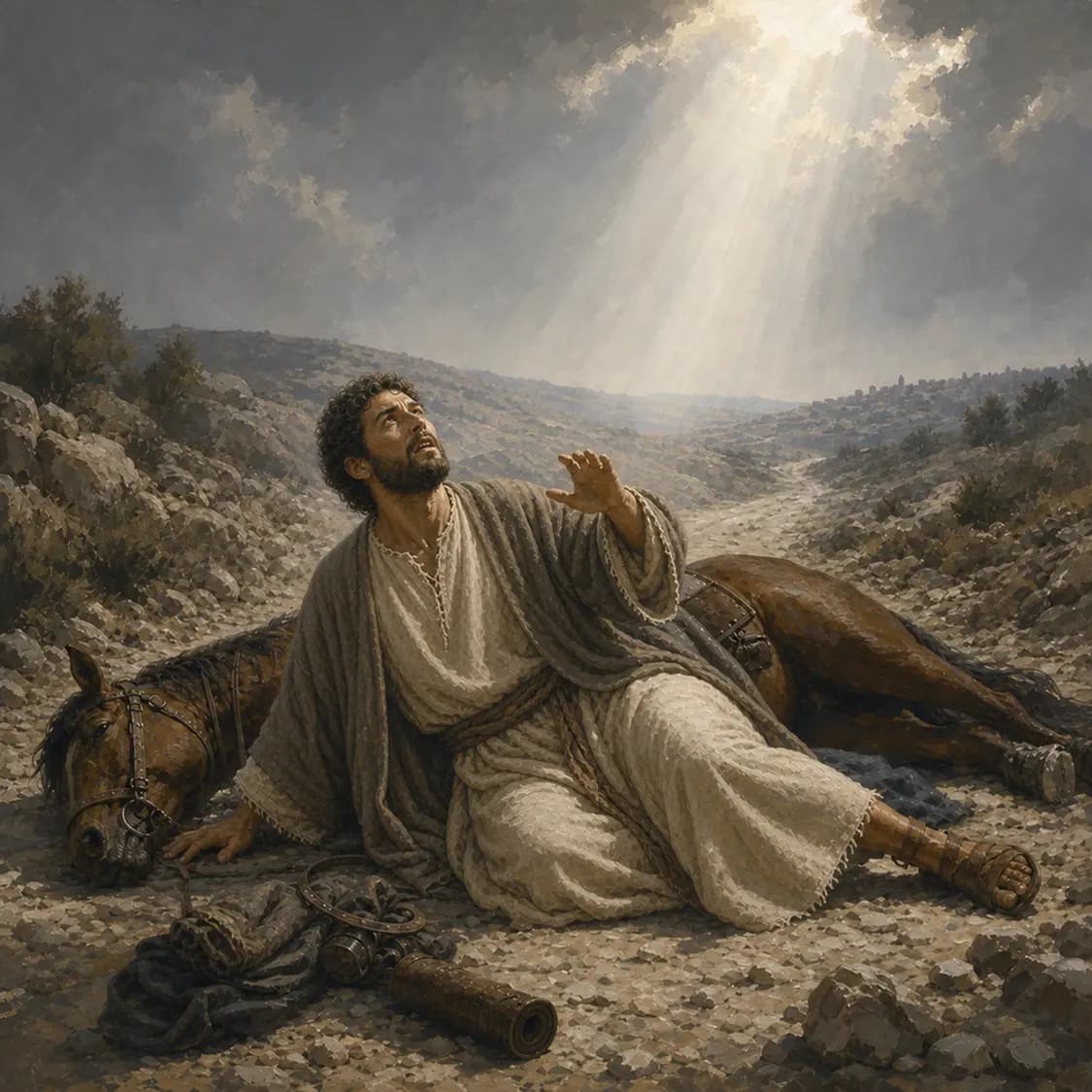
Saul’s Conversion
Saul obtains letters to arrest followers of the Way in Damascus. Near the city, a light from heaven surrounds him and the risen Jesus asks why Saul is persecuting him. Saul is blinded and led into Damascus, where he fasts for three days. In a vision the Lord sends Ananias, despite his fear of Saul, to restore Saul's sight and announce his calling to bear Jesus' name before Gentiles, kings, and Israel. Saul regains sight, is baptized, joins the disciples, and soon proclaims in the synagogues that Jesus is the Son of God and the Messiah.
Listen to the story5 min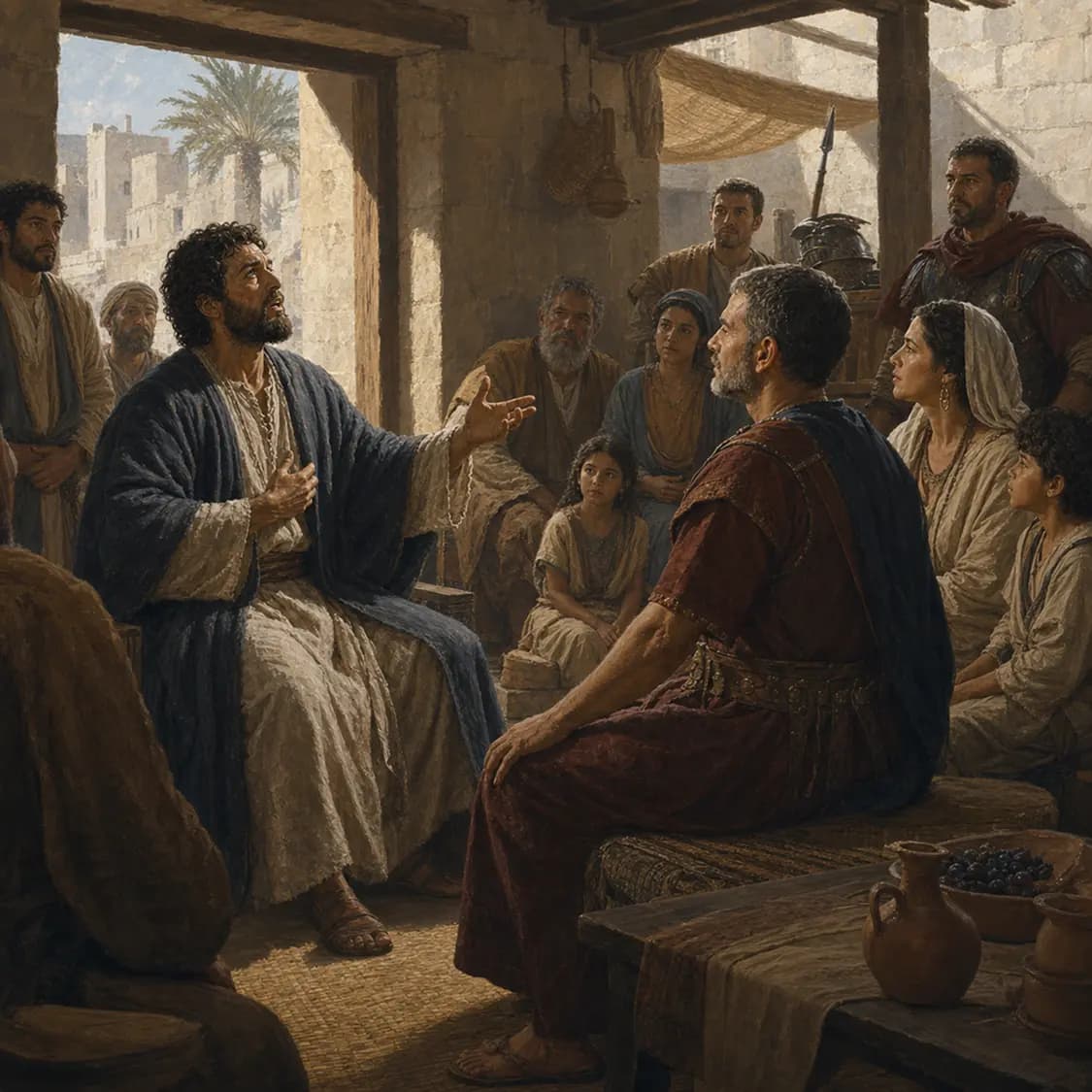
Peter and Cornelius
Cornelius, a Roman centurion in Caesarea who fears God, gives generously, and prays, receives a vision directing him to send for Peter in Joppa. Peter receives a vision of a sheet of animals and hears that he must not call unclean what God has made clean. The Spirit sends Peter with Cornelius's messengers. At Cornelius's house Peter says he has learned not to call any person impure or unclean, then proclaims Jesus' ministry, death, resurrection, lordship, and forgiveness. The Holy Spirit falls on the Gentile listeners, who speak in tongues and praise God; Peter then orders their baptism.
Listen to the story7 min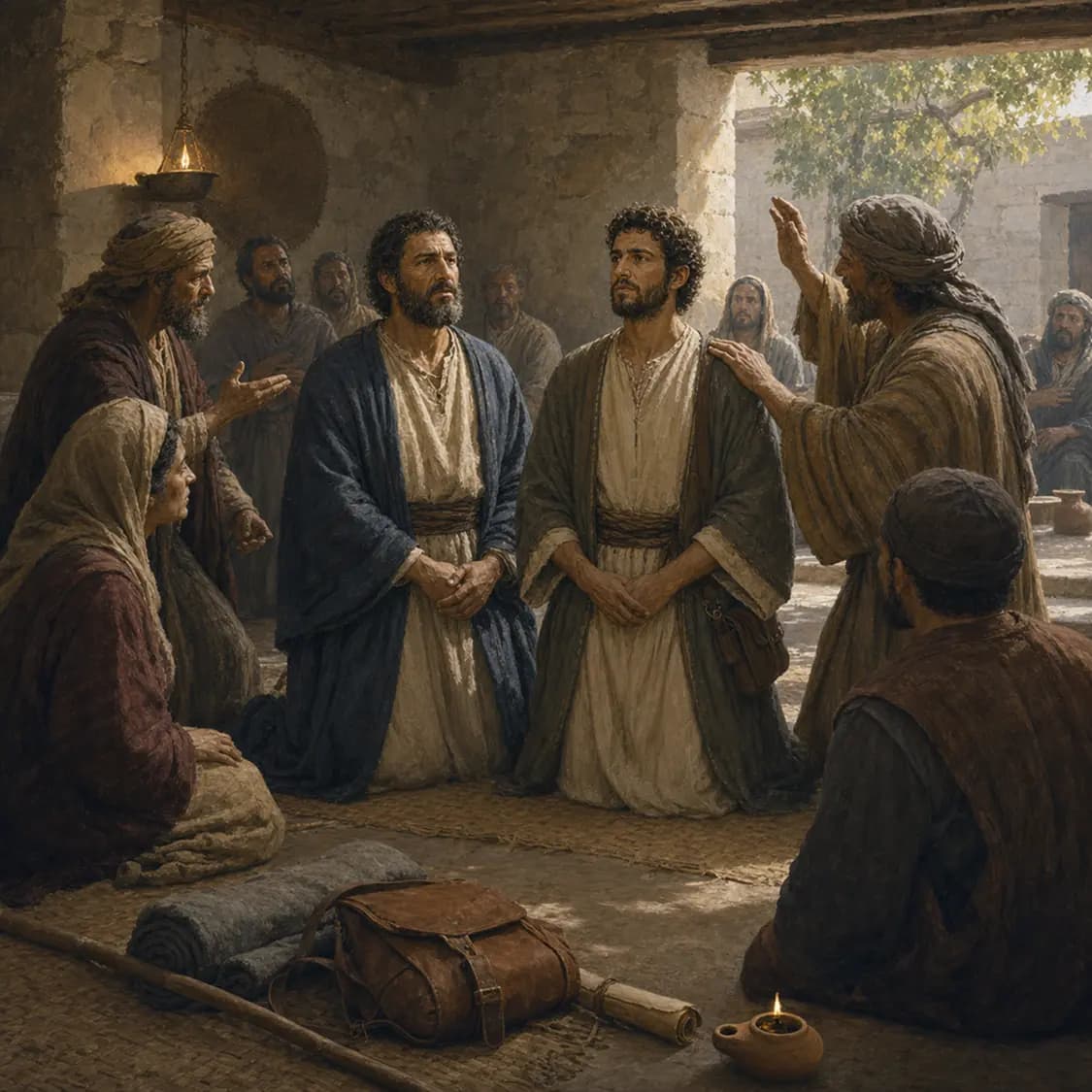
Barnabas and Paul Are Sent Out
While the Antioch church's prophets and teachers worship and fast, the Holy Spirit tells them to set apart Barnabas and Saul for the work to which they are called. After prayer, fasting, and laying hands on them, the church sends them to Cyprus. At Paphos, the proconsul Sergius Paulus asks to hear God's word, but the sorcerer and false prophet Bar-Jesus, also called Elymas, tries to turn him away. Saul, also called Paul, announces temporary blindness on Elymas; when Sergius Paulus sees what happened and hears the teaching, he believes.
Listen to the story4 min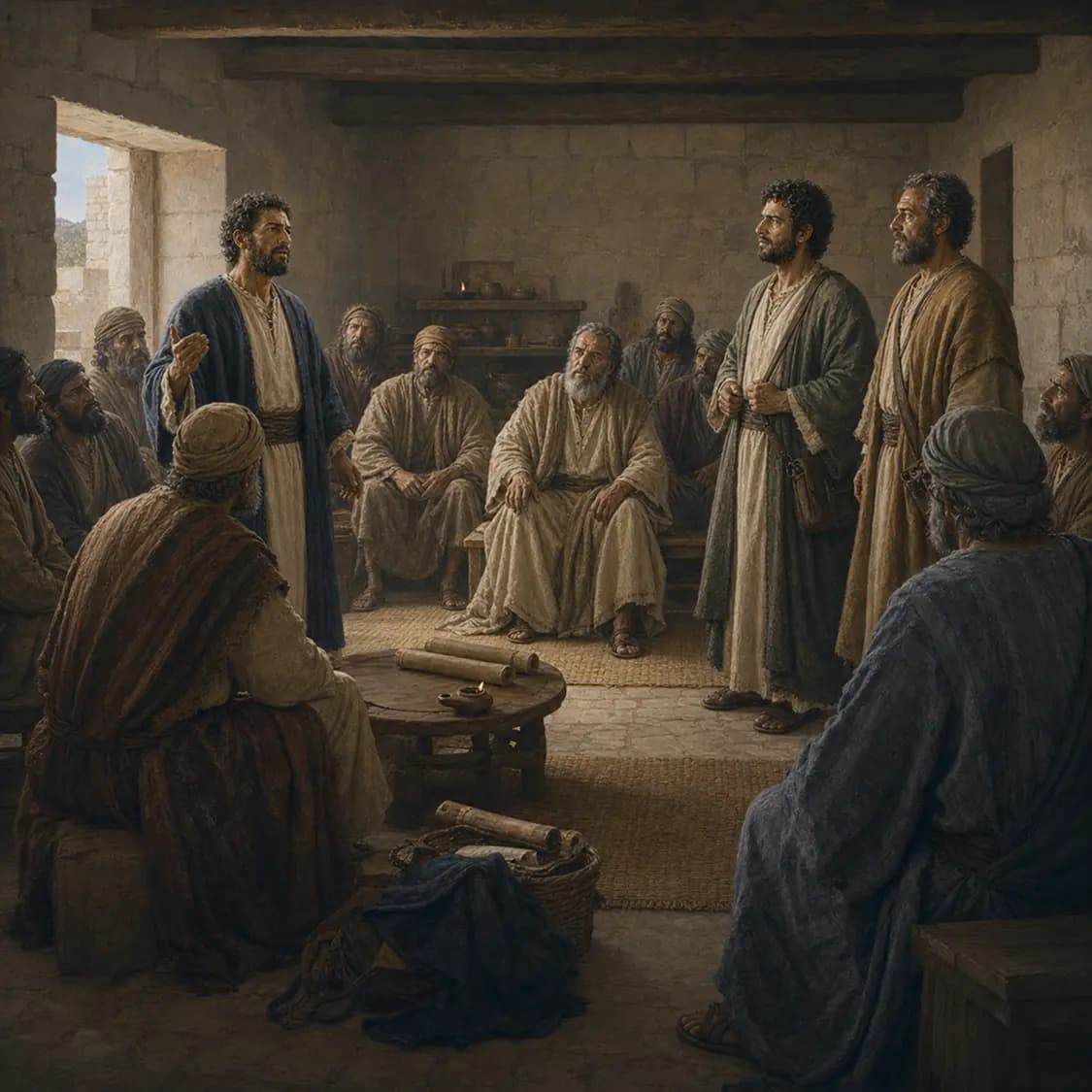
The Jerusalem Council
A dispute in Antioch arises when some people teach that Gentile men must be circumcised according to Moses' custom to be saved. Paul and Barnabas are sent to Jerusalem, where apostles and elders consider the question. Peter testifies that God gave Gentiles the Holy Spirit and purified their hearts by faith; Barnabas and Paul report signs among Gentiles; and James cites the prophets. The council writes to Gentile believers in Antioch, Syria, and Cilicia, refusing to require circumcision or the law of Moses as a condition of salvation while giving several instructions for their shared life. Judas Barsabbas and Silas carry the letter and strengthen the Antioch church.
Listen to the story6 min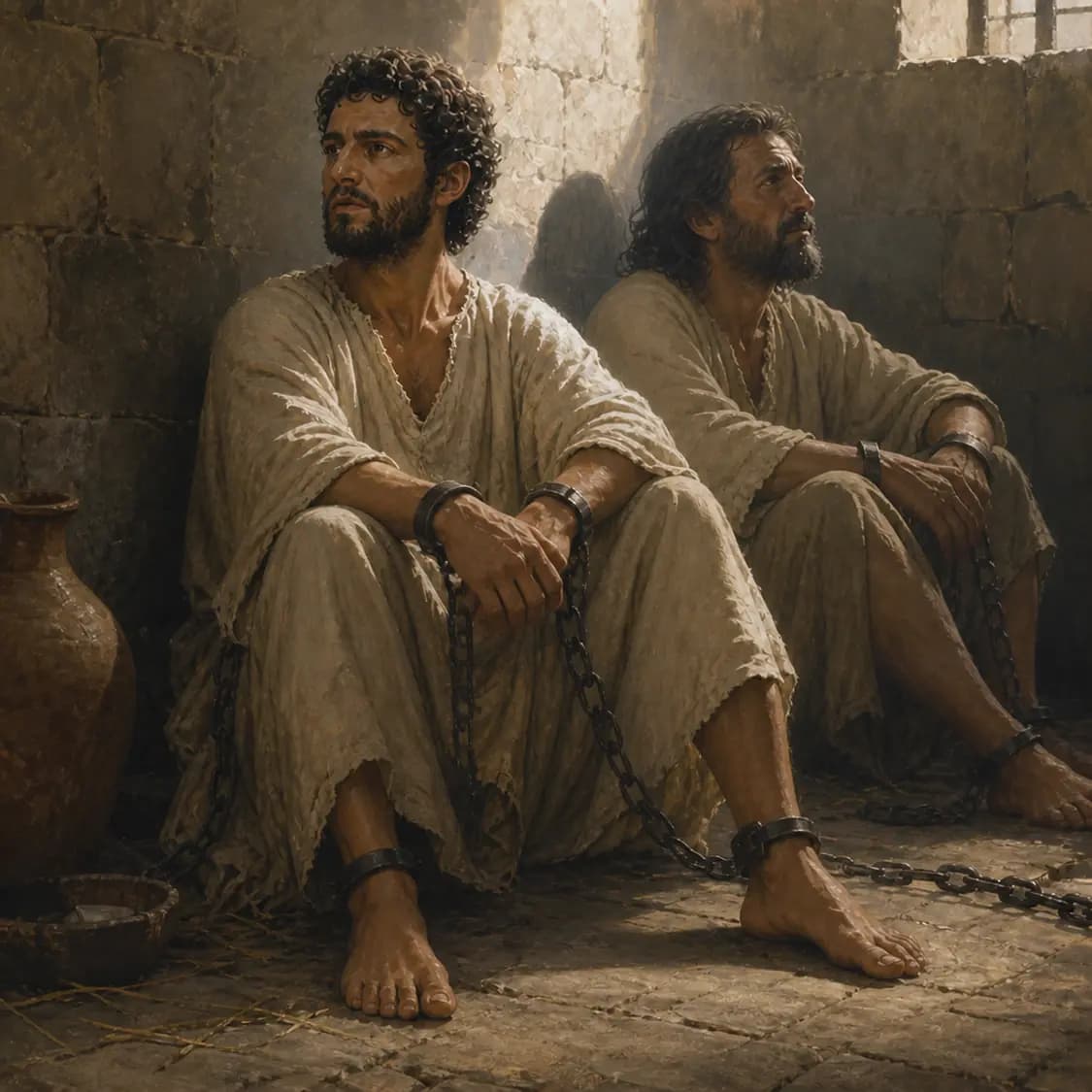
Paul and Silas in Prison
In Philippi, Paul commands a spirit of divination to leave an enslaved young woman, ending the profit her owners received from her fortune-telling. Her owners bring Paul and Silas before magistrates, who have them beaten and imprisoned without a proper hearing. At midnight the missionaries pray and sing; an earthquake opens the doors and loosens every prisoner's chains. Paul prevents the jailer from harming himself, and he and Silas tell the jailer and his household the word of the Lord. The jailer washes their wounds, is baptized with his household, and welcomes them; Paul later invokes his Roman citizenship before leaving Philippi.
Listen to the story5 min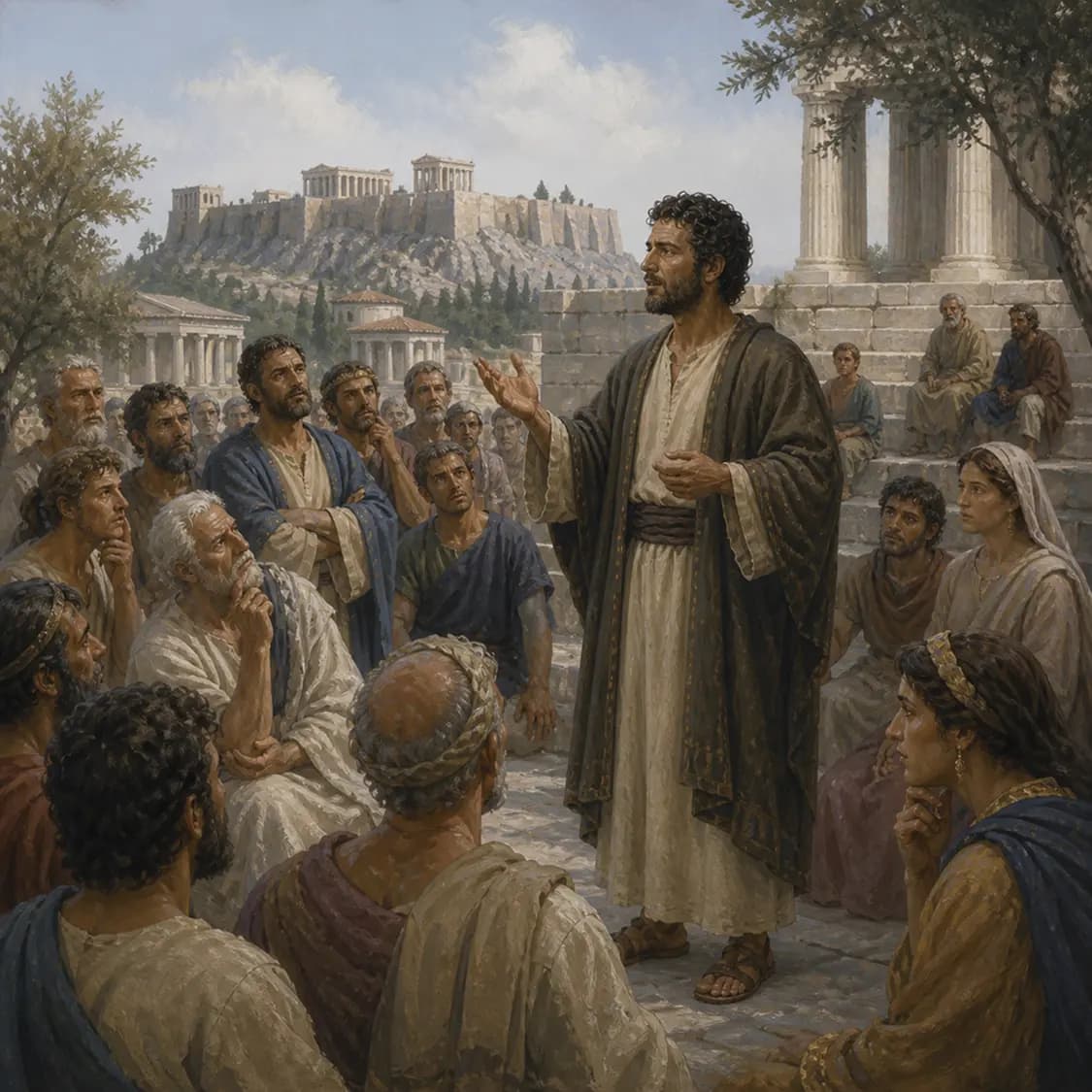
Paul Speaks in Athens
While waiting in Athens, Paul is distressed by the city's idols and reasons in the synagogue and marketplace. Epicurean and Stoic philosophers bring him to the Areopagus to explain his teaching about Jesus and the resurrection. Paul begins with an altar inscribed to an unknown god and proclaims the Creator who does not live in human-made temples or need human service. He calls people to repent because God has appointed a day of just judgment through the man raised from the dead. Some mock at the resurrection, some want to hear more, and some—including Dionysius and Damaris—believe.
Listen to the story4 min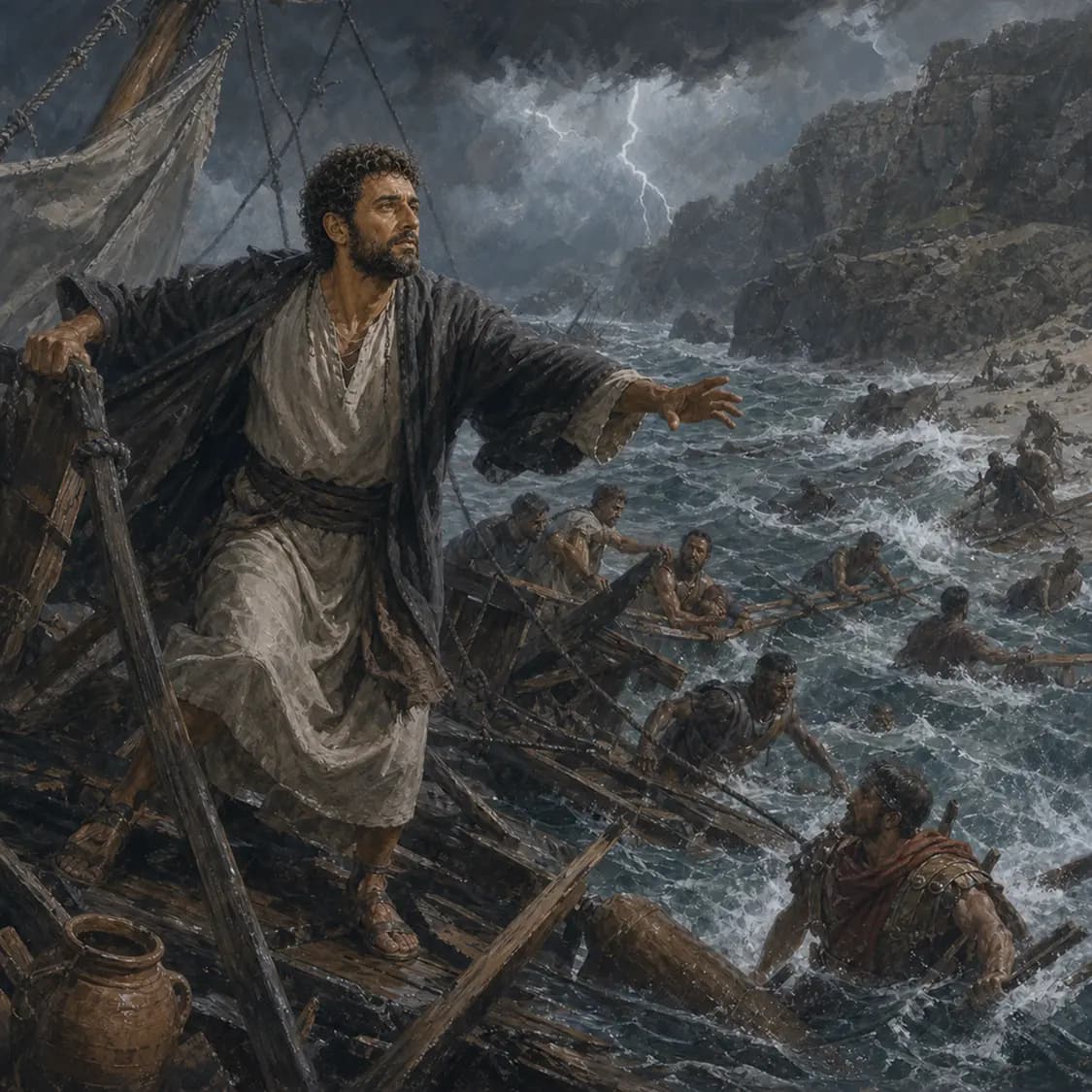
Paul Is Shipwrecked
Paul, a prisoner being taken to Italy under the centurion Julius, sails through worsening seasonal conditions. At Fair Havens he warns of danger, but Julius follows the pilot and owner. A violent storm drives the ship for many days, and the crew throws cargo and equipment overboard. An angel assures Paul that he must stand before Caesar and that every life on the ship will be preserved, though the ship will be lost. After fourteen nights, the ship runs aground and breaks apart, but all 276 people reach land safely under Julius's protection of Paul.
Listen to the story6 min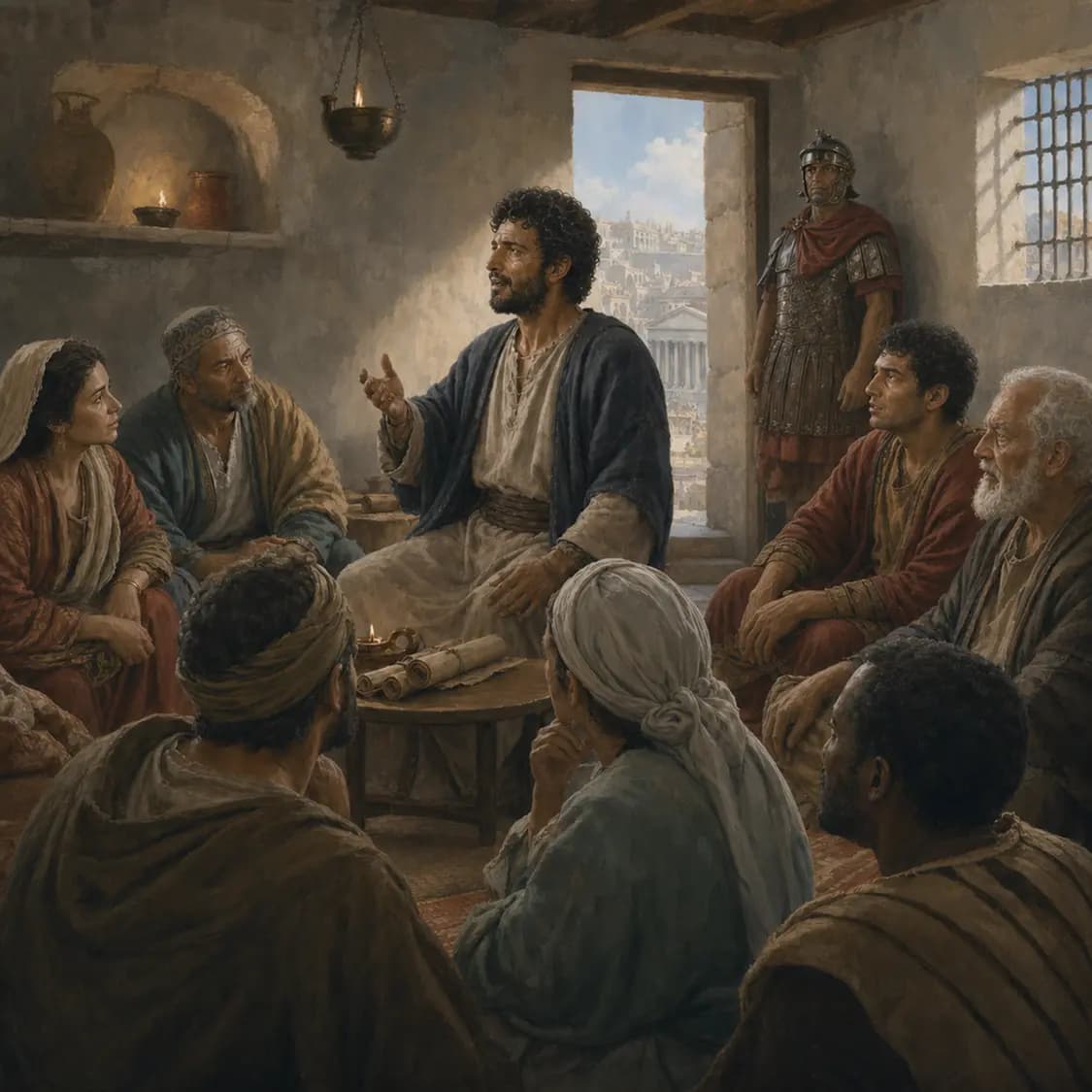
The Good News Reaches Rome
In Rome, Paul is allowed to live by himself with a soldier guarding him. He calls together local Jewish leaders, explains that he has done nothing against his people or ancestral customs, and says he is chained because of Israel's hope. On an appointed day he testifies about God's kingdom and tries to persuade them about Jesus from the Law of Moses and the Prophets. Some believe and others do not. Paul remains for two years in rented quarters, welcoming all who come and proclaiming God's kingdom and teaching about the Lord Jesus Christ with boldness and without hindrance.
Listen to the story5 min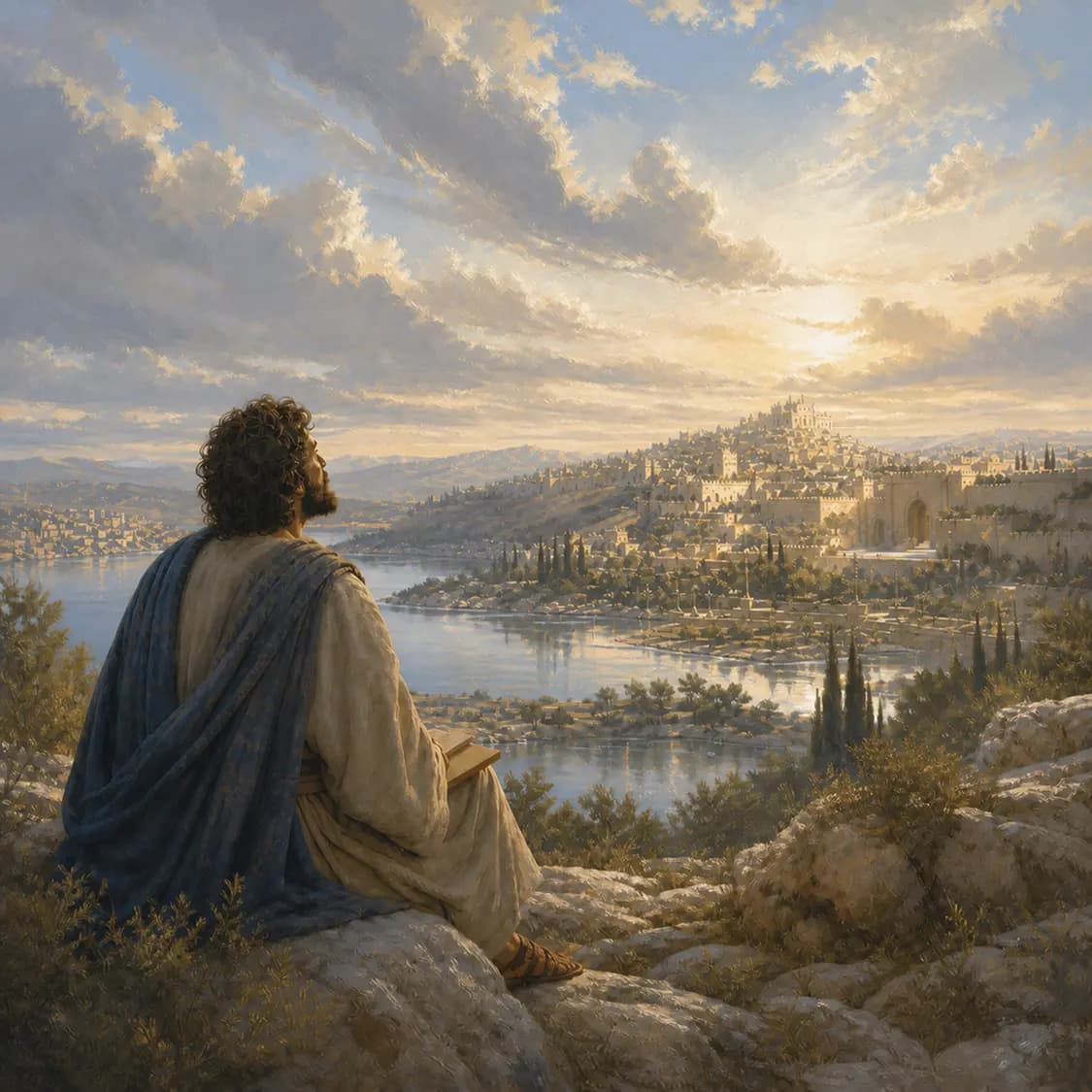
A New Heaven and a New Earth
In a vision, John sees a new heaven and new earth and the New Jerusalem coming down from God like a bride. A voice announces that God will dwell with his people, wipe away tears, and end death, mourning, crying, and pain. The city has gates bearing Israel's tribes and foundations bearing the Lamb's apostles. God and the Lamb are its temple, God's glory fills it with light, and the Lamb is its lamp. Nothing unclean enters it. A river of the water of life flows from God's and the Lamb's throne, the tree of life brings healing to the nations, the curse is gone, and God's servants see his face and reign forever.
Listen to the story6 min