
Read the story
Context
The first followers of Jesus were Jewish, but the good news was spreading far beyond Judea. Antioch had become an important center for this growing mission, and many Gentiles—people from other nations—were turning to God.
Jewish life had long been shaped by the law of Moses, and circumcision marked Jewish men as members of Israel’s covenant community. Now the church faced an urgent question: Did Gentile believers also need to be circumcised and keep the law of Moses in order to be saved? The answer would affect believers across many regions and clarify how they belonged among God’s people.
Story
The dispute began when some men came from Judea to Antioch. They taught the believers that unless Gentile men were circumcised according to the custom of Moses, they could not be saved.
Paul and Barnabas strongly opposed them, and a serious debate followed. The church decided to send Paul, Barnabas, and several others to Jerusalem to bring the question before the apostles and elders there.
As the group traveled through Phoenicia and Samaria, they told believers how Gentiles had turned to God. The news brought great joy to the churches along the way.
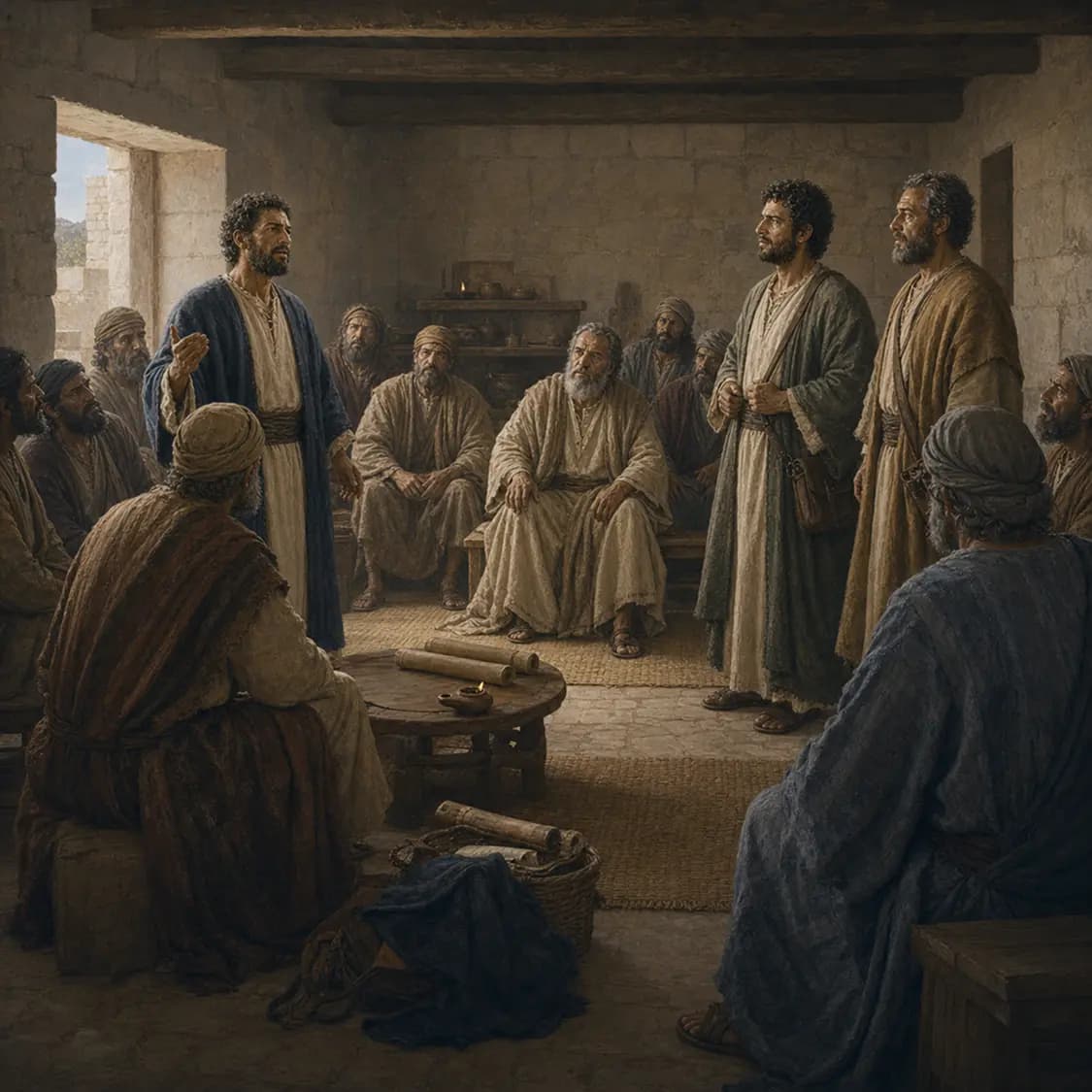
When they reached Jerusalem, the church, the apostles, and the elders welcomed them. Paul and Barnabas reported everything God had done through them. But some believers who belonged to the party of the Pharisees stood and argued that the Gentiles must be circumcised and commanded to keep the law of Moses.
The apostles and elders gathered to consider the matter. After much discussion, Peter stood to speak. He reminded them that God had previously chosen him to proclaim the good news to Gentiles so that they might hear and believe. God, who knows every heart, had given those Gentiles the Holy Spirit just as he had given the Spirit to Jewish believers.
God had made no distinction between them. He had purified their hearts through faith. Peter therefore asked why they would test God by placing a yoke on Gentile disciples that neither their ancestors nor they themselves had been able to bear.
“We believe it is through the grace of the Lord Jesus that we are saved, just as they are.”
The assembly became silent. Then Barnabas and Paul described the signs and wonders God had done among the Gentiles through them.
When they finished, James addressed the gathering. He recalled Peter’s testimony that God was taking from the Gentiles a people for his name. James then showed how this agreed with the words of the prophets. God had promised to restore David’s fallen dwelling so that people from the nations—even Gentiles called by God’s name—might seek the Lord. What was happening among the Gentiles was consistent with what God had made known long ago.
James gave his conclusion: they should not make it difficult for Gentiles who were turning to God. Instead, they should write and instruct them to abstain from food polluted by idols, sexual immorality, meat from strangled animals, and blood. He also noted that the law of Moses had long been proclaimed in every city and was read in the synagogues each Sabbath.
The apostles, elders, and the whole church agreed. They chose two respected leaders, Judas Barsabbas and Silas, to accompany Paul and Barnabas back to Antioch. The men carried a letter addressed to the Gentile believers in Antioch, Syria, and Cilicia.
The letter acknowledged that some people had troubled and unsettled the believers with teachings they had not been authorized to give. The church in Jerusalem had therefore agreed to send trusted representatives with their beloved Barnabas and Paul—men who had risked their lives for the name of the Lord Jesus. Judas and Silas would confirm the message in person.
The letter said that it had seemed good to the Holy Spirit and to the gathered believers not to place any greater burden on the Gentiles than the necessary instructions James had proposed. It did not require them to be circumcised or to keep the law of Moses as a condition of salvation.
The messengers returned to Antioch and gathered the church together. When the letter was read aloud, the believers rejoiced because its message encouraged them. Judas and Silas, who were also prophets, spoke at length to strengthen the believers.
After spending time in Antioch, the visitors received a peaceful farewell. Paul and Barnabas remained there, teaching and proclaiming the word of the Lord alongside many others.
What We Learned
- Salvation rests on the grace of the Lord Jesus, not on requiring Gentile believers to be circumcised and keep the law of Moses.
- God knows the heart. His gift of the Holy Spirit and his cleansing through faith showed that he made no distinction between Jewish and Gentile believers.
- The church faced serious disagreement by listening to testimony, considering Scripture, and discerning together under the guidance of the Holy Spirit.
- Refusing an unnecessary burden did not mean ignoring faithful conduct; the council still gave clear instructions for the Gentile believers.
- Honest correction, trusted messengers, and clear communication turned confusion into encouragement and strengthened the church.
Story background
The Jerusalem Council is read in Acts 15:1-35. A dispute in Antioch arises when some people teach that Gentile men must be circumcised according to Moses' custom to be saved. The account also draws attention to grace and faith and Gentile inclusion. Its named people, setting, and sequence matter, while details not stated in the passage should remain open rather than being supplied from later retellings. Read the scene in its surrounding movement: notice what prompts the action, how the central figures respond, and what the final words leave with the hearer. This background keeps the story close to its explicit claims while making room for careful reflection on grace and faith, Gentile inclusion, and the other themes named here. The passage can be revisited slowly, with its questions and tensions intact.
People in the story
- Paul and Barnabas — Oppose the circumcision requirement, report God's work among Gentiles, and return with the council's letter
- Peter — Testifies that God gave Gentiles the Holy Spirit and purified their hearts by faith
- James — Connects the Gentile mission with the prophets and proposes the council's conclusion
- Apostles, elders, and the Jerusalem church — Deliberate together, agree on a letter, and send trusted representatives
- Judas Barsabbas and Silas — Carry the letter to Antioch and strengthen the believers
Themes to notice
Grace and faith
The passage brings grace and faith into focus through its named people, actions, and ending.
Gentile inclusion
The passage brings Gentile inclusion into focus through its named people, actions, and ending.
Church discernment
The passage brings church discernment into focus through its named people, actions, and ending.
Shared life across cultures
The passage brings shared life across cultures into focus through its named people, actions, and ending.
Questions for reflection
- What stands out to you about grace and faith in this passage?
- How do the people in the story respond to Gentile inclusion?
- Which detail would you want to read again in its wider context?
- What question does this account leave you carrying?
Related stories
Carry the story with you
Save your reflections on the jerusalem council and revisit them as you continue through Scripture.