
Read the story
Context
Paul was carrying the good news of Jesus into cities where people approached questions about God and life through different religious traditions and schools of philosophy. Athens was such a place. People discussed faith in the synagogue, exchanged ideas in the marketplace, and examined unfamiliar teachings at the Areopagus.
When Paul spoke there, he could not assume that everyone shared the synagogue’s understanding of God. His listeners first needed to understand whom he meant by “God”—and why his message about Jesus and the resurrection concerned them.
Story
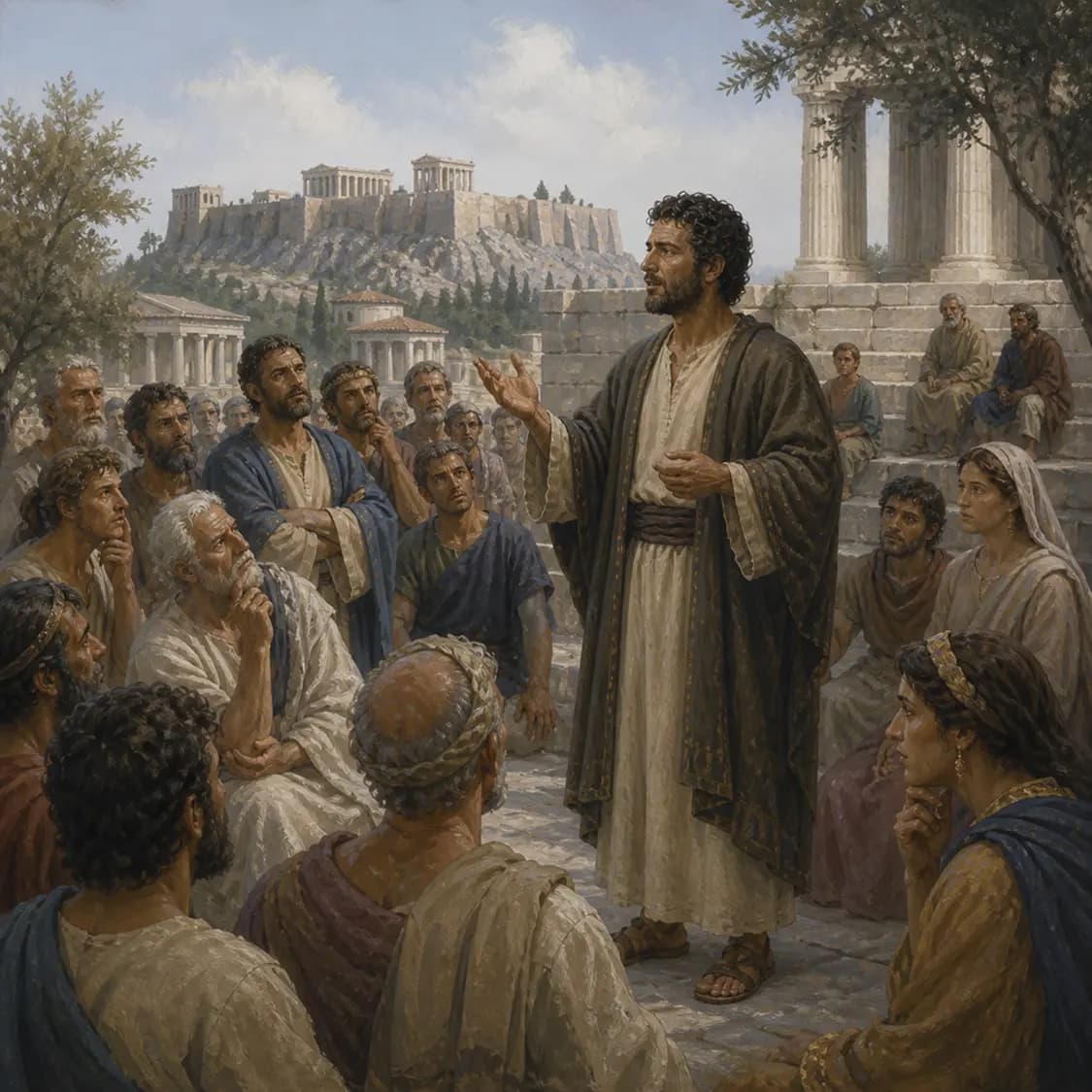
While Paul waited in Athens for his companions, he saw that the city was filled with idols. The sight deeply troubled him. He began reasoning in the synagogue with Jews and others who worshiped God. Day after day, he also spoke with people he met in the marketplace.
Some Epicurean and Stoic philosophers began debating with him. They came from different schools of thought, and Paul’s message sounded strange to them. Some dismissed him as a babbler. Others thought he was announcing foreign gods because he was proclaiming Jesus and the resurrection.
They brought Paul to the Areopagus and asked him to explain his teaching. He was bringing unfamiliar ideas to their ears, they said, and they wanted to know what those ideas meant. Many Athenians and visitors were eager to discuss whatever seemed new.
Standing among them, Paul began with something he had observed in their city. He said that he could see they were very religious. As he had walked around and examined their objects of worship, he had found an altar dedicated “To an Unknown God.” The God they worshiped without knowing, Paul said, was the God he now proclaimed to them.
This God had made the world and everything in it. As Lord of heaven and earth, he did not live in temples built by human hands. Nor did he depend on people to supply his needs. God was the giver, not the receiver: he gave everyone life, breath, and everything else.
God had made every nation of humanity from one shared origin. He had determined the times and places in which people would live so that they might seek him, reach out for him, and find him. Yet God was not far from any of them.
Paul then drew on words familiar from their own poets: “In him we live and move and have our being,” and, “We are his offspring.” If human beings are God’s offspring, Paul reasoned, then God should not be imagined as an image of gold, silver, or stone shaped by human skill and imagination.
God had overlooked past times of ignorance, but now he commanded people everywhere to repent. He had appointed a day when he would judge the world with justice through the man he had chosen. God had given assurance of this to everyone by raising that man from the dead. Paul’s message had returned to the resurrection of Jesus.
At the mention of resurrection, the listeners responded in different ways. Some mocked Paul. Others said they wanted to hear him speak about it again. Paul then left the gathering.
But some joined him and believed. Among them were Dionysius, a member of the Areopagus, a woman named Damaris, and others with them.
What We Learned
- Paul paid close attention to his listeners and began with something they recognized, while still clearly proclaiming God’s truth.
- God is the Creator and giver of life. He is not confined to human buildings or dependent on human offerings.
- Every nation shares one human origin, and God’s purpose is that people should seek him. He is not far from any of us.
- The resurrection of Jesus supports Paul’s call to repentance and his warning that God will judge the world with justice.
- The same message can bring ridicule, further questions, or faith. In Athens, all three responses appeared.
Story background
Paul Speaks in Athens is read in Acts 17:16-34. While waiting in Athens, Paul is distressed by the city's idols and reasons in the synagogue and marketplace. The account also draws attention to Creator and human dependence and idolatry. Its named people, setting, and sequence matter, while details not stated in the passage should remain open rather than being supplied from later retellings. Read the scene in its surrounding movement: notice what prompts the action, how the central figures respond, and what the final words leave with the hearer. This background keeps the story close to its explicit claims while making room for careful reflection on Creator and human dependence, idolatry, and the other themes named here. The passage can be revisited slowly, with its questions and tensions intact.
People in the story
- Paul — Reasons with Athenians and proclaims the Creator, repentance, judgment, and resurrection
- Epicurean and Stoic philosophers — Debate Paul and bring him to the Areopagus to explain his teaching
- Athenians and visitors — Hear Paul and respond with mockery, interest, or belief
- Dionysius — A member of the Areopagus named among those who believe
- Damaris — A woman named among those who believe
Themes to notice
Creator and human dependence
The passage brings Creator and human dependence into focus through its named people, actions, and ending.
Idolatry
The passage brings idolatry into focus through its named people, actions, and ending.
Contextual witness
The passage brings contextual witness into focus through its named people, actions, and ending.
Resurrection and judgment
The passage brings resurrection and judgment into focus through its named people, actions, and ending.
Questions for reflection
- What stands out to you about Creator and human dependence in this passage?
- How do the people in the story respond to idolatry?
- Which detail would you want to read again in its wider context?
- What question does this account leave you carrying?
Related stories
Carry the story with you
Save your reflections on paul speaks in athens and revisit them as you continue through Scripture.