
Read the story
Context
For those who came to Jesus, eternal life was closely tied to entering God’s kingdom. Jesus had already called disciples to follow him, and they had left familiar lives to travel at his side. Still, they were learning what that call meant when it touched a person’s deepest security. A stranger’s urgent question would bring that issue into the open.
Story
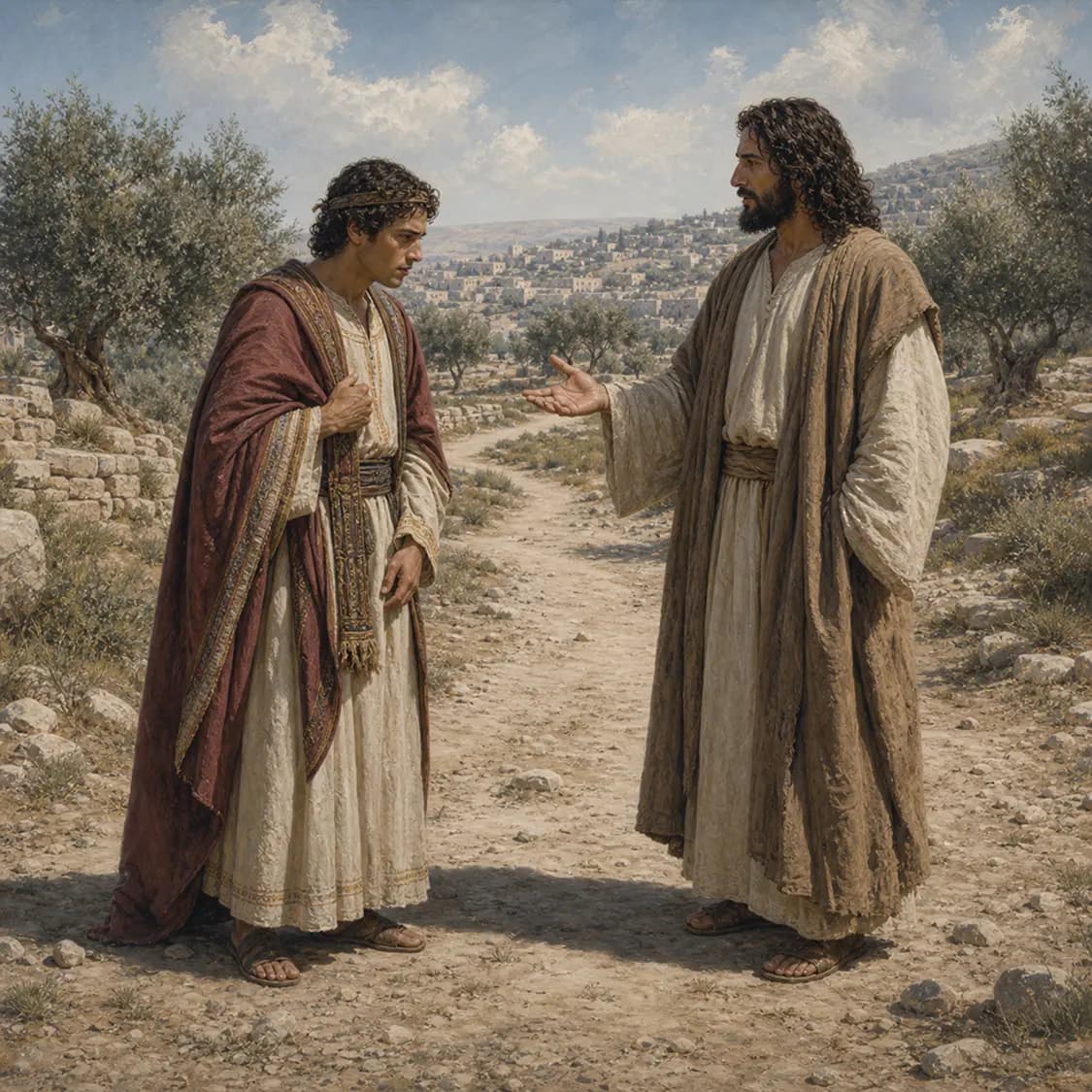
As Jesus set out on the road, a man ran up, knelt before him, and asked, “Good Teacher, what must I do to inherit eternal life?”
Jesus began by directing the man’s attention to God: “Why do you call me good? No one is good except God alone.” Then he reminded him of the commandments: do not commit adultery or murder, do not steal, give false testimony, or defraud anyone, and honor your father and mother.
The man answered that he had kept all these commandments since his youth. Jesus looked at him and loved him. Then he told the man that one thing was still lacking. He was to sell what he owned, give the money to the poor, and have treasure in heaven. Then he was to come and follow Jesus.
At those words, the man became sad and went away grieving because he had many possessions. His question had brought him eagerly to Jesus; now his wealth stood between him and the call to follow.
Jesus looked around at his disciples and told them how hard it is for those who have wealth to enter God’s kingdom. His words astonished them. Calling them children, he repeated how difficult it is to enter the kingdom of God.
Then Jesus gave them a striking image: it is easier for a camel to pass through the eye of a needle than for a rich person to enter God’s kingdom.
The disciples were even more amazed. They asked one another, “Who, then, can be saved?”
Jesus looked at them before answering. For human beings, he said, this is impossible—but not for God. All things are possible with God.
Peter then pointed out that he and the other disciples had left everything to follow Jesus. Jesus answered with a promise. Anyone who leaves home, family, or land for his sake and for the good news will receive a hundredfold in this present age—homes, brothers and sisters, mothers and children, and lands—along with persecutions. In the age to come, they will receive eternal life.
The conversation ended with a reversal: “Many who are first will be last, and the last first.”
What We Learned
- Respectable behavior alone did not settle the man’s question. Jesus called him beyond a record of obedience into wholehearted discipleship.
- Jesus looked at the man and loved him before giving a difficult command. His searching challenge came from love.
- Wealth is not presented as evil in itself, but possessions can become a barrier when keeping them matters more than following Jesus.
- Salvation cannot be achieved by human ability. What is impossible for people remains possible with God.
- Following Jesus may involve genuine sacrifice and persecution, but Jesus promises that nothing surrendered for him and the good news is forgotten.
Story background
The Rich Man Who Asked About Eternal Life is read in Mark 10:17-31. A man runs to Jesus and asks what he must do to inherit eternal life. The account also draws attention to discipleship and wealth and allegiance. Its named people, setting, and sequence matter, while details not stated in the passage should remain open rather than being supplied from later retellings. Read the scene in its surrounding movement: notice what prompts the action, how the central figures respond, and what the final words leave with the hearer. This background keeps the story close to its explicit claims while making room for careful reflection on discipleship, wealth and allegiance, and the other themes named here. The passage can be revisited slowly, with its questions and tensions intact.
People in the story
- Jesus — Calls the man to follow him and teaches the disciples about wealth, God’s possibility, and discipleship
- Man with many possessions — Asks about eternal life, grieves at Jesus’ call, and goes away
- Peter and the disciples — Hear Jesus’ teaching and ask about those who have left everything to follow him
Themes to notice
Discipleship
The passage brings discipleship into focus through its named people, actions, and ending.
Wealth and allegiance
The passage brings wealth and allegiance into focus through its named people, actions, and ending.
Generosity
The passage brings generosity into focus through its named people, actions, and ending.
God’s saving power
The passage brings God’s saving power into focus through its named people, actions, and ending.
Questions for reflection
- What stands out to you about discipleship in this passage?
- How do the people in the story respond to wealth and allegiance?
- Which detail would you want to read again in its wider context?
- What question does this account leave you carrying?
Related stories
Carry the story with you
Save your reflections on the rich man who asked about eternal life and revisit them as you continue through Scripture.