
Read the story
Context
In Acts, the good news continues moving outward as the Holy Spirit directs the church. This episode follows a route from Antioch to Seleucia on the coast, then across the sea to Cyprus. The journey begins with the shared worship of the church that sends Barnabas and Saul.
The names can be easy to confuse. Saul and Paul are the same man, while Bar-Jesus and Elymas are two names for the same opponent. Sergius Paulus is a third person, the Roman official governing Cyprus. He wants to hear the word of God, but Elymas is determined to turn him away from faith.
Story
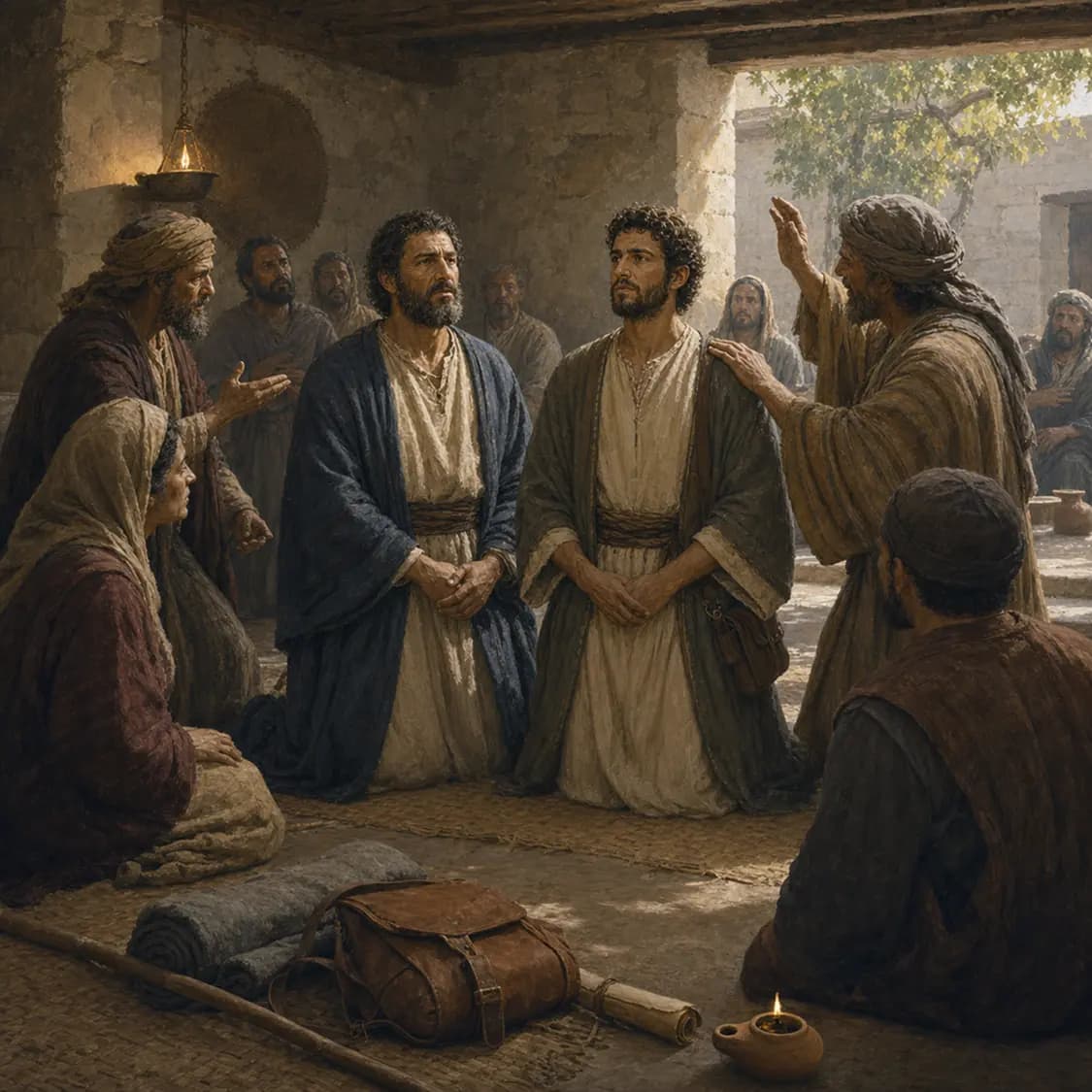
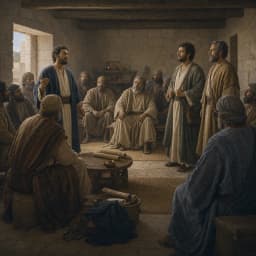
The church in Antioch had a group of prophets and teachers. They were Barnabas, Simeon known as Niger, Lucius from Cyrene, Manaen, who had been raised with Herod the ruler, and Saul.
While these men were worshiping the Lord and fasting, the Holy Spirit gave them a clear direction:
“Set apart for me Barnabas and Saul for the work to which I have called them.”
The leaders continued in fasting and prayer. Then they placed their hands on Barnabas and Saul and sent them out. The church sent them on their way, and they departed under the direction of the Holy Spirit.
Barnabas and Saul traveled to Seleucia and sailed from there to Cyprus. When they reached Salamis, they proclaimed the word of God in the Jewish synagogues. John traveled with them as their helper. From Salamis, they made their way across the island until they came to Paphos.
There they encountered a Jewish man named Bar-Jesus, also known as Elymas. He practiced sorcery and was a false prophet. He was with Sergius Paulus, the Roman proconsul who governed Cyprus. Sergius Paulus was an intelligent man, and he summoned Barnabas and Saul because he wanted to hear the word of God.
Elymas opposed Barnabas and Saul. His purpose was not merely to question them; he was trying to turn the governor away from faith.
Then Saul, who was also called Paul, faced Elymas. Filled with the Holy Spirit, Paul looked directly at him. He declared that Elymas was full of deceit and evil, a child of the devil and an enemy of everything right. He accused him of twisting the Lord’s straight ways and asked whether he would ever stop.
Paul then announced that the Lord’s hand was against Elymas. For a time, he would be blind and unable to see the sun. Immediately, mist and darkness came over him, and he began searching for someone to lead him by the hand. The man who had tried to turn the governor away from faith now needed another person to guide him.
When Sergius Paulus saw what had happened, he believed. The governor Elymas had tried to divert from faith was now astonished at the teaching about the Lord.
What We Learned
- The mission begins with God’s initiative. The Holy Spirit calls Barnabas and Saul, while Antioch’s leaders support their sending through worship, fasting, prayer, and the laying on of hands.
- Those who are sent keep God’s word central. Barnabas and Saul proclaim it, John helps them, and Sergius Paulus actively asks to hear it.
- A sincere desire to hear God’s word can face deliberate resistance. Elymas tries to turn Sergius away from faith, and Paul confronts that deception clearly.
- Elymas’s temporary blindness shows how seriously the Lord treats the deliberate twisting of his ways.
- Sergius’s response keeps the sign and the message together: he sees what happens, believes, and is astonished at the teaching about the Lord.
Story background
Barnabas and Paul Are Sent Out is read in Acts 13:1-12. While the Antioch church's prophets and teachers worship and fast, the Holy Spirit tells them to set apart Barnabas and Saul for the work to which they are called. The account also draws attention to Spirit-led sending and church discernment. Its named people, setting, and sequence matter, while details not stated in the passage should remain open rather than being supplied from later retellings. Read the scene in its surrounding movement: notice what prompts the action, how the central figures respond, and what the final words leave with the hearer. This background keeps the story close to its explicit claims while making room for careful reflection on Spirit-led sending, church discernment, and the other themes named here. The passage can be revisited slowly, with its questions and tensions intact.
People in the story
- Barnabas — Antioch teacher and missionary set apart with Saul
- Saul, also called Paul — Missionary set apart by the Spirit who confronts Elymas
- Antioch church leaders — Worship, fast, pray, lay hands on Barnabas and Saul, and send them
- Sergius Paulus — Roman proconsul who seeks to hear God's word and believes
- Bar-Jesus, also called Elymas — Sorcerer and false prophet who tries to turn Sergius Paulus away from faith
Themes to notice
Spirit-led sending
The passage brings Spirit-led sending into focus through its named people, actions, and ending.
Church discernment
The passage brings church discernment into focus through its named people, actions, and ending.
God's word and opposition
The passage brings God's word and opposition into focus through its named people, actions, and ending.
Mission across regions
The passage brings mission across regions into focus through its named people, actions, and ending.
Questions for reflection
- What stands out to you about Spirit-led sending in this passage?
- How do the people in the story respond to church discernment?
- Which detail would you want to read again in its wider context?
- What question does this account leave you carrying?
Related stories
Carry the story with you
Save your reflections on barnabas and paul are sent out and revisit them as you continue through Scripture.