
Read the story
Context
Jesus had been crucified in Jerusalem, leaving his followers with shattered expectations. They had hoped he was God’s promised deliverer, the one who would redeem Israel. His death seemed impossible to reconcile with that hope.
It was now the third day. Reports of an empty tomb and a message from angels had begun to circulate, but Jesus’ followers did not yet understand what had happened. Two of them left Jerusalem carrying both their grief and their unanswered questions.
Story
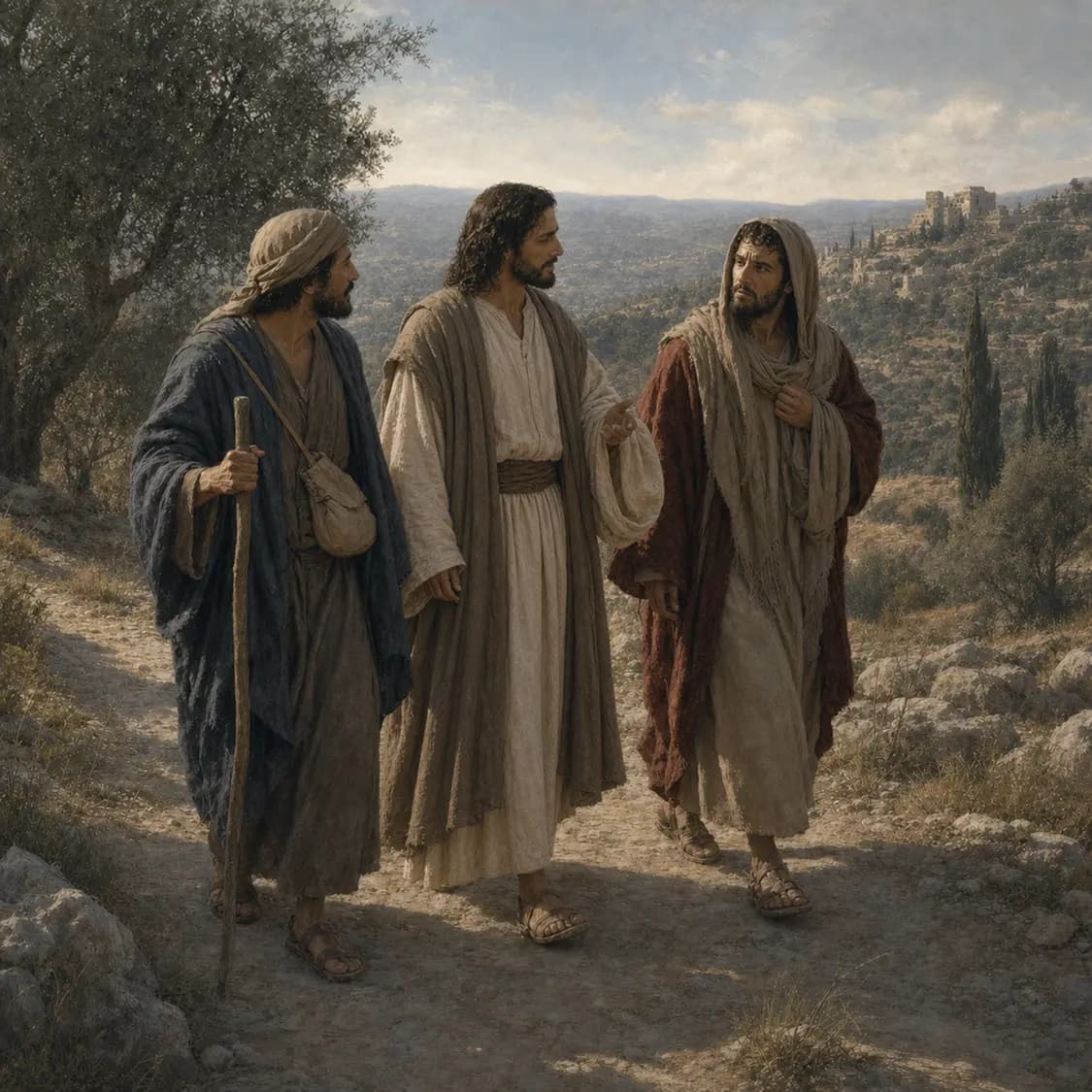
That same day, two of Jesus’ followers set out for Emmaus, a village about seven miles from Jerusalem. One of them was named Cleopas. As they walked, they talked through everything that had happened.
While they were discussing these things, Jesus himself came up and began walking with them. They saw him, but they were kept from recognizing him.
Jesus asked what they were discussing as they walked. They stopped, and their sadness was plain.
Cleopas answered with amazement. Was this man the only visitor to Jerusalem who had not heard what had happened there?
Jesus asked, “What things?”
So they told him about Jesus of Nazareth. They described him as a prophet who had been powerful in both word and deed before God and all the people. They explained how the chief priests and rulers had handed him over to be condemned to death and crucified.
Then they spoke of their disappointed hope: they had believed Jesus was the one who would redeem Israel. But he had died, and this was already the third day since it had happened.
Still, there were reports they could not explain. Some women from their group had gone to the tomb early that morning and found that his body was not there. The women said they had seen angels who told them Jesus was alive. Others went to the tomb and found it just as the women had said—but they did not see Jesus.
The two travelers knew the reports. They knew the tomb was empty. Yet they still could not see how suffering, death, and their hope of redemption belonged together.
Jesus challenged them for being slow to believe all that the prophets had spoken. Was it not necessary for the Messiah to suffer these things and then enter his glory?
Beginning with Moses and continuing through the prophets, Jesus explained what the Scriptures said concerning him. Step by step, he showed them that the Messiah’s suffering was not the end of God’s purpose. The Scriptures they knew were opening before them in a new way, even though they still did not recognize the one teaching them.
By the time they reached Emmaus, evening was approaching. Jesus appeared ready to continue farther, but the two followers urged him to remain with them.
“Stay with us.”
Jesus went in with them. When they sat down to eat, he took bread, blessed it, broke it, and gave it to them.
At that moment, their eyes were opened. They recognized him.
It was Jesus—alive and present with them. Then he disappeared from their sight.
The two turned to each other. They now understood what they had experienced on the road.
“Were not our hearts burning within us while he talked with us and opened the Scriptures to us?”
They got up that very hour and returned to Jerusalem. There they found the eleven apostles gathered with others. The group was already declaring that the Lord had truly risen and had appeared to Simon.
Then Cleopas and his companion told what had happened on the road. They described how Jesus had walked beside them, opened the Scriptures to them, and finally made himself known when he broke the bread.
What We Learned
- Jesus was present with the two followers even before they recognized him.
- The Messiah’s suffering was not a failure of God’s plan; Scripture showed that suffering and glory belonged together.
- Their hearts were stirred as Jesus opened the Scriptures and helped them understand God’s purpose.
- Recognizing the risen Jesus changed their direction immediately: they returned to the other followers and shared what they had experienced.
Story background
On the Road to Emmaus is read in Luke 24:13-35. On the day of the resurrection, two followers of Jesus travel from Jerusalem to Emmaus; one is named Cleopas. The account also draws attention to resurrection and Scripture and the Messiah's suffering. Its named people, setting, and sequence matter, while details not stated in the passage should remain open rather than being supplied from later retellings. Read the scene in its surrounding movement: notice what prompts the action, how the central figures respond, and what the final words leave with the hearer. This background keeps the story close to its explicit claims while making room for careful reflection on resurrection, Scripture and the Messiah's suffering, and the other themes named here. The passage can be revisited slowly, with its questions and tensions intact.
People in the story
- Jesus — Walks with the two followers, opens the Scriptures to them, and is recognized at the meal
- Cleopas — One of the two travelers who explains their disappointed hopes and later reports the encounter
- Unnamed companion — Travels with Cleopas, hears Jesus' teaching, and returns to Jerusalem with him
- The eleven and other followers — Receive the travelers' report in Jerusalem and report that Jesus has appeared to Simon
Themes to notice
Resurrection
The passage brings resurrection into focus through its named people, actions, and ending.
Scripture and the Messiah's suffering
The passage brings Scripture and the Messiah's suffering into focus through its named people, actions, and ending.
Recognition
The passage brings recognition into focus through its named people, actions, and ending.
Shared witness
The passage brings shared witness into focus through its named people, actions, and ending.
Questions for reflection
- What stands out to you about resurrection in this passage?
- How do the people in the story respond to Scripture and the Messiah's suffering?
- Which detail would you want to read again in its wider context?
- What question does this account leave you carrying?
Related stories
Carry the story with you
Save your reflections on on the road to emmaus and revisit them as you continue through Scripture.