
Read the story
Context
Paul and Silas were carrying the good news of Jesus through Philippi, where a new community of believers had begun to gather. Lydia’s home was one place where they could meet.
Philippi’s public life was shaped by Roman identity and law. Local magistrates could wield considerable authority, while public appeals to Roman customs could inflame a crowd. In that setting, the mission of Paul and Silas was about to collide with profit, prejudice, and official power.
Story
As Paul and his companions went to a place of prayer, they met an enslaved young woman. She had a spirit through which she told fortunes, earning a great deal of money for her owners.
She followed Paul and the others, repeatedly shouting that they were servants of the Most High God who proclaimed the way of salvation. This continued for many days. Deeply troubled, Paul finally turned and addressed the spirit.
“In the name of Jesus Christ, I command you to come out of her.”
The spirit left her at once.
When her owners realized that their source of profit was gone, they seized Paul and Silas and dragged them into the marketplace before the authorities. Rather than speak about their financial loss, they accused the missionaries of disturbing the city. They emphasized that Paul and Silas were Jews and claimed that they were teaching customs Romans could not accept or practice.
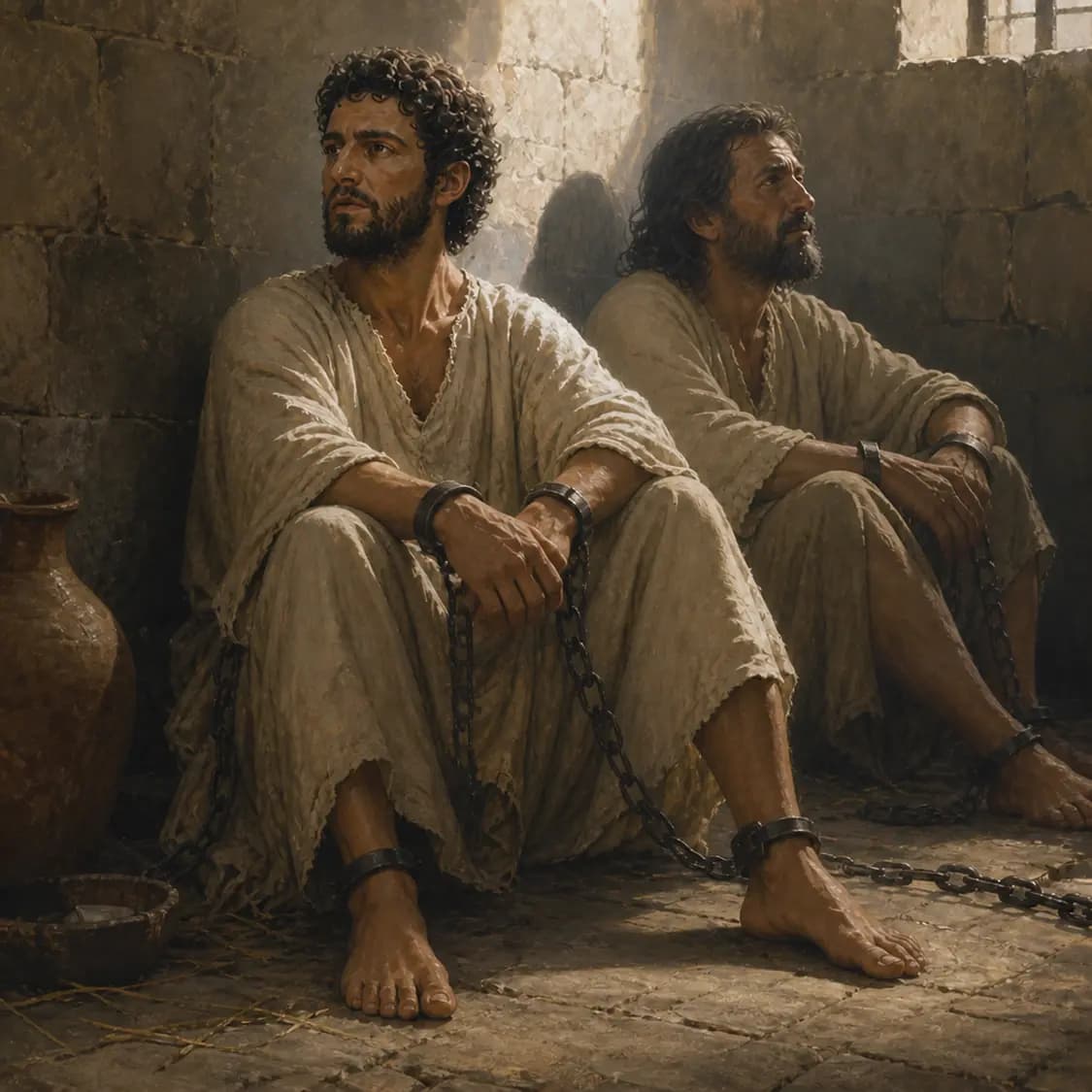
The crowd joined the attack. Without giving Paul and Silas a proper hearing, the magistrates ordered them stripped and beaten repeatedly. Afterward, the two men were thrown into prison. The jailer received strict orders to guard them securely, so he put them in the innermost cell and fastened their feet in stocks.
At midnight, Paul and Silas were praying and singing hymns to God. The other prisoners listened.
Suddenly, a powerful earthquake shook the prison to its foundations. The doors opened, and everyone’s restraints came loose. The jailer awoke, saw the open doors, and assumed the prisoners had escaped. He drew his sword to take his own life.
Paul called out loudly, “Do not harm yourself! We are all here.”
The jailer called for lights and rushed inside. Trembling, he fell before Paul and Silas. Then he brought them out and asked, “What must I do to be saved?”
They answered, “Believe in the Lord Jesus, and you will be saved—you and your household.” Paul and Silas then explained the word of the Lord to him and to everyone in his house.
The jailer responded immediately. During that same hour of the night, he washed their wounds. Then he and his household were baptized. He brought Paul and Silas into his home and placed food before them. Earlier he had secured them in the inner cell; now he tended their injuries and welcomed them at his table. He and his household rejoiced because they had come to believe in God.
When morning came, the magistrates sent officers with orders to release Paul and Silas. The jailer told them they were free to leave in peace.
But Paul would not accept a quiet dismissal. He pointed out that the magistrates had publicly beaten Roman citizens without a trial and had thrown them into prison. He insisted that the magistrates come in person and escort them out.
When the officials learned that Paul and Silas were Roman citizens, they became afraid. They came to the prison, appealed to them, and escorted them out. Then they asked the missionaries to leave the city.
Before departing, Paul and Silas went to Lydia’s home. There they met with the other believers and encouraged them. Then they left Philippi.
What We Learned
- The young woman’s deliverance exposed how readily people can value profit above another person’s freedom and dignity.
- Beating and imprisonment did not silence Paul and Silas. Their prayers and songs expressed trust in God amid suffering and injustice.
- Paul valued the jailer’s life above an immediate opportunity to escape. Freedom did not make him indifferent to someone else’s despair.
- The jailer’s faith became visible through listening, caring for the wounded prisoners, baptism, hospitality, and joy.
- Paul’s appeal to his Roman citizenship shows that faithfulness can include naming injustice and asking authorities to address it openly.
Story background
Paul and Silas in Prison is read in Acts 16:16-40. In Philippi, Paul commands a spirit of divination to leave an enslaved young woman, ending the profit her owners received from her fortune-telling. The account also draws attention to freedom from exploitation and faithfulness under injustice. Its named people, setting, and sequence matter, while details not stated in the passage should remain open rather than being supplied from later retellings. Read the scene in its surrounding movement: notice what prompts the action, how the central figures respond, and what the final words leave with the hearer. This background keeps the story close to its explicit claims while making room for careful reflection on freedom from exploitation, faithfulness under injustice, and the other themes named here. The passage can be revisited slowly, with its questions and tensions intact.
People in the story
- Paul — Commands the spirit to leave, prays in prison, protects the jailer, teaches, and invokes Roman citizenship
- Silas — Is beaten and imprisoned with Paul, prays and sings, and joins the witness to the jailer
- Enslaved young woman — Is exploited by owners for fortune-telling until the spirit leaves her
- Her owners — Lose their source of profit and bring accusations against Paul and Silas
- Jailer — Guards the prisoners, is stopped from self-harm, hears the word, and responds with care and baptism
- Magistrates — Order the beating and imprisonment, then appeal to Paul and Silas after learning they are Roman citizens
Themes to notice
Freedom from exploitation
The passage brings freedom from exploitation into focus through its named people, actions, and ending.
Faithfulness under injustice
The passage brings faithfulness under injustice into focus through its named people, actions, and ending.
Care for life
The passage brings care for life into focus through its named people, actions, and ending.
Witness and baptism
The passage brings witness and baptism into focus through its named people, actions, and ending.
Questions for reflection
- What stands out to you about freedom from exploitation in this passage?
- How do the people in the story respond to faithfulness under injustice?
- Which detail would you want to read again in its wider context?
- What question does this account leave you carrying?
Related stories
Carry the story with you
Save your reflections on paul and silas in prison and revisit them as you continue through Scripture.