
Read the story
Context
Jesus had been crucified. For the disciples who had followed him, the claim that he was alive again raised the largest possible question: had death truly been overcome? The answer would shape not only their hope, but also the mission Jesus was about to entrust to them. Thomas, one of the Twelve, would face that question after the others did.
Story
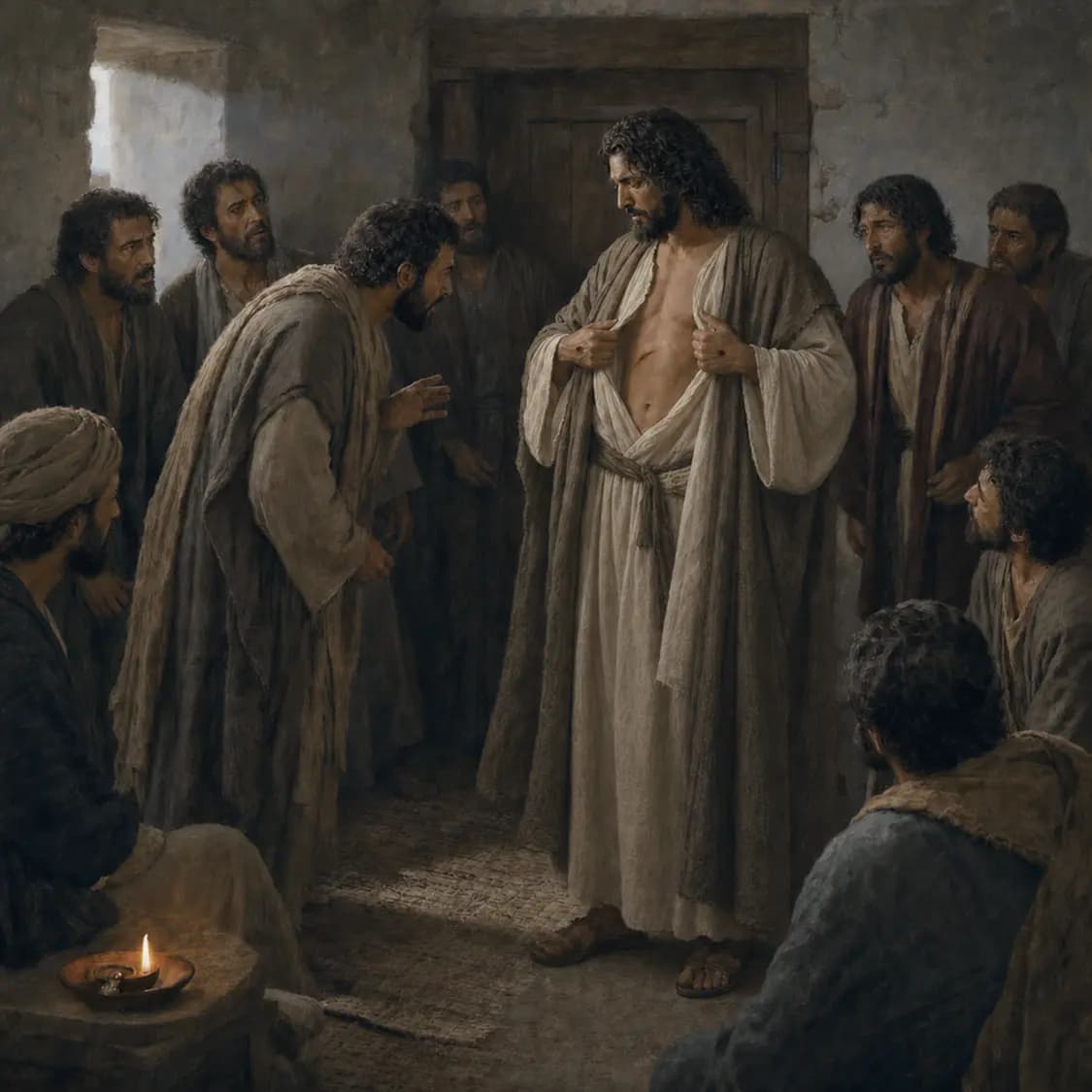
On the evening of the first day of the week, the disciples gathered behind closed doors because they were afraid. Yet Jesus came and stood among them.
His first words were simple: “Peace be with you.” Then he showed them his hands and his side. The one standing before them was the same Jesus who had been crucified. When the disciples saw the Lord, their fear gave way to joy.
Jesus spoke peace to them again. Then he gave them a mission. Just as the Father had sent him, Jesus was now sending them. He breathed on them and told them to receive the Holy Spirit. He also told them that the sins they forgave would be forgiven, and the sins they retained would be retained. The peace Jesus brought was not meant to leave them hiding behind closed doors. He was preparing them to go out in his name.
Thomas had not been with the other disciples when Jesus appeared. Later, they told him, “We have seen the Lord.”
Thomas said he would need to see for himself before he believed. He wanted to see the marks left by the nails in Jesus’ hands. He even said that he needed to touch those marks and place his hand into Jesus’ wounded side.
Eight days later, the disciples were inside again, and this time Thomas was with them. The doors were shut, but once more Jesus came and stood among them.
“Peace be with you,” he said.
Then Jesus turned to Thomas and addressed the very evidence Thomas had asked for. He invited Thomas to look at his hands, reach out his finger, and place his hand into his side. Jesus called him to leave unbelief behind and believe.
Thomas answered with a personal confession: “My Lord and my God!”
Jesus told Thomas that he believed because he had seen. Then Jesus extended the moment far beyond that room and those gathered disciples. His final words were a blessing for all who would trust him without seeing him with their own eyes: “Blessed are those who have not seen and yet have believed.”
What We Learned
- The risen Jesus meets his fearful disciples with peace, then sends them out as the Father sent him.
- Jesus does not hide the marks of crucifixion. The risen Lord is the same Jesus who suffered and died.
- The disciples’ mission depends on the Holy Spirit and carries a serious responsibility concerning the forgiveness of sins.
- Jesus addresses Thomas personally at the point of his question, and Thomas responds by confessing Jesus as his Lord and God.
- Jesus blesses those who believe without seeing him physically, extending his promise to later generations of believers.
Story background
Thomas Sees the Risen Jesus is read in John 20:19-29. On the evening of the first day of the week, the risen Jesus appears to disciples gathered behind locked doors, shows them his hands and side, speaks peace, sends them as the Father sent him, and tells them to receive the Holy Spirit. The account also draws attention to resurrection and peace. Its named people, setting, and sequence matter, while details not stated in the passage should remain open rather than being supplied from later retellings. Read the scene in its surrounding movement: notice what prompts the action, how the central figures respond, and what the final words leave with the hearer. This background keeps the story close to its explicit claims while making room for careful reflection on resurrection, peace, and the other themes named here. The passage can be revisited slowly, with its questions and tensions intact.
People in the story
- Jesus — Appears to the disciples, commissions them, and addresses Thomas' demand for evidence
- Thomas — Absent at the first appearance, asks for evidence, and confesses Jesus as Lord and God
- Other disciples — See the risen Jesus first and tell Thomas that they have seen the Lord
Themes to notice
Resurrection
The passage brings resurrection into focus through its named people, actions, and ending.
Peace
The passage brings peace into focus through its named people, actions, and ending.
Commission
The passage brings commission into focus through its named people, actions, and ending.
Belief and testimony
The passage brings belief and testimony into focus through its named people, actions, and ending.
Questions for reflection
- What stands out to you about resurrection in this passage?
- How do the people in the story respond to peace?
- Which detail would you want to read again in its wider context?
- What question does this account leave you carrying?
Related stories
Carry the story with you
Save your reflections on thomas sees the risen jesus and revisit them as you continue through Scripture.