

It is early, the house is quiet, and your Bible lies open on the kitchen table next to a notebook you are not sure how to fill. Bible study for beginners often begins exactly here: with a willing heart, a blank page, and the quiet worry that you are doing it wrong. You are welcome to start small. Choose one short passage, read it slowly, write down what you see, and give yourself four gentle weeks to build a rhythm that can last.
This guide walks you through that start. You will set up a simple study session, follow a week-by-week path, and learn the kinds of questions that keep you close to the text. The aim is a steady, honest practice you can repeat on an ordinary Tuesday, long after the first burst of motivation fades.
Begin with a passage you can stay with
The most common beginner mistake is choosing a passage that is too large to hold. A whole chapter invites you to skim. A single paragraph invites you to notice. For your first weeks, pick a complete unit of thought: a short narrative scene, a paragraph of teaching, or a small cluster of verses that belong together.
Choose ground that rewards a second reading. Narrative passages are kind to beginners because something happens, someone speaks, and you can watch the scene unfold. Teaching passages work well too, as long as you keep them short enough to reread without losing the thread.
Settle this before you sit down. Write the passage at the top of your page the night before, or keep a short list of passages you plan to visit. When the decision is already made, your morning energy goes into reading and noticing, where it belongs.
Set up a simple Bible study session
A good beginner session has a shape you can remember without a checklist taped to the wall. Give yourself twenty to thirty unhurried minutes, one passage, and one page. Keep your Bible, something to write with, and a quiet seat ready the evening before. That way, you can begin by reading.
A practical session can follow this order:
Pray briefly, asking for patience and honesty as you read.
Read the passage once without writing anything, simply listening.
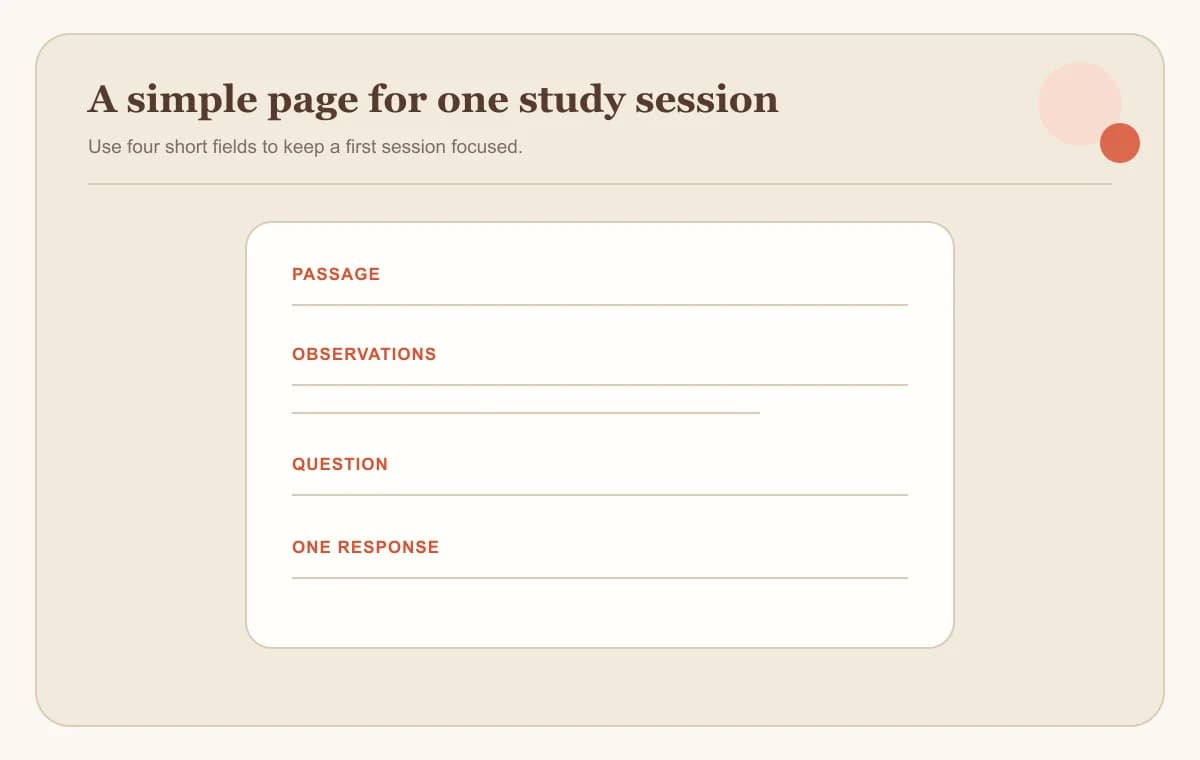
Read it again slowly, and record the passage reference at the top of your page.
Write two or three observations: words that repeat, people who act, a turn in the argument, a detail that surprises you.
Write one or two honest questions the passage raises for you.
Close with one small response, a sentence about how you want to carry the passage into your day or your prayers.
This four-part note, with its fields for passage, observations, questions, and response, is the Bible note method in miniature. It keeps every thought you write in a useful home, so the page stays clear even when your thinking is still forming.
Keep the session short enough to repeat
Let the rhythm stay simple enough to return to. A fifteen-minute session repeated four times a week gives you four chances to reread, notice, and carry a question forward. Protect the ending, too. Stop while you still have a question alive on the page, because that question is the thread that pulls you back tomorrow.
Learn the pattern by hand before any tool
Do the first sessions with paper or a plain note, even if you plan to study digitally later. Writing observations in your own words trains the attention that every good tool depends on. Once the pattern lives in your hands, an app can carry the organizing while you keep the noticing.
Follow a four-week beginner Bible study path
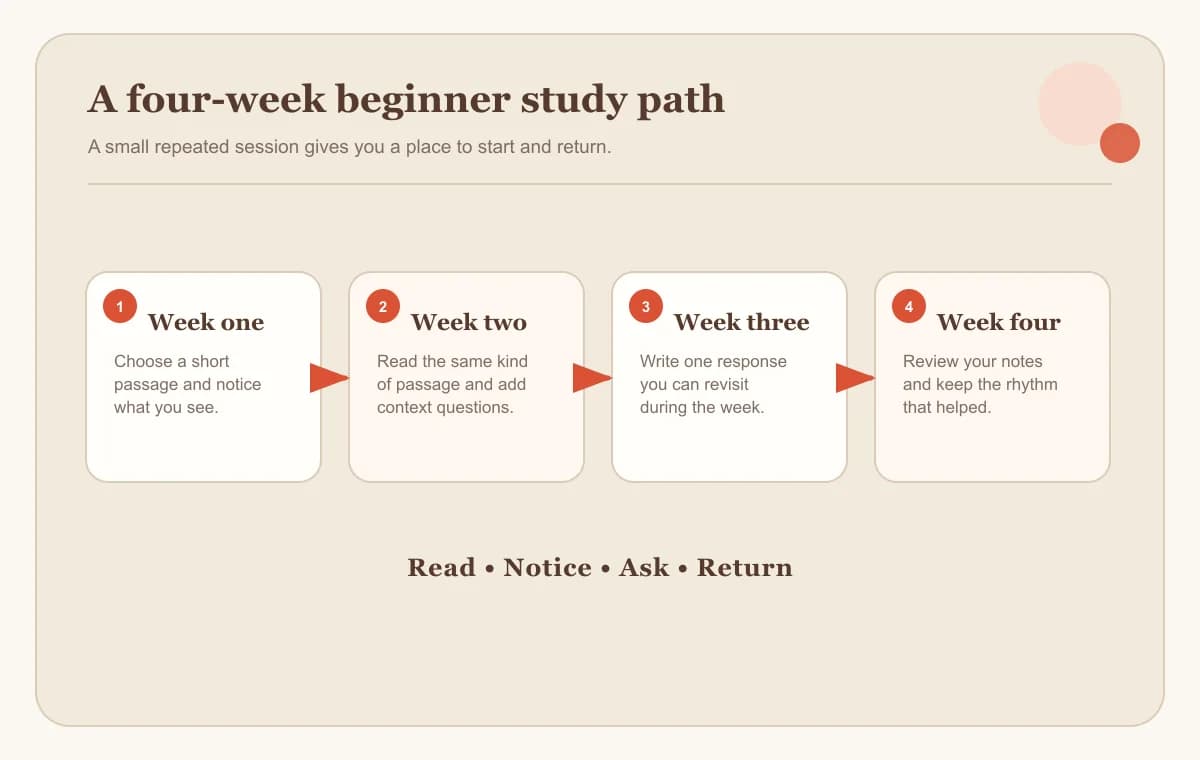
Four weeks is long enough to feel a habit forming and short enough to commit to without dread. The path below assumes three or four sessions a week, each with one short passage. A schedule like this gives your study direction; the passages themselves still do the real work.
Week one: Learn to look. Stay in one short narrative book or a single Gospel section. Each session, record only observations: what is said, who acts, what repeats. Let yourself notice slowly, and resist the urge to explain anything yet.
Week two: Add honest questions. Keep observing, and now give your questions equal room. Write them exactly as they occur to you, even the ones that feel basic. A beginner's plain question is often the door into the passage.
Week three: Connect session to session. Look back over your notes before each new reading. Watch for a theme that keeps appearing, a question from last week that the text begins to answer, or a detail you missed the first time.
Week four: Practice response and review. Give each session a clear closing response, then spend your final session rereading the month's notes. Notice where your attention grew and which questions still wait for you.
If you want structure beyond a self-made list, a Bible reading plan generator can map a range of Scripture across a pace you choose, including 90, 180, or 365 days, or a custom number of days that fits your season. It also offers a weekly grace day, which suits a beginner's real life: when a Thursday collapses under work and errands, the plan absorbs the missed day and you simply continue.
Adjust the pace without abandoning the path
Some weeks will hold four sessions; some will hold two. When a week shrinks, keep the same short passages and the same note pattern, and let the path stretch to fit. A four-week path that takes five or six weeks still teaches everything it was meant to teach.
Ask questions that keep you close to the text
Good Bible study questions begin with what is actually on the page. Start with the observable: Who speaks here? What word repeats? What changes between the beginning and the end of the passage? What would I see if I watched this scene happen? These questions keep your eyes in the text long enough for the text to surprise you.
From there, let one question reach toward meaning: Why might the writer place this detail here? What does this passage assume its first readers already knew? Hold your answers lightly, and write them as possibilities you can test in the next reading.
Structured methods can help you practice this. The SOAP Bible study method, for example, moves a reader through Scripture, observation, application, and prayer, giving each kind of attention its own moment. Whether you use a named method or the simple note pattern above, the discipline is the same: observe first, question honestly, and let application grow out of what you actually saw.
Keep a small boundary around speculation, too. A question you cannot yet answer is a good resident in your notebook. Write it down and let it wait. Many beginner questions ripen simply because you kept reading.
Keep your questions and reading plan together
As the weeks add up, your study materials begin to scatter: a plan in one place, notes in a notebook, questions in the margin of your Bible. Gathering them is practical work, and it is where a tool can serve the habit you have already built by hand.
Bible Note Bible Study Chat can begin from the open passage you are reading or from a sermon note you have saved. Its answers present citations and labels so you can see where a claim comes from, and they can be wrong, so read the cited Scripture yourself and weigh what you find. For weighty matters, bring your questions to a pastor or a trusted believer who knows you; careful reading and Christian community are the right home for the hardest questions.
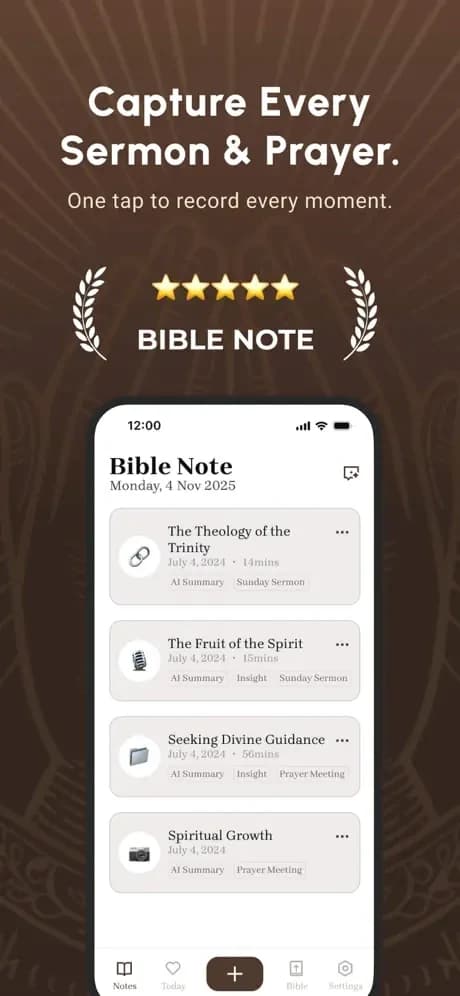
The app carries the organizing so your attention can stay on the page: your questions sit beside the passage that raised them, and your next session starts where the last one ended. The reading, the noticing, and the praying remain yours.
When a passage still feels hard
Every beginner meets a passage that stays closed after two careful readings. When that happens, widen the circle before you reach for an explanation. Reread the paragraphs on either side. Ask who wrote this, to whom, and what came just before. Often the difficulty lives in missing context, and the context is sitting quietly one paragraph away.
Some passages stay hard even then, and that is a normal part of reading an ancient, weighty book. Write the question clearly, keep it with your notes, and let it travel with you. Difficult or weighty questions belong in careful reading over time and in trusted Christian community: a pastor, a mature believer, or a small group where the question can be held patiently. A question you carry honestly is doing quiet work in you while it waits for its answer.
Frequently asked questions
Where should a beginner start reading the Bible?
Start with a short narrative book or a single Gospel section, and take it one paragraph at a time. Narrative gives you people, actions, and scenes you can observe, which makes the note pattern easier to practice from the first session.
How long should a beginner Bible study session last?
Twenty to thirty unhurried minutes is plenty, and fifteen focused minutes works when the day is tight. A short session you repeat several times a week builds more understanding than a long session you cannot sustain.
What should I write in my Bible study notes?
Write the passage reference, two or three observations in your own words, one or two honest questions, and a single small response for your day or your prayers. That simple shape keeps every thought in a useful place and gives your next session a clear starting point.
What do I do when I do not understand a passage?
Reread the surrounding paragraphs, write the question clearly, and keep it with your notes for later. If it stays unresolved, bring it to a pastor, a trusted believer, or a small group; weighty questions deserve patient reading and good company.
Sources
Editorial status
Written and edited by Hans Keller for Bible Note. Sources, Scripture context, dates, and practical limitations are checked before publication.

About the author
Hans Keller
Editorial & Content Lead
Bible Study & Sermon Learning Content Editor
Hans helps Christians turn sermons and Scripture study into clear notes, thoughtful questions, and faithful next steps.
His work helps listeners and group leaders carry a sermon or study beyond the meeting: back to the passage, into clearer questions, and toward one practical response for the week.
Read with Scripture open
Use this guide alongside the full biblical passage and the practices of your local church. Interpretive details can differ across Christian traditions.